Supporting gender equality in Nepal: a placement in Pokhara
Nepal is a country of high mountains, medieval cities and sacred sites, and travelling there is an adventure in itself. It is also a place where gender inequality still shapes marriage, property ownership and access to work. A placement with the Pokhara Community Project offers a way to see these realities clearly and to contribute, through education, to the slow but vital work of advancing women's rights.
The scale of the challenge is well documented. Reporting by UN Women shows that child marriage remains widespread, with around 37 per cent of girls married before eighteen and one in ten before fifteen. Marrying young often means having children young, which in turn locks many women out of paid work. Women carry out nearly twelve hours of unpaid domestic labour a day, work that is left out of national economic figures, and only around a quarter are in the formal workforce. Stigma around menstruation adds another barrier, including the practice of Chhaupadi, which excludes women and girls from their homes and daily life while menstruating despite being outlawed.
Education is one of the most effective levers for change. Helping women build literacy, numeracy and professional skills gives them a route to economic independence and a stronger voice in their communities. The effects ripple outward: economically empowered women mean more children staying in school, higher household incomes and more families lifted out of poverty. Workshops and classes are where that begins.
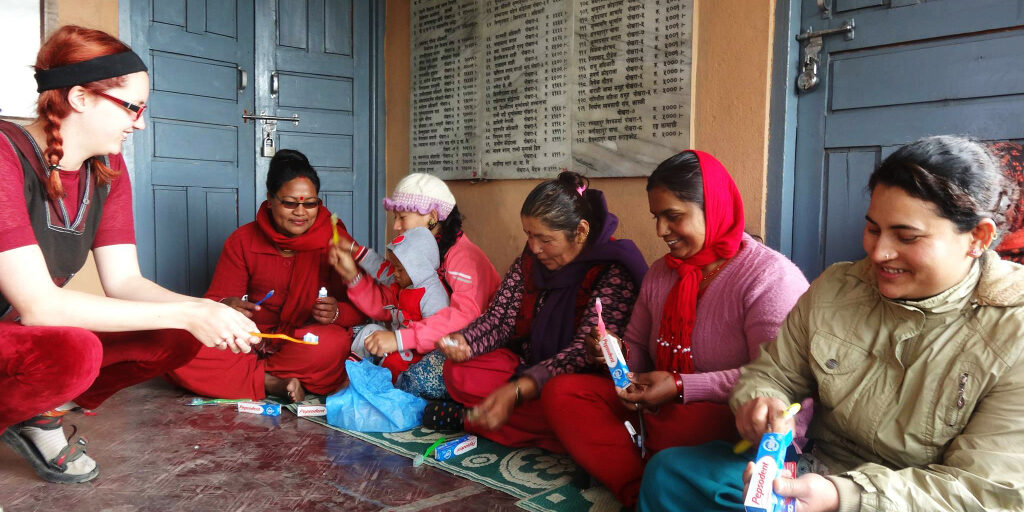
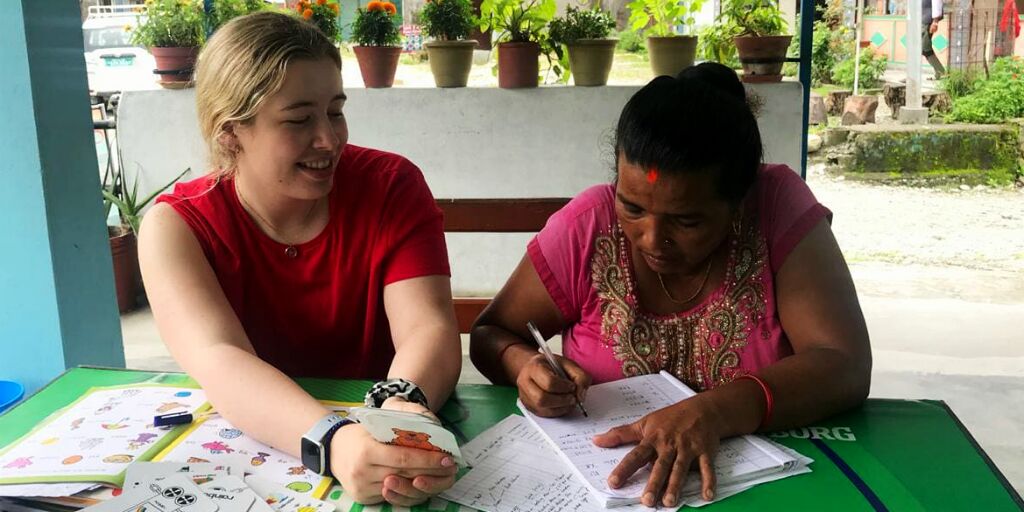
During a placement you can contribute in several ways. Alongside literacy, numeracy and life-skills sessions for girls at a local school, you can support professional-development classes and conversational English lessons for local women. The women who attend are dedicated students, and the classes double as a space for social support and connection. In helping to plan and deliver these sessions you gain real experience of community education and a clearer sense of what practical support for gender equality looks like.
The work also touches on one of Nepal's gravest problems: human trafficking, which rose sharply after the 2015 earthquake pushed thousands of families into hardship. Each year women and girls are trafficked for sexual exploitation and for forced labour in workshops, construction and elsewhere, with those who have the fewest economic options most at risk. Raising awareness is therefore central to any work on gender equality. The Pokhara Community Project works alongside Samrakshak Samuha Nepal, known as SASANE, a social-justice organisation founded and run by survivors of trafficking, whose work spans investigation, legal support and helpline services. Contributing to awareness efforts with SASANE is sobering but genuinely inspiring, and it offers a close view of how effective grassroots organisations can be.
Nepal rewards curiosity beyond the work, too. Placements are based in homestay-style accommodation on the edge of Lake Phewa in Pokhara, with the snow-capped Annapurna range mirrored in the water each morning. For the adventurous there is paragliding, white-water rafting and, from Pokhara's doorstep, the famous Annapurna Circuit. For a gentler pace there are centuries-old monasteries, palaces and temples to wander through. Combined with work that makes a real difference to people's lives, it may be one of the most rewarding journeys you ever take.
To learn more, explore The Impact Network's women's empowerment work with the Pokhara Community Project and start contributing to a more equal world today.
Comments
Add new comment