
A Day on the Beach: What Sea Turtle Conservation Actually Looks Like
Sea turtle conservation is often imagined as a single dramatic moment: a clutch of hatchlings scrambling towards the surf. The reality is quieter, earlier and far more methodical. On the Caribbean coast near Puerto Morelos, where several turtle species come ashore to nest, protecting them is the sum of many small, careful tasks carried out day after day through the season.
It starts before sunrise. The night's crickets are still calling as the first team gathers, and the beach survey has to begin while it is cool and the sand still holds the tracks of the night. The kit is simple and shared out among everyone: field notebooks and pens, water, and the materials for repairing nest protection. Stepping onto the beach as the first light breaks over the sea, the group moves steadily along the shoreline, checking each known nest in turn.
Reading the beach
At every nest the question is the same: is it still secure? Nests are vulnerable to predators, to erosion and to disturbance, and part of the morning's work is reinforcing their protection where needed. Marking, recording and, where appropriate, screening a nest can be the difference between a clutch surviving and one being lost. Fresh tracks in the sand may reveal that a female came ashore overnight, and a new nest is logged, measured and added to the season's record.
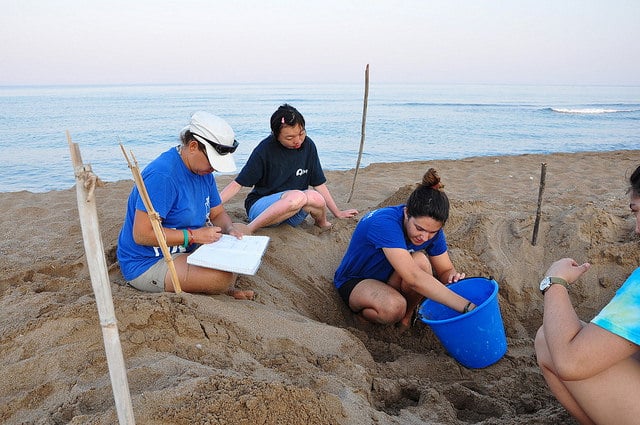
That record is the point. Every nest counted, every emergence noted and every hatching success or failure logged builds a dataset that shows how a nesting population is faring from one year to the next. Turtles are long-lived and slow to mature, so trends only become visible through consistent, patient monitoring over many seasons. A single morning's survey feels modest; stitched together across a whole nesting period, it becomes real evidence.
The threats these animals face are well known. Coastal development and artificial light can disorient nesting females and hatchlings, plastic and discarded fishing gear injure and entangle them, and warming sand can skew the balance of the sexes, since temperature determines whether eggs produce males or females. Set against all this, a protected, well-documented nest is a small but genuine victory, and dozens of them add up.
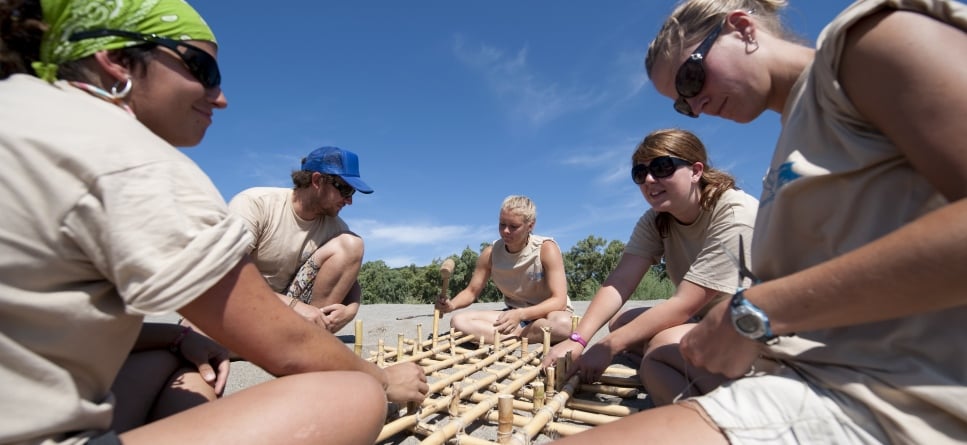
Work like this also depends on the community around it. Local knowledge of the beaches, cooperation over lighting and litter, and a shared sense that the turtles are worth protecting all make the difference between a project that endures and one that fades. The Puerto Morelos Reef Project sits within that wider effort to keep this stretch of coast healthy, above and below the waterline.
By the time the sun is fully up and the beach is warming, the survey is done and the notes are written up. It is unglamorous work, but it is exactly what conservation looks like most of the time: showing up early, paying attention and letting the data accumulate until it can speak for the animals it describes.
Comments
Add new comment