
How Do Asian Elephants Keep Cool? What the Data Tells Us

Sweating is how our bodies shed heat when the temperature climbs. Elephants do not have that option. Unlike us, Asian elephants have almost no sweat glands, yet they live through scorching Thai summers with apparent ease. So how do they manage it? The answer is a neat combination of physical features and learned behaviour, and it is exactly the sort of question careful observation can answer.
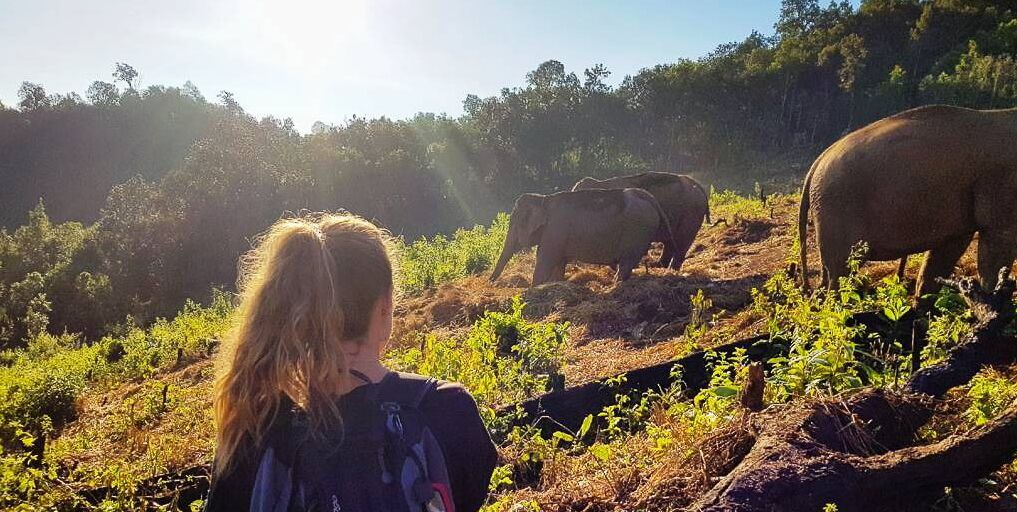
Understanding animal behaviour starts with data. Working with the Canopy Conservation in Chiang Mai, volunteers observe and record the natural behaviour of semi-wild Asian elephants day by day. One such study set out to test a simple hunch: that the elephants would show more cooling behaviours in the hotter afternoons than in the cooler mornings. Data was gathered through the dry season, from January to March, as temperatures rose.
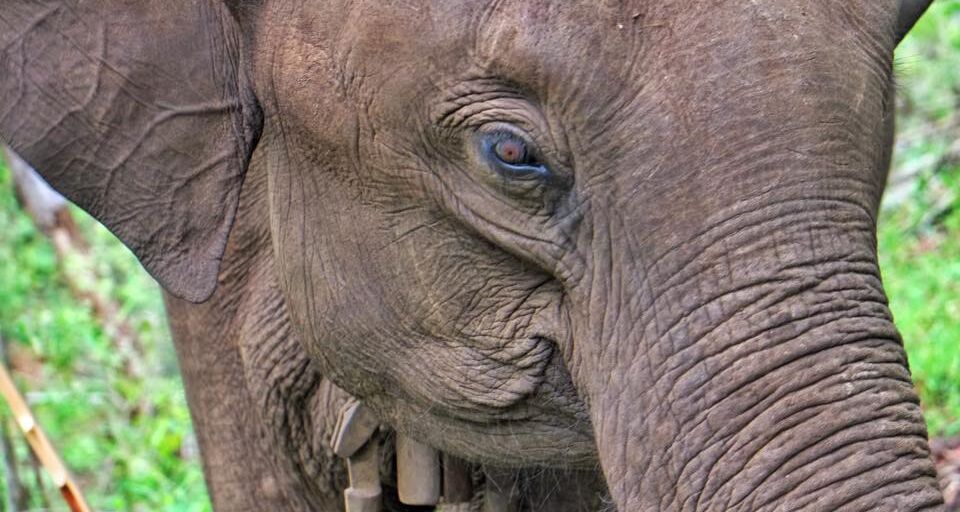
The physical adaptations are the first line of defence. Although elephants have sweat glands only in the cuticles of their toenails, their skin is remarkably permeable, so water can evaporate straight through it and cool the body. Their wrinkled, textured hide helps too, trapping moisture on the surface for longer rather than letting it flash off at once.
Then there are the ears, perhaps the most effective cooling system of all. By flapping their large ears, elephants generate a breeze that can lower their body temperature by more than ten degrees Celsius. The backs of the ears are laced with a dense network of veins and capillaries; as warm blood passes through, the moving air cools it before it returns to the body. This is why you will often see an elephant standing into the wind with its ears spread wide, maximising the surface exposed to the breeze.
Behaviour does the rest, and here the trunk comes into its own. Asian elephants are crepuscular, most active around dawn and dusk when it is cooler, spending those hours foraging, moving and socialising. During the heat of the day they turn to three trunk-based tactics. Dusting involves scooping up sand or soil and throwing it over the body; the study found this began above around 13 degrees Celsius and grew more frequent as the temperature rose. Mudding, either by rolling in a wallow or spraying mud with the trunk, coats the skin and helps regulate temperature. Spraying works similarly, drawing water from a river or pool and showering it over the body, where its lower temperature speeds cooling.
When the afternoon data was compared with earlier records, the hunch held up: these elephants did display more cooling and drinking behaviours in the warmer afternoons than in the mornings. That may sound modest, but findings like this are the foundation of good conservation. Without steady monitoring and research, we would not understand the daily needs of the species, and without that understanding we could neither care for them well nor share reliable information with the public.
This is the quiet, patient side of conservation that rarely makes the headlines but underpins everything else. By observing an elephant herd alongside traditional keepers and the local community, volunteers help build the knowledge that keeps these extraordinary animals thriving.
Comments
Add new comment