Nosy Be Island Conservation and Community Project
Run by Mora Mora
Protecting the last old-growth forest and reefs of Nosy Be.
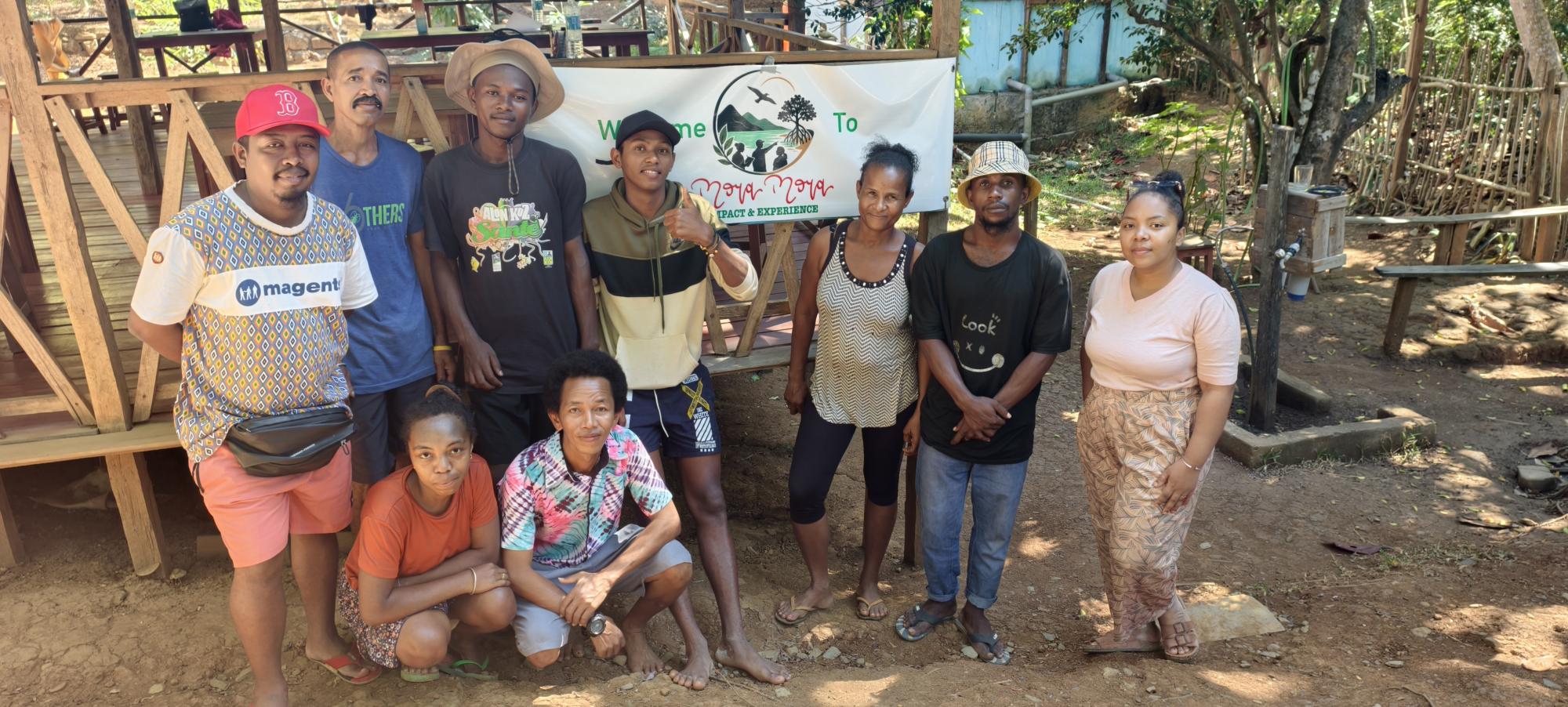
About Mora Mora
Operating since 2021
Protecting the last old-growth forest and reefs of Nosy Be.
Mora Mora carries out biodiversity monitoring and conservation research in and around Lokobe National Park, one of the last remaining stands of rainforest in Madagascar's Diana region. Working alongside Madagascar National Parks, teams run structured surveys of lemurs, birds, reptiles, amphibians, invertebrates and marine and coastal species, and contribute records to open citizen-science databases such as eBird and iNaturalist so the data is freely available to scientists worldwide. On the coastal side, surveys cover seagrass and mangrove species, coral and reef fish, nudibranchs and coastal birds, alongside beach profiling and clean-ups.
The community programmes focus on education, English-language skills, women's and girls' empowerment and, in development, public health. English teaching runs across children's classes in local schools, adult classes for community members, and conversational workshops with Lokobe National Park rangers so they can engage with visitors and improve conservation communications. Teams also support local teachers with lesson planning and resources, refurbish classrooms, and run twice-weekly sessions with a local women's group on personal development, communication, health, handicrafts and sport.
- Set at the edge of Lokobe National Park, one of the last remaining stands of rainforest in Madagascar's Diana region, which gained full protected status in 2011.
- Delivered in partnership with Madagascar National Parks, the government-mandated body that manages the country's national parks and reserves.
- Survey data is contributed to open citizen-science databases (eBird and iNaturalist), making it freely available to scientists and conservation planners worldwide.
- Community programmes teach up to around 260 students a week, from age 8 to over 50, across three schools and community centres and adult classes.
- The women's group programme is member-led: women set their own goals across personal development, health, communication, handicrafts and sport, and it is expanding to reach girls in schools.
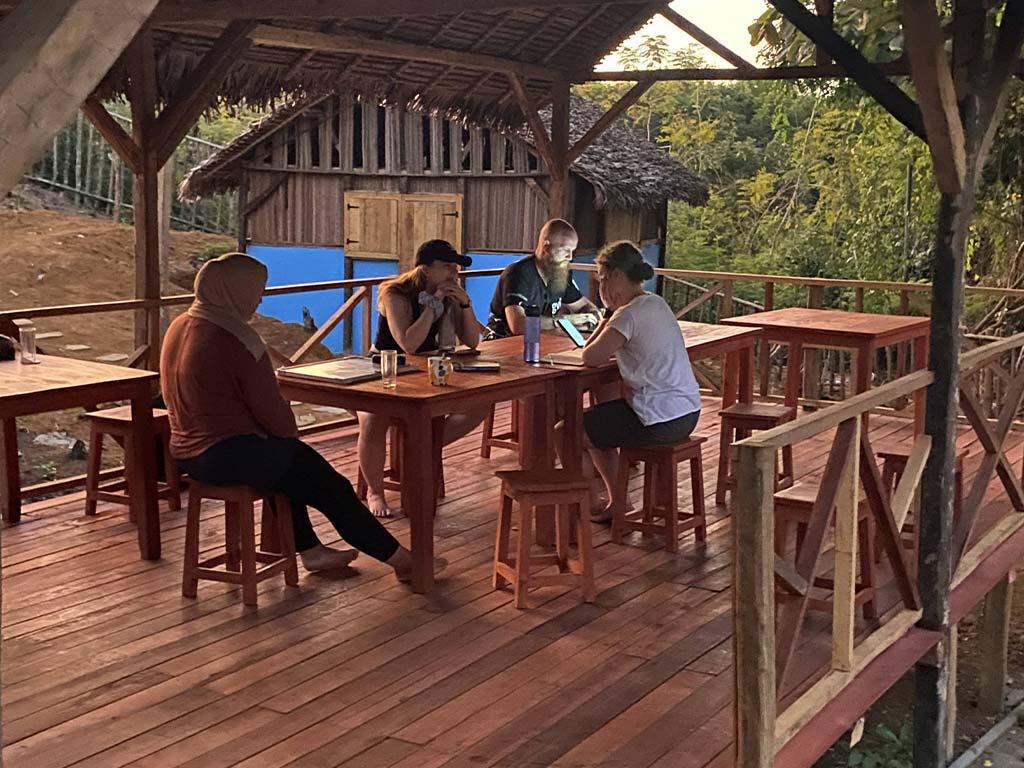
- The research station runs entirely on solar power and is built from sustainably sourced local materials, with rainwater harvesting, composting, an on-site vegetable garden and a largely plant-based menu.
Project work
Conservation & community
Mora Mora runs biodiversity monitoring and conservation research in and around Lokobe National Park alongside English-language education, women's empowerment and (in development) public health work with the island's schools and villages. Structured surveys of lemurs, birds, reptiles, amphibians and coastal species build baseline data for conservation partners, while community programmes teach up to around 260 students a week, from age 8 to over 50.
Community-led & ethical
The work is delivered in partnership with Madagascar National Parks, which manages Lokobe National Park, and with local schools and community centres including Marodoka and Ampasipohy primary schools and the Maison de Jeunes Community Centre. A member-led women's association sets its own goals for the gender-equality programme. Wildlife is observed non-invasively, local customs and taboos (fady) are respected, and safeguarding and child-protection policies apply across all activities.
Approach
This organisation carries out biodiversity monitoring and conservation research in and around a national park that protects one of the last stands of rainforest in Madagascar's Diana region. Working alongside Madagascar National Parks, it builds baseline data on lemurs, birds, reptiles, amphibians and marine and coastal species to inform long-term conservation strategy, and delivers environmental education and English-language ranger classes for local park guides.
The station operates to high ethical standards, guided by its local partners and the customs of the host community. It runs entirely on solar power with rainwater harvesting, an on-site garden, composting and a largely plant-based menu, and tracks and reports its own carbon footprint each month.
Impact
Mora Mora works on a volcanic island off Madagascar's north-west coast, beside the biodiversity hotspot of Lokobe National Park. Our teams combine marine and forest conservation with community education, monitoring endangered and endemic species, running biodiversity and coastal surveys, tackling plastic pollution, and supporting local schools through children's classes, adult English lessons and gender-equality sessions. The figures below record the measured outcomes of that work, year by year.
2024
2023
Milestones
- 2021Programmes first launched.
- 2011Lokobe National Park gained full protected status, helping safeguard the last remaining stand of rainforest in the Diana region against growing development pressure.
- 2022The research station was constructed on Nosy Be (buildings completed mid-2022) and a partnership was established with Madagascar National Parks to support the conservation priorities of Lokobe National Park; the first participants arrived in August 2022. Ranger classes were launched at Ampasipohy with Madagascar National Parks.
- 2023The station marked its one-year anniversary and, over the year, welcomed 51 volunteers, completed 260 bird, lemur and herpetofauna surveys and taught 484 classes. Present: work continues to establish baseline biodiversity data through species monitoring in and around the park to inform long-term conservation strategy, while addressing ongoing threats including illegal logging, bushmeat trapping and expanding settlement.
Highlights
- Set at the edge of Lokobe National Park, one of the last remaining stands of rainforest in Madagascar's Diana region, which gained full protected status in 2011.
- Madagascar is a global biodiversity hotspot with exceptionally high endemism; many species around Nosy Be are found nowhere else on Earth.
- The research station runs entirely on solar power and is built from sustainably sourced local materials, with rainwater harvesting, composting, an on-site vegetable garden and a largely plant-based menu.
- Focal endangered species include the black lemur, Hawk's sportive lemur, dwarf chameleon and the critically endangered Madagascan fish eagle.
- Survey data is contributed to open citizen-science databases (eBird and iNaturalist), making it freely available to scientists and conservation planners worldwide.
- Three distinct ecosystems meet in one location: rainforest, coastal reef and tropical shoreline.
- Delivered in partnership with Madagascar National Parks, the government-mandated body that manages the country's national parks and reserves, including the community-managed Ampasipohy Lokobe area.
- English-language ranger classes support local park guides and rangers with conservation and ecology terminology.
- Whale watching for humpbacks (July-November) and whale-shark snorkelling (October-December) are seasonal features of the waters around Nosy Be.
Setting
Nosy Be (pronounced "Nossy-Bay") is a volcanic island off Madagascar's north-western coast in the Indian Ocean. Madagascar is the world's fourth-largest island and a globally significant biodiversity hotspot with exceptionally high levels of endemism, meaning many species around Nosy Be are found nowhere else on Earth.
The base sits in a small village at the foot of Lokobe National Park, a short distance from the beach and roughly a ten to fifteen minute tuk-tuk ride from Hellville, the island's main town. Built from sustainably sourced local materials and running entirely on solar power, it is surrounded by a range of ecosystems from tropical rainforest and coastal habitats to shallow reefs. Nosy Be has a tropical climate with a dry season (May to October, roughly 20-30C) and a wet season (November to April, roughly 25-35C).
Volunteering in Madagascar
Madagascar's wildlife is overwhelmingly endemic — found there and nowhere else — which makes habitat loss on the island permanent in a way it rarely is elsewhere. Nosy Be retains fragments of old-growth forest alongside its reefs.
Volunteer placement FAQs
What does a typical week look like?
Project work runs Monday to Friday, roughly 35 hours a week. A typical day starts early, around 6:00 to 6:30 am, with breakfast before heading out to surveys, clean-ups, workshops or teaching sessions, depending on the day's plan. Weekends are free, though you are asked to be back at the research station before dinner on Sunday, ready for the week ahead.
Where will I stay?
Accommodation is dorm-style, with up to six people per room in bunk beds, and conditions are basic. There are Western-style toilets and cold-water showers, and the base is powered by solar energy. You can wash laundry on site, or pay a local group to wash and dry it for a small fee. Bring your own bedding and a mosquito net.
What does Mora Mora do?
Where exactly are you based?
What conservation work would I be involved in?
What community work do you do?
Who can volunteer, and are there age or fitness requirements?
Do I need previous experience?
How long can I stay, and when do placements start?
What is provided and what do I need to bring?
How do I get there, and how does arrival work?
Do I need a visa or vaccinations?
What is your approach to the environment and carbon footprint?
How do you work with the local community and respect local customs?
What is the approach to working with the wildlife?
Can I volunteer in Madagascar?
Yes. The Impact Network Foundation works with one partner organisation in Madagascar: Nosy Be Island Conservation and Community Project, based in Nosy Be, off the north-west coast. You apply to it directly through this site.
What NGOs are there in Madagascar?
The NGO in the Impact Network in Madagascar is Mora Mora, an independent conservation organisation working in the island of Nosy Be, off the north-west coast. It is one of eight NGOs in the network, and the network is deliberately small — every organisation in it is locally run rather than a field office of an international charity.
Are there NGOs in Nosy Be?
Yes — Mora Mora works in the island of Nosy Be, off the north-west coast. Its work is forest and coral reef monitoring.
What volunteer work can I do in Madagascar?
Forest and coral reef monitoring. Forest and reef protection on an island where both are under pressure. The work spans terrestrial and marine monitoring, because on Nosy Be the forest and the reef are the same conservation problem seen from two sides.
How long can I volunteer in Madagascar for?
You can volunteer for anywhere between 2 and 24 weeks, and you choose your own start date rather than fitting a fixed intake.
Is this a local NGO or a volunteer agency?
Mora Mora is an independent, locally run organisation. The Impact Network Foundation does not operate it, staff it or direct its work — the Foundation exists to connect volunteers to organisations like it and to publish what they achieve.
How do I apply to volunteer in Madagascar?
Apply on the Nosy Be Island Conservation and Community Project page on this site. Every applicant then has a short one-to-one call before a place is confirmed, so you can ask anything and the organisation can check the placement is a good fit.
Group bookings
We also host school groups, university groups and bespoke groups.