Siem Reap Education and Community Development Projects
Education and community-learning projects with novice monks, children, and women in Siem Reap, Cambodia.
About Siem Reap Education and Community Development Projects
Operating since 2018
Education and community-learning projects with novice monks, children, and women in Siem Reap, Cambodia.
The programme supports novice monks, children, young people, women and underserved communities in and around Siem Reap through locally-led education and community-development projects. Its central focus is English-language teaching, delivered alongside local partners rather than in place of them.
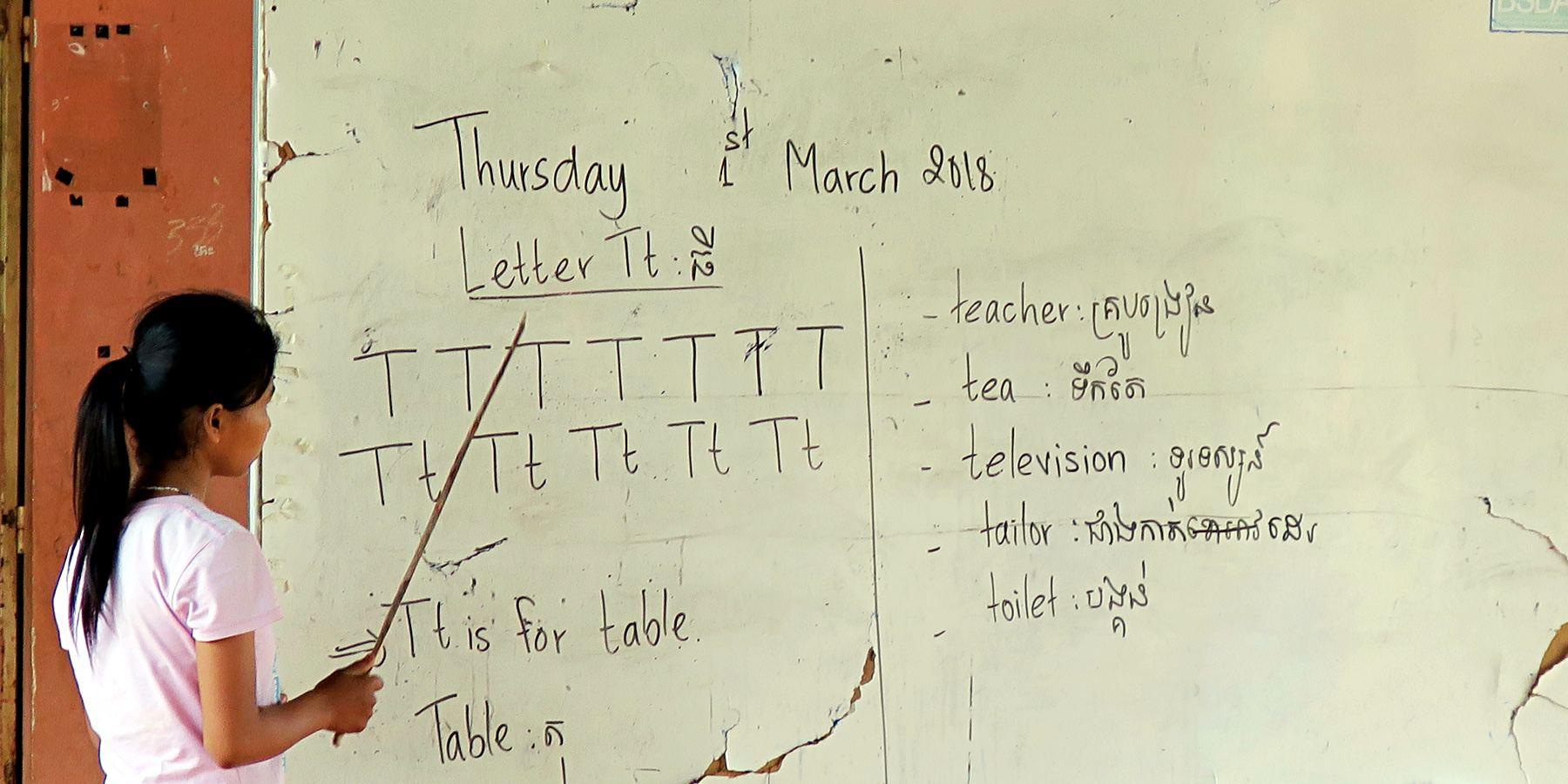
Volunteers and participants support qualified local teachers as native-English-speaking role models and provide enrichment activities; independent teaching is not required. A large part of the work is teaching English to novice monks at Wat Damnak, a teaching monastery in the centre of Siem Reap, alongside classes for community members there. The rest spans several partners: English classes at primary and middle schools run by a local school foundation, English and confidence-building sessions with women through partner NGOs, and occasional health, nutrition and small refurbishment work.
Project weeks run Monday to Friday, with morning and late-afternoon sessions and evenings and weekends free. Schedules stay flexible around community needs, school holidays and Khmer festivals such as Khmer New Year and Pchum Ben, when project work pauses.
- Central focus is English-language education, delivered to support (not replace) local teachers.
- Works with a distinctive mix of partners: local school foundations, a Buddhist teaching monastery, women's-empowerment NGOs and community organisations.
- The current base is run jointly with a hospitality training college that creates opportunities for disadvantaged young rural Cambodians. The hotel ids a social enterprise - 100% of surplus goes back to partner organisations.
- Programme themes align with UN Sustainable Development Goals 1 (No Poverty), 4 (Quality Education), 5 (Gender Equality) and 17 (Partnerships for the Goals).
- Work includes English classes for novice monks at Wat Damnak, children's early-years and school English support, and women's confidence and sewing classes.
- Operating in Cambodia since 2018; relocated from Kampong Cham to Siem Reap in 2022 after a COVID-era pause.
Project work
Education & community
English-language education is the core of our work. A large share of it is teaching novice monks at the Wat Damnak teaching monastery, alongside children's early-years and school English, adult English classes, and women's confidence and sewing sessions, plus community development and health and nutrition activities.
Community-led & ethical
We work alongside local partners in Siem Reap, including a local school foundation, the Wat Damnak teaching monastery and women's-empowerment NGOs. Teaching is designed to support qualified local teachers rather than replace them, and all participants complete cultural, ethical and child-safeguarding training before entering the field.
Approach
This programme supports children, young people, women and underserved communities through locally-led education and community-development projects, with a central focus on English-language teaching delivered alongside local partners rather than in place of them. Teaching is designed to strengthen, not replace, local teachers so that support is sustainable, and work spans schools, a Buddhist pagoda, and women's-empowerment NGOs.
The programme treats respect for local culture and knowledge as central to doing no harm and building long-term projects, and aligns with UN Sustainable Development Goals 1, 4, 5 and 17. Donations flow only through official channels, and the current base is run jointly with a hospitality training college that creates opportunities for disadvantaged young Cambodians.
Impact
Working in Siem Reap, Cambodia, the network runs year-round education and community programmes: children's learning and development sessions, adult English classes, gender-equality workshops with girls and women, and health, nutrition and sustainability activities. The figures below are drawn directly from the annual impact records for each year, tracking sessions delivered, learners reached and facilitators engaged, alongside environmental measures such as clean-ups and the carbon footprint of operations.
2026
2025
2024
2023
Milestones
- 2018The programme began with its first community hub in Kampong Cham, a city on the Mekong River: English workshops at a local university partner, a first Education Coordinator and a first volunteer, then expansion into healthcare and women’s empowerment.
- 2019Through 2018–19 the hub added classes at a local pagoda, its first dental-hygiene health initiative, and a Women’s Empowerment Club that grew substantially after moving to a Teacher Training Centre.
- 2020Preparations to move to Siem Reap were interrupted when the COVID-19 pandemic forced the hub into hibernation.
- 2022July: the hub reopened in Siem Reap with a new base and partners, quickly building programmes with monks, schools and community health.
- 2023A new programme team, a deepened women’s-empowerment partnership, a memorandum of understanding with a local school foundation, and community art projects such as school murals.
- 2024May: relocated to a new base run jointly with a hospitality training college that offers opportunities to disadvantaged young Cambodians.
- 2025All English programmes running well across children, women, monks and a sewing class.
Highlights
- Based in Siem Reap, northwestern Cambodia, gateway to the Angkor Wat UNESCO World Heritage temple complex.
- Central focus is English-language education, delivered to support (not replace) local teachers.
- Works with a distinctive mix of partners: local school foundations, a Buddhist teaching monastery (teaching English to monks), women's-empowerment NGOs and community organisations.
- Current base is run jointly with a hospitality training college that creates opportunities for disadvantaged young Cambodians, so hosting proceeds support local training.
- Operating in Cambodia since 2018; relocated from Kampong Cham to Siem Reap in 2022 after a COVID-era pause.
- Programme themes align with UN Sustainable Development Goals 1 (No Poverty), 4 (Quality Education), 5 (Gender Equality) and 17 (Partnerships for the Goals).
- Includes women's confidence and sewing classes, monk English classes, and children's early-years and school English support.
- In 2025 the programme delivered over 1,200 adult English sessions and around 775 children's learning sessions, reaching more than 860 children.
Setting
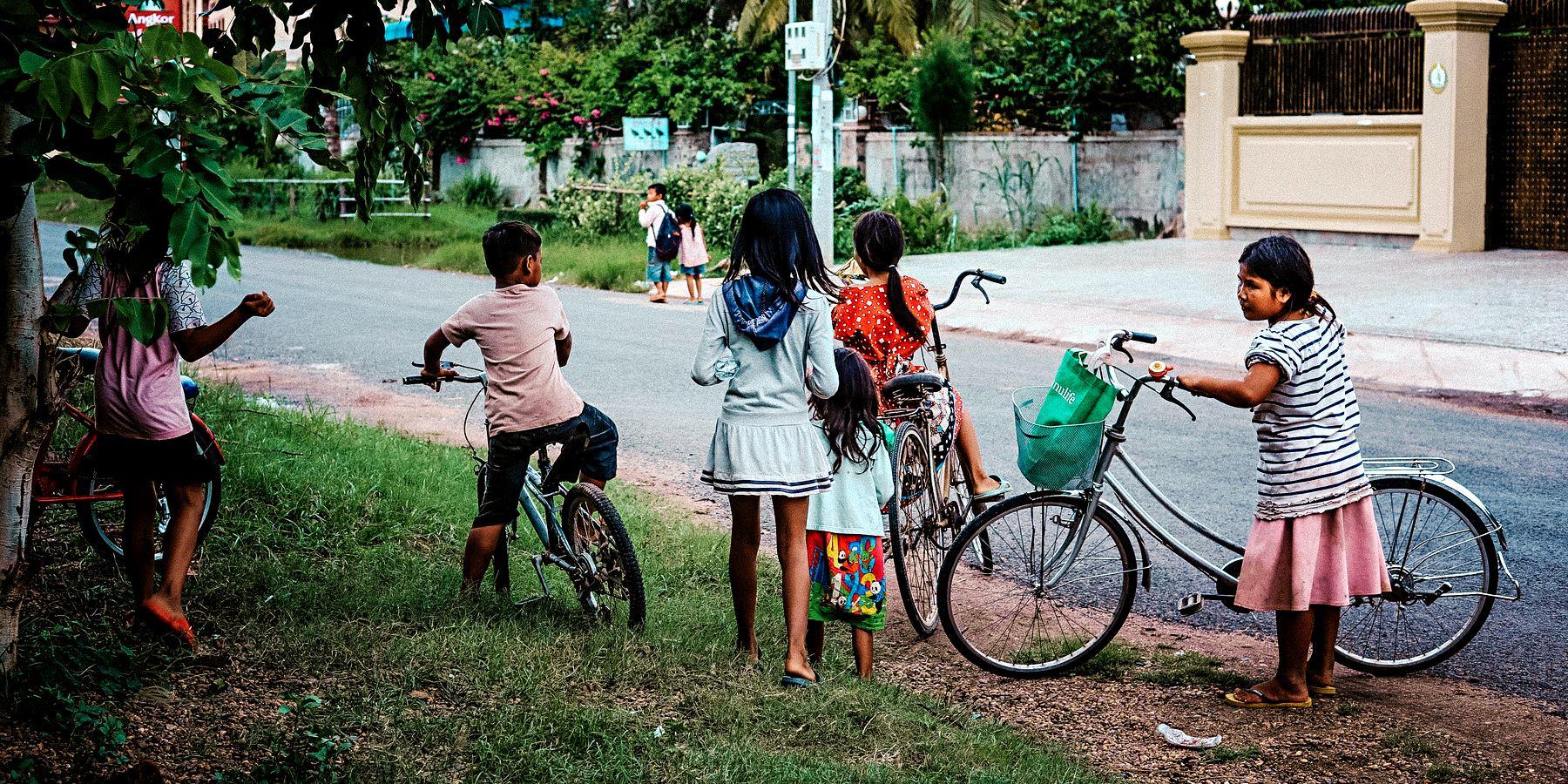
The programme is based in Siem Reap in northwestern Cambodia, best known as the gateway to Angkor Wat, the 12th-century UNESCO World Heritage temple complex. The city combines cultural heritage with a lively modern atmosphere of markets, Khmer cuisine and community life, and Buddhist monks have a strong presence because of its historic temples. Cambodia has seen significant reductions in overall poverty, but people remain marginalised on the basis of gender, geography, ability and ethnicity. English language, the gateway to business and higher education, is only taught to a minority of young people hence its focus in the program.
Siem Reap has a tropical climate with two seasons: a cooler, drier season from November to April (December and January the most comfortable, April the hottest at up to around 45C) and a wet monsoon season from May to October with warm temperatures and frequent afternoon or evening rain. The base sits centrally but in a quiet corner of the city on large, calm grounds. The time zone is Indochina Time (GMT+7).
Volunteering in Cambodia
Siem Reap is shaped by tourism to Angkor, and the benefits of that economy are unevenly distributed. The education work here is aimed at the people it reaches least.
Volunteer placement FAQs
What does a typical week look like?
Fieldwork is around 35 hours per week, Monday to Friday. On teaching projects you can expect to spend at least an hour a day working with children, with time also given to lesson preparation and support tasks. Days can be busy and schedules change, so flexibility helps. Weekends are usually free for rest or travel.
The programs run from Monday to Friday every week. The day is split into morning sessions, a break back at the hotel during the heat of the middle of the day, then afternoon / evening sessions. Morning sessions include an informal morning class at Wat Damnak pagoda supporting women and monks English learning, novice monks English classes, teaching industry language to a women's sewing program at the Wat, or supporting English classes in a rural primary school. Afternoon and evening sessions can include supporting English lessons at Wat Damnak Education Centre for community members, teaching an evening English class to monks at Wat An Kau Sa, and supporting English lessons in a foundation primary school in a rural area (different from the morning). An option exists to support Sunday programs to rural girls boarding in Siem Reap to obtain an education.
Where will I stay?
Accommodation is in shared single-gender dormitory rooms (one room of four, one of three and two of two) with en-suite bathrooms, air conditioning, a fridge and a hairdryer. There is running water and Western-style flush toilets, bedding and towels are provided, and there is a swimming pool on site. Private rooms with double beds can be booked for an additional US$15 per night. Facilities may be more basic than you are used to, so it helps to travel with an open mind.
What does the network do in Siem Reap?
It runs year-round education and community programmes in Siem Reap, Cambodia: children's learning and development sessions, adult English classes, gender-equality workshops with girls and women, and health, nutrition and sustainability activities. All projects are locally led and shaped by partner priorities.
Who can volunteer?
How long can I volunteer for?
Do I need previous teaching or volunteering experience?
What is provided as part of the programme?
How do meals and dietary requirements work?
How do I get there, and what are the arrival arrangements?
Do I need a visa and travel insurance?
You need a valid passport with at least six months' validity from your arrival date. Most participants obtain a Tourist Visa (T Visa) or Business Visa (E Visa); these can be arranged before arrival via the official Cambodian government website, which takes a minimum of three business days. Comprehensive travel insurance covering medical and evacuation costs is compulsory.
What health and safety support is in place?
Staff are trained in emergency protocols and are qualified first aiders, and every location has a comprehensive first-aid kit. Health and safety briefings are given on arrival. There are several medical clinics in Siem Reap, including a 24/7 clinic a short tuk-tuk ride from the accommodation and a hospital about 5 km away. Only bottled or filtered water should be used.
How much spending money should I budget?
Participants typically spend around USD 40 per week on things like a mobile SIM, snacks and local outings while on base. Weekend excursions cost more and vary with the season. Carrying an emergency card approved for international use is recommended for unexpected costs. There are weekend opportunities to travel further afield - to Phnom Penh and the Cambodian Islands of Koh Rong and Koh Rong Samlouen.
How did the programmes start in Cambodia?
The first community hub in Cambodia opened in 2018 in Kampong Cham, on the Mekong River, beginning with English workshops at a local university partner and later expanding into healthcare and women's empowerment work. In 2022 the work moved to Siem Reap, including a partnership with a local pagoda to teach English to Buddhist monks. It currently supports English language learning in a group of primary schools, two Wats, a communiuty education program, and an NGO run by monks.
How does the network measure its environmental impact?
Alongside its education and community work, the network tracks environmental activity such as site clean-ups, plastic waste collected and environmental workshops, and it monitors the carbon footprint of its operations. On average each participant generates about 46 kg of CO2 emissions per week during their stay, and the network works to reduce its environmental impact. The social enterprise hotel aims to be plastic free, has an onsite hydroponic garden for vegetable production, and uses non chemical environmentally friendly mosquito control measures.
What's expected of me in the field, and will I teach on my own?
Your main role is to support the local class teacher as a native English-speaking role model and to run enrichment activities; independent teaching is not required. Everyone completes a background check and child-protection and safeguarding training, with clear guidance on interacting with children and how to report concerns, before any work begins. Responsible-technology, photography and gift-giving policies apply, and free-time conduct is expected to reflect the same respect for local laws and customs.
Can I volunteer in Cambodia?
Yes. The Impact Network Foundation works with one partner organisation in Cambodia: Siem Reap Education and Community Development Projects, based in Siem Reap. You apply to it directly through this site.
What NGOs are there in Cambodia?
The NGO in the Impact Network in Cambodia is Siem Reap Education and Community Development Projects, an independent community development organisation working in Siem Reap, in north-west Cambodia. It is one of eight NGOs in the network, and the network is deliberately small — every organisation in it is locally run rather than a field office of an international charity.
Are there NGOs in Siem Reap?
Yes — Siem Reap Education and Community Development Projects works in Siem Reap, in north-west Cambodia. Its work is education and community development work.
What volunteer work can I do in Cambodia?
Education and community development work. Education and community learning with novice monks, children, women and other underserved groups — several distinct programmes rather than a single classroom placement.
How long can I volunteer in Cambodia for?
Placements run to fixed start dates set by the project, so the dates are published in advance rather than chosen by you.
Is this a local NGO or a volunteer agency?
Siem Reap Education and Community Development Projects is an independent, locally run organisation. The Impact Network Foundation does not operate it, staff it or direct its work — the Foundation exists to connect volunteers to organisations like it and to publish what they achieve.
How do I apply to volunteer in Cambodia?
Apply on the Siem Reap Education and Community Development Projects page on this site. Every applicant then has a short one-to-one call before a place is confirmed, so you can ask anything and the organisation can check the placement is a good fit.
Group bookings
We also host school groups, university groups, under-18 cohorts and bespoke groups.
School group info University group info U18 cohort info Bespoke group info