
Tenerife Cetacean Project
Run by MutatioMare
Advancing marine conservation and scientific research in the Canary Islands.
About MutatioMare
Operating since 2021
Advancing marine conservation and scientific research in the Canary Islands.
MutatioMare is a local Canarian association based in Tenerife, focused on marine conservation and research and dedicated to advancing scientific understanding of marine animals and their ecosystems. Through research, education, innovation and community engagement it generates knowledge that informs conservation action and promotes the long-term protection of marine biodiversity.
Its objectives are to:
- Conduct high-quality scientific research on cetaceans, sea turtles, seabirds and other marine species — collecting and analysing robust data on their ecology, behaviour, distribution and conservation to monitor marine ecosystems, assess human impacts, and support evidence-based management of marine protected areas and conservation policy.
- Complete land-based biodiversity surveys to better understand the species found on the island and the pressures they face, supporting the protection of endemic species and better land management.
- Promote environmental education for students, participants, locals and tourists to inspire more sustainable ways of coexisting with nature, and support the next generation of marine scientists and conservation leaders through training, internships, field experiences and research.
Project work
Marine research & monitoring
Boat-based cetacean surveys with photo-identification, alongside sea turtle, seabird and land-biodiversity monitoring — building robust, long-term data to inform conservation and the management of marine protected areas.
Education & sustainable seas
Environmental education for students, locals and visitors, training the next generation of marine scientists, and promoting ethical, sustainable whale and dolphin watching.
Day to day, the work includes training in cetacean identification and cataloguing; boat-based cetacean monitoring and photo-identification in the Teno-Rasca reserve; land surveys of boat traffic to assess threats to whales and dolphins; bird and rock-pool biodiversity surveys; beach cleans and microplastic collection; citizen-science data entry; sustainable-tourism practice such as ethical whale and dolphin watching; and environmental education and community outreach.
Approach
This is a local marine conservation organisation that monitors dolphin and pilot whale populations around a protected marine reserve, providing long-term, consistent data to support conservation decision-making and sustainable tourism. Its objectives include monitoring cetacean populations, supplying data to conservation partners, raising public awareness of marine ecosystems and endangered species, and assisting with local coastal waste management.
Work aligns with UN Sustainable Development Goals 4, 6, 13, 14, 15 and 17. The organisation promotes ethical, sustainable whale and dolphin watching and supports local authorities in tourism decisions, while running its research station along sustainable lines with energy-efficient fixtures, a largely plant-based menu, an on-site garden and low-carbon transport.
Impact
The project publishes annual figures on its cetacean monitoring, biodiversity surveys, coastal clean-ups and community education. The metrics below are grouped by year; the short-finned pilot whale photo-identification catalogue is cumulative and shown against the point at which each total was recorded.
2025
2024
2023
Milestones
- 2021the project launched, partnering with REDPROMAR to monitor dolphin and pilot whale populations around the Teno-Rasca Marine Reserve, and introduced a citizen-science island conservation programme.
- 2022moved into its current research station and continued land surveys, beach cleans, citizen-science databases and community outreach.
- 2023first recorded sightings of false killer whales and Risso's dolphins; the pilot-whale photo-ID catalogue reached 500 identified individuals.
- 2024milestone sightings including a juvenile Cuvier's beaked whale, Blainville's beaked whales, a sei whale and a pygmy sperm whale; bird surveys began; the catalogue reached 600 identified pilot whales; third anniversary marked in August.
- 2025first sighting of a juvenile humpback whale. Ongoing work includes land surveys of boat movements, beach cleans, contributions to citizen-science databases such as eBird and iNaturalist, and environmental education and community outreach.
Highlights
- Tenerife's west coast was declared a Whale Heritage Site for cetacean conservation in 2021 - the first Whale Heritage Site in Europe.
- The surrounding waters are among the best places on the planet for whale and dolphin watching, with as many as 30 species of cetaceans present.
- The pilot-whale photo-ID catalogue grew from 500 identified short-finned pilot whales (Dec 2023) to 600 (Jul 2024).
- Data partners include RedPROMAR (Government of the Canary Islands biodiversity network), eBird, and ocean citizen-science platforms; the project also works alongside local marine organisation Whale Express in the Teno-Rasca Reserve.
- Endangered or threatened species recorded include fin whales, sperm whales, false killer whales and loggerhead turtles.
- Tenerife receives approximately 5 million tourists annually - a key pressure the project's sustainable-tourism work is designed to address.
Setting
The project is based in southern Tenerife (Adeje), the largest of the Canary Islands, Spain, on an island dominated by the sometimes-snowy active volcano Mount Teide. In 2021 the island's west coast was declared a Whale Heritage Site - the first in Europe - and the surrounding waters, including the Teno-Rasca Marine Reserve, are among the best places on the planet for whale and dolphin watching, home to as many as 30 species of cetaceans.
Tenerife's climate is mild and subtropical year-round: winters (November-March) average 18-22C with occasional rain in the north, and summers (April-October) average 24-28C, occasionally exceeding 30C in the south. The island is a densely populated tourist destination receiving approximately 5 million visitors a year, which is both a pressure on the marine environment and part of the conservation challenge the project addresses.
Meet the local team


Volunteering in the Canary Islands
The waters between Tenerife and La Gomera hold resident whale and dolphin populations year-round, which is unusual and makes sustained study possible rather than seasonal. It is also one of the busiest whale-watching areas in Europe, so the research has direct management consequences.
Volunteer placement FAQs
What does a typical week look like?
Weekdays start early with an optional run or swim, then breakfast, station duties and a team briefing. The main fieldwork block begins around 9am, either on the inflatable motorboat collecting cetacean data or on land-based surveys of boat traffic, plus beach clean-ups and, on some programmes, bird or rock-pool surveys. After a group lunch, afternoons are given over to data input and analysis, followed by a debrief, communal dinner and free time. Survey boat trips run three times a week for two hours, and the first week of every programme is dedicated to training. Weekends are free.
Project work runs Monday to Friday; weekends are free. Daily rhythm: breakfast 07:30-08:30, lunch 11:45-12:45, dinner 19:00, everyone back at base by 22:00.
| Day | Morning | Afternoon | Evening |
|---|---|---|---|
| Monday | Boat survey | Data entry and fin-ID | Free time, then dinner |
| Tuesday | Land survey (boat-traffic monitoring) | Environmental clean-up | Free time, then dinner |
| Wednesday | Boat survey | Data entry and fin-ID | Free time, then dinner |
| Thursday | Bird survey | Biodiversity and rock-pool survey | Free time, then dinner |
| Friday | Boat survey | Data entry and fin-ID | Free time, then dinner |
| Sat-Sun | Free — weekends are yours to explore the island | ||
Where will I stay?
You stay in mixed shared dormitories in rooms reserved for the project, within a hostel about a 15-minute walk from the beach and 5–10 minutes from shops. The communal kitchen and bathrooms are shared with other guests, and staff stay on site. There is Wi-Fi, on-site laundry and a training workspace, and the station is run along sustainable lines, with energy-efficient lighting, low-flow water fixtures, an on-site vegetable garden and recycling and upcycling stations.
Where is the project based and what does it study?
The project is based in southern Tenerife (Adeje), Canary Islands, Spain. It monitors dolphin and pilot whale populations in the waters around the Teno-Rasca Marine Reserve, alongside sea turtles, birds and boat-traffic threats, and works to inform sustainable tourism and marine management.
What is included in a placement?
A placement includes an airport transfer from Tenerife South (TFS) on the start date, dorm-style accommodation at the research station with Wi-Fi, on-site laundry and a training workspace, three weekday meals with vegetarian and vegan options, species-identification and survey training in the first week, survey boat trips three times a week, and a full programme of surveys, beach cleans and citizen-science data entry.
Are meals provided?
Three meals are provided on weekdays, with vegetarian and vegan options; the station menu is over 70% vegetarian or vegan. Lunches often feature Canarian dishes prepared by a local cook. Weekends are free, so meals then are self-organised.
Who can volunteer, and are there age or experience requirements?
The volunteering programmes are open to anyone with an interest in marine conservation; no prior experience or qualifications are required, as the first week of every programme covers training in species identification and survey methods. Days are long and can be physically demanding due to the temperature and hilly terrain, so a reasonable level of fitness is needed.
How long can I stay?
Volunteering and fellowship placements run from 1 week up to 12 weeks; internships can run up to 24 weeks. Placements start every second week on a Saturday.
How do I join, and when do placements start?
Placements are booked in advance and hosted year-round for individuals and groups. They start every second week on a Saturday, and include accommodation, meals, training and structured conservation fieldwork.
What programmes are available?
Volunteering programmes cover Dolphin and Whale Conservation, Marine Conservation Research and Analysis, Sustainable and Ethical Ecotourism, and Citizen Science. There is also a Marine Conservation Internship with leadership responsibilities and a personal project, and a Marine Conservation Research Fellowship for independent, dissertation-level research with academic supervision from a qualified biologist.
What skills and training will I gain?
The first week covers species and behaviour identification, photo-identification technique, use of hydrophones, survey techniques and equipment, and data collection and analysis. Across a placement you develop marine conservation practice, species identification, survey research methods, population ecology, and data management. Longer placements can take on leadership tasks such as leading surveys and mentoring newer participants.
Will I get to analyse the data I collect?
Yes. Most afternoons after the boat trip are spent cataloguing photos and entering behavioural and cohesion data into the local database, so you take part in analysis as well as collection.
What marine species might I see?
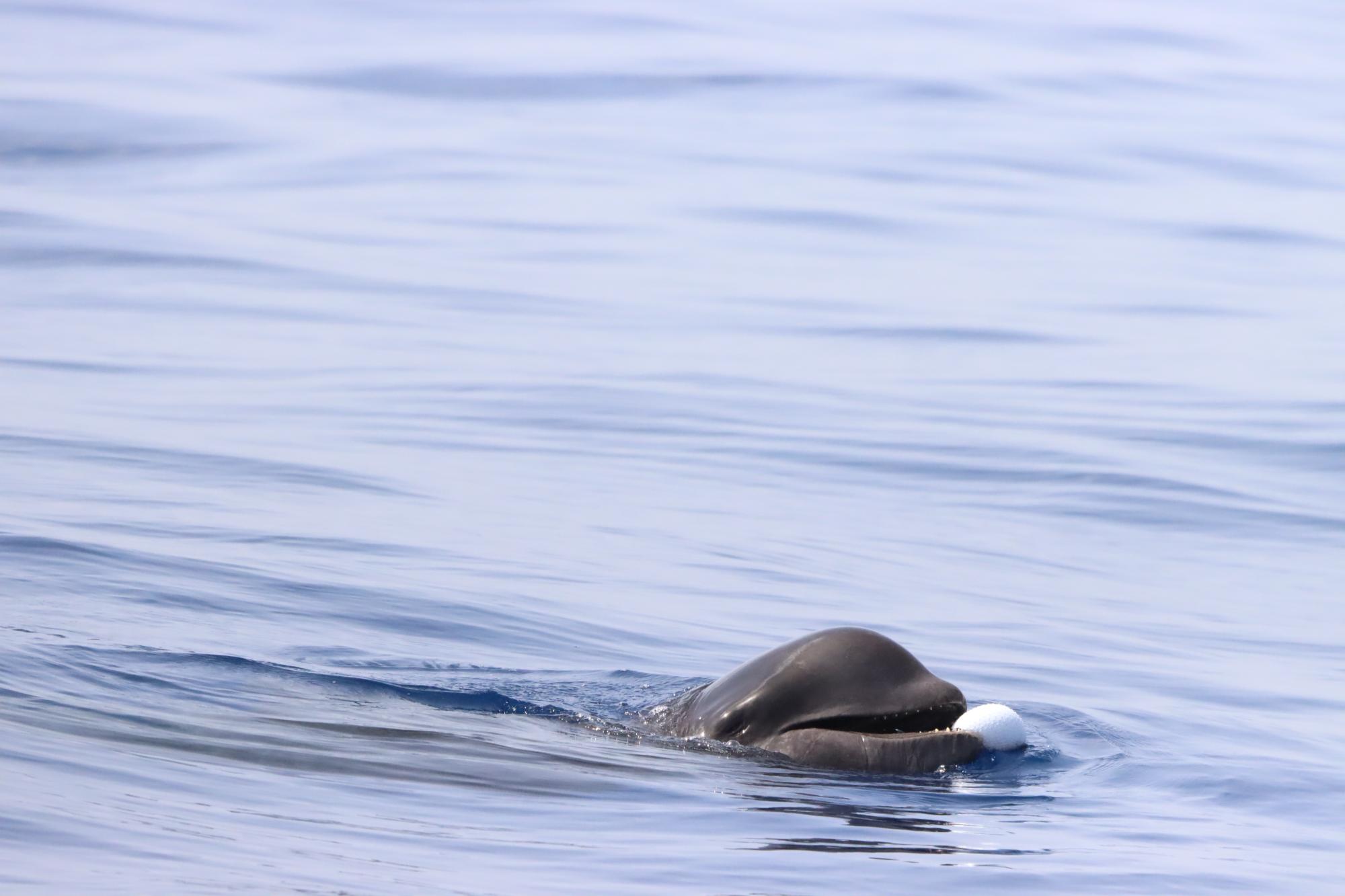
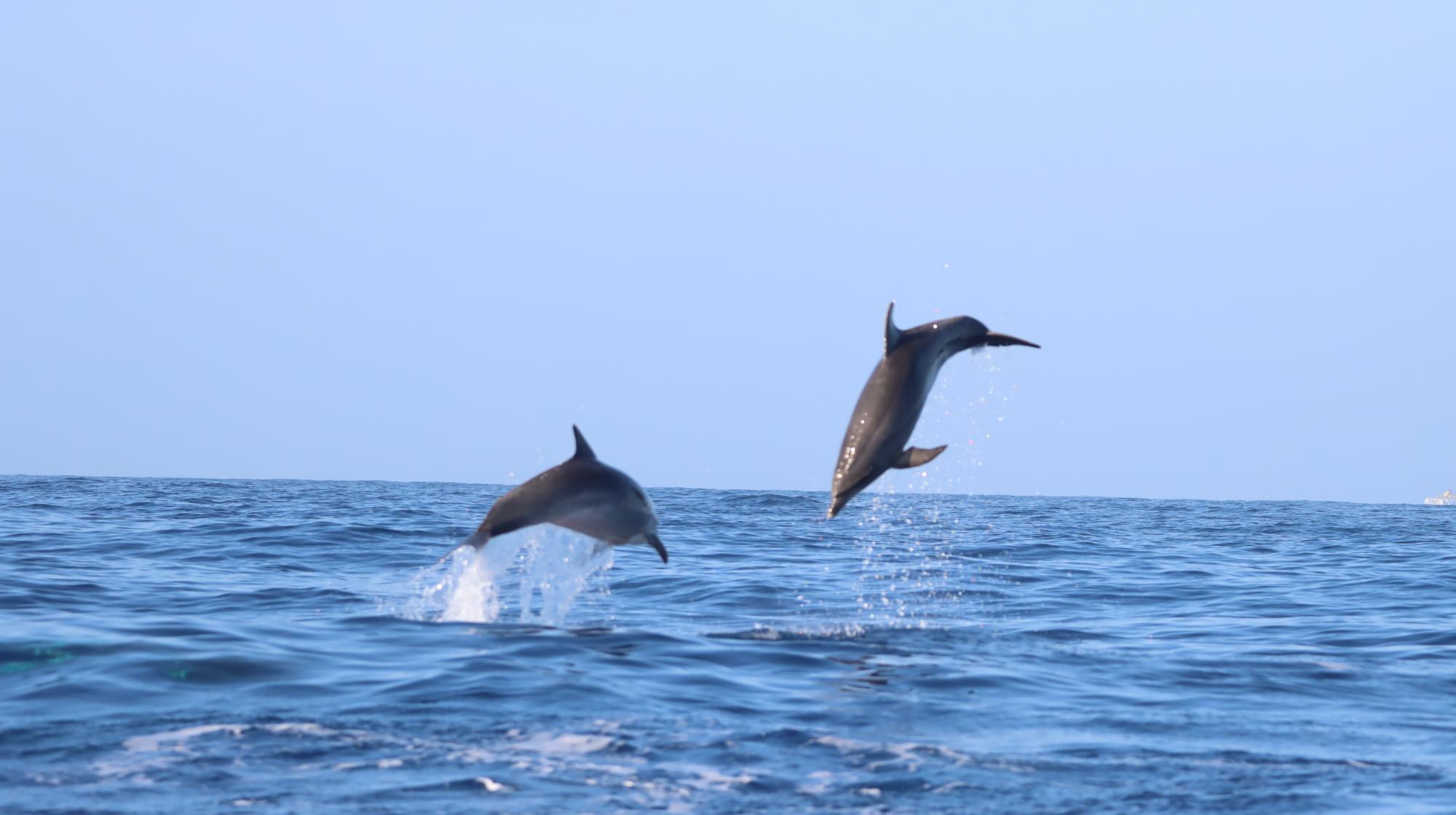
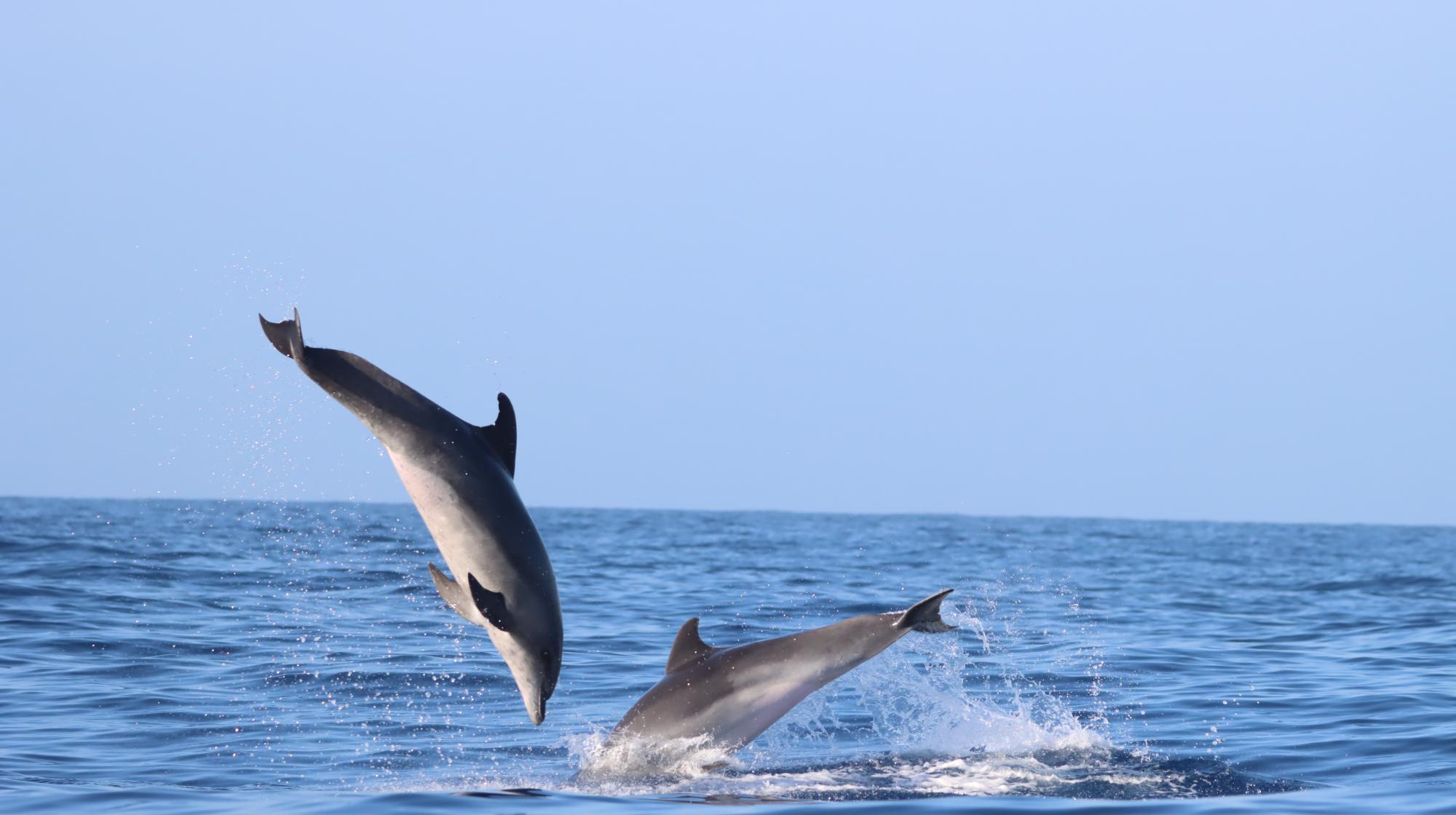
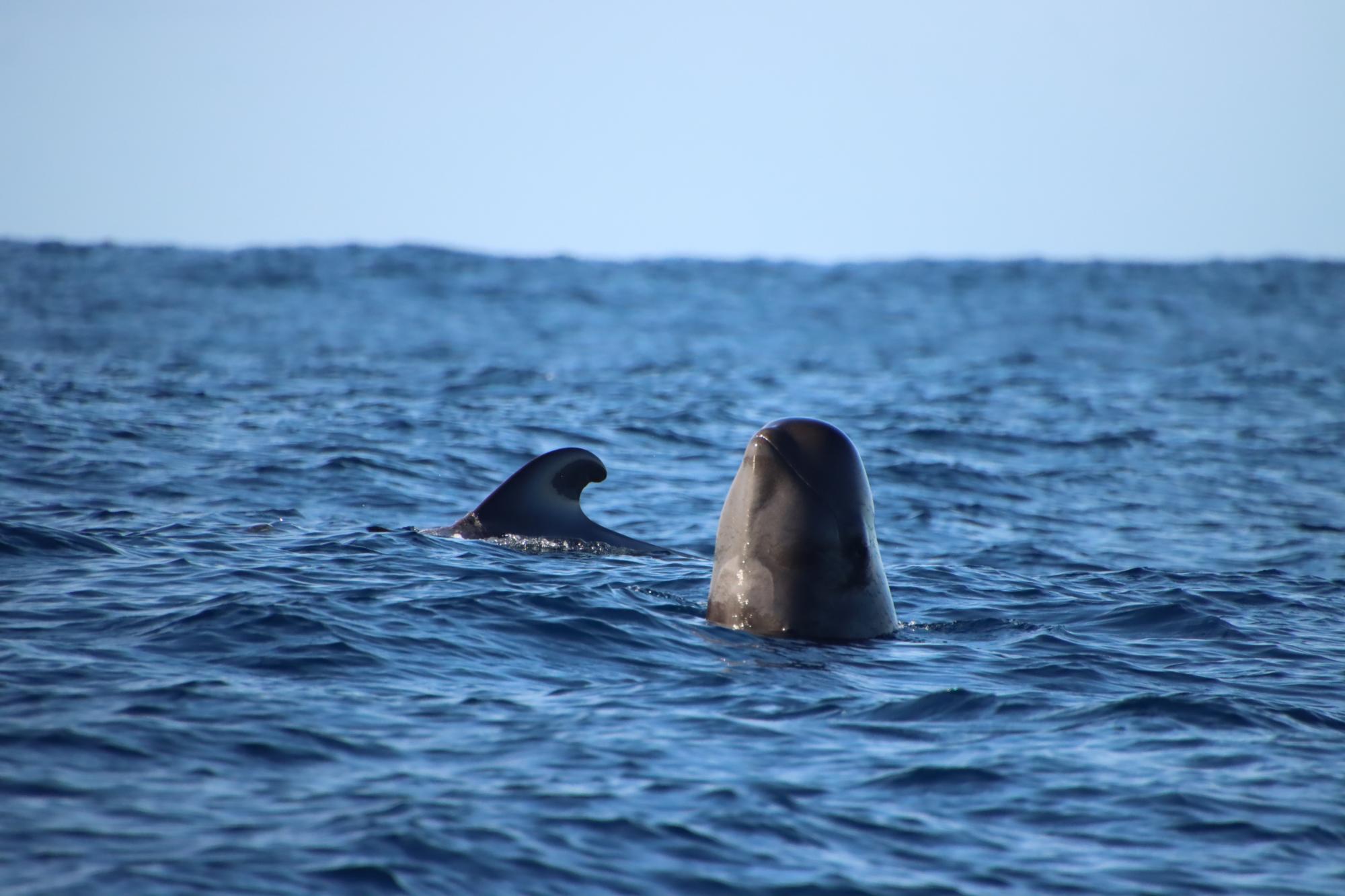
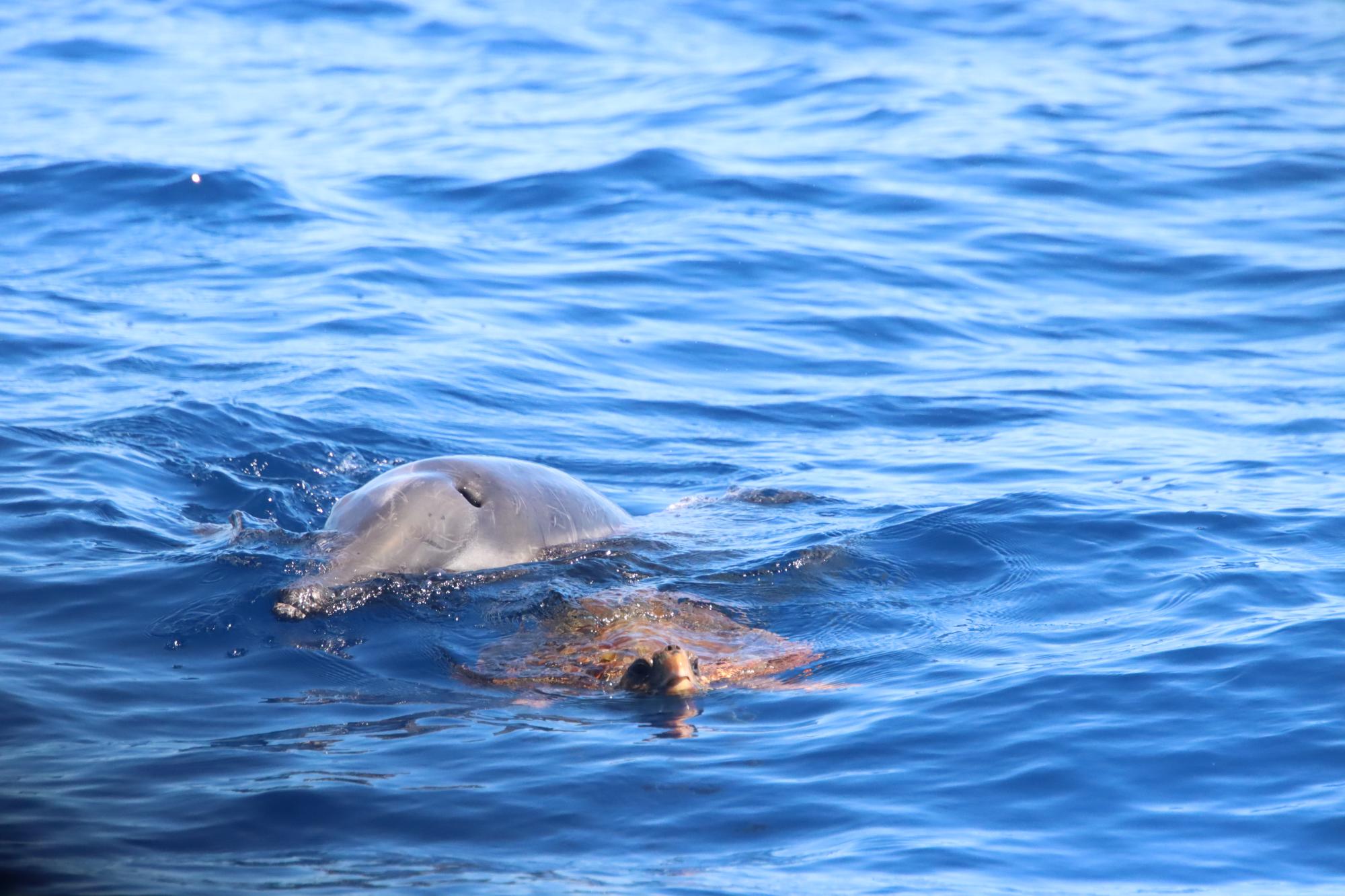
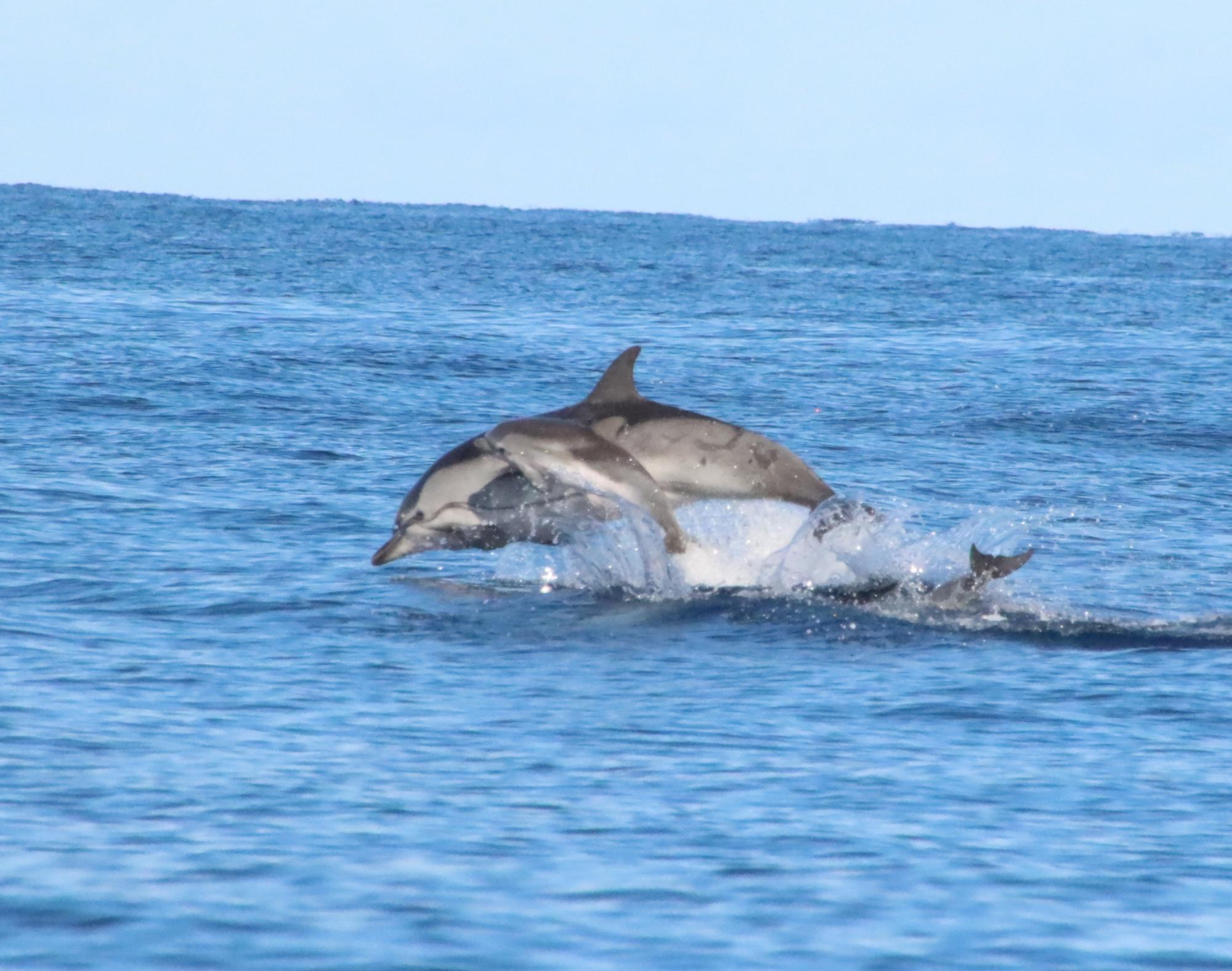
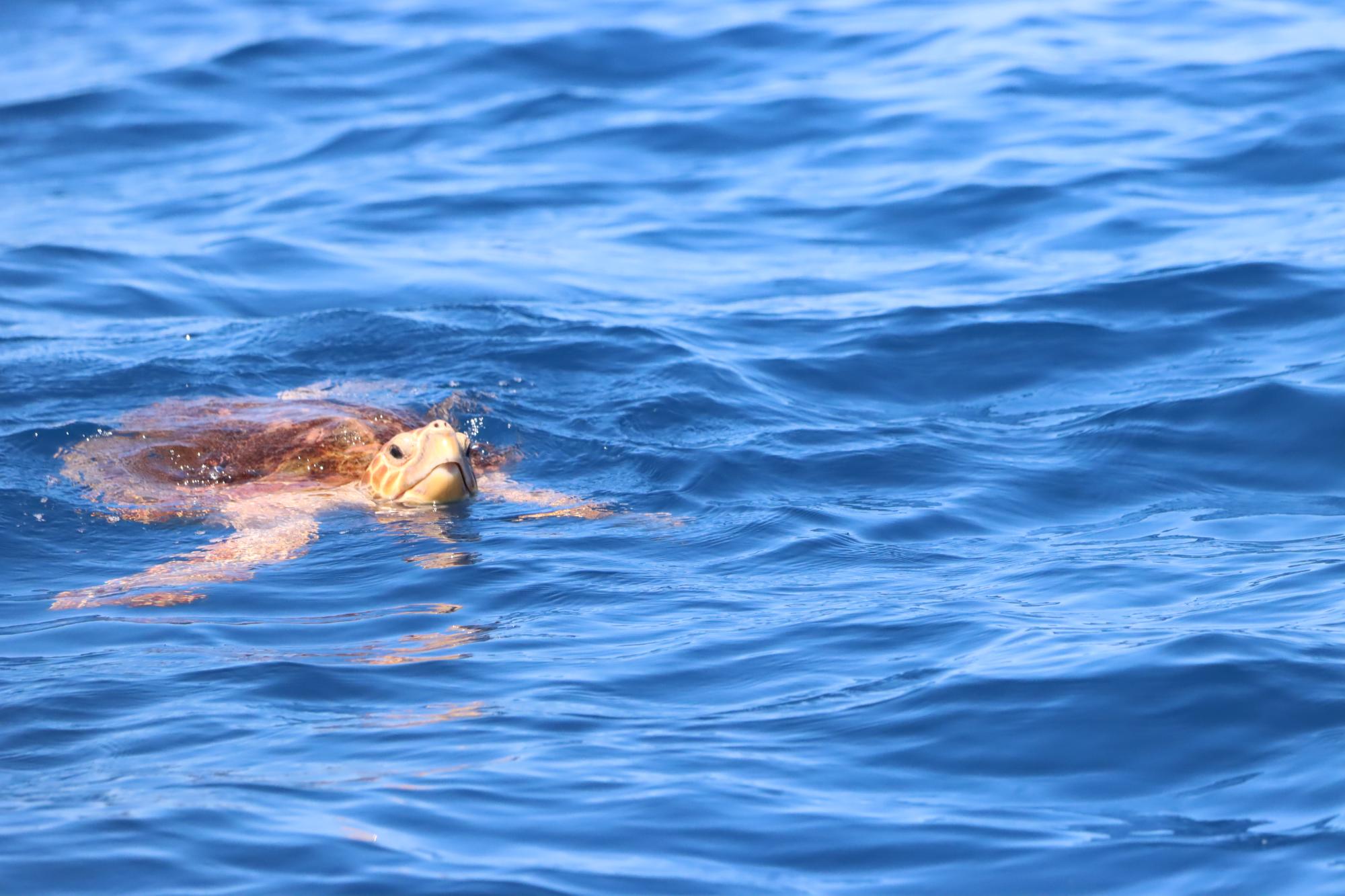
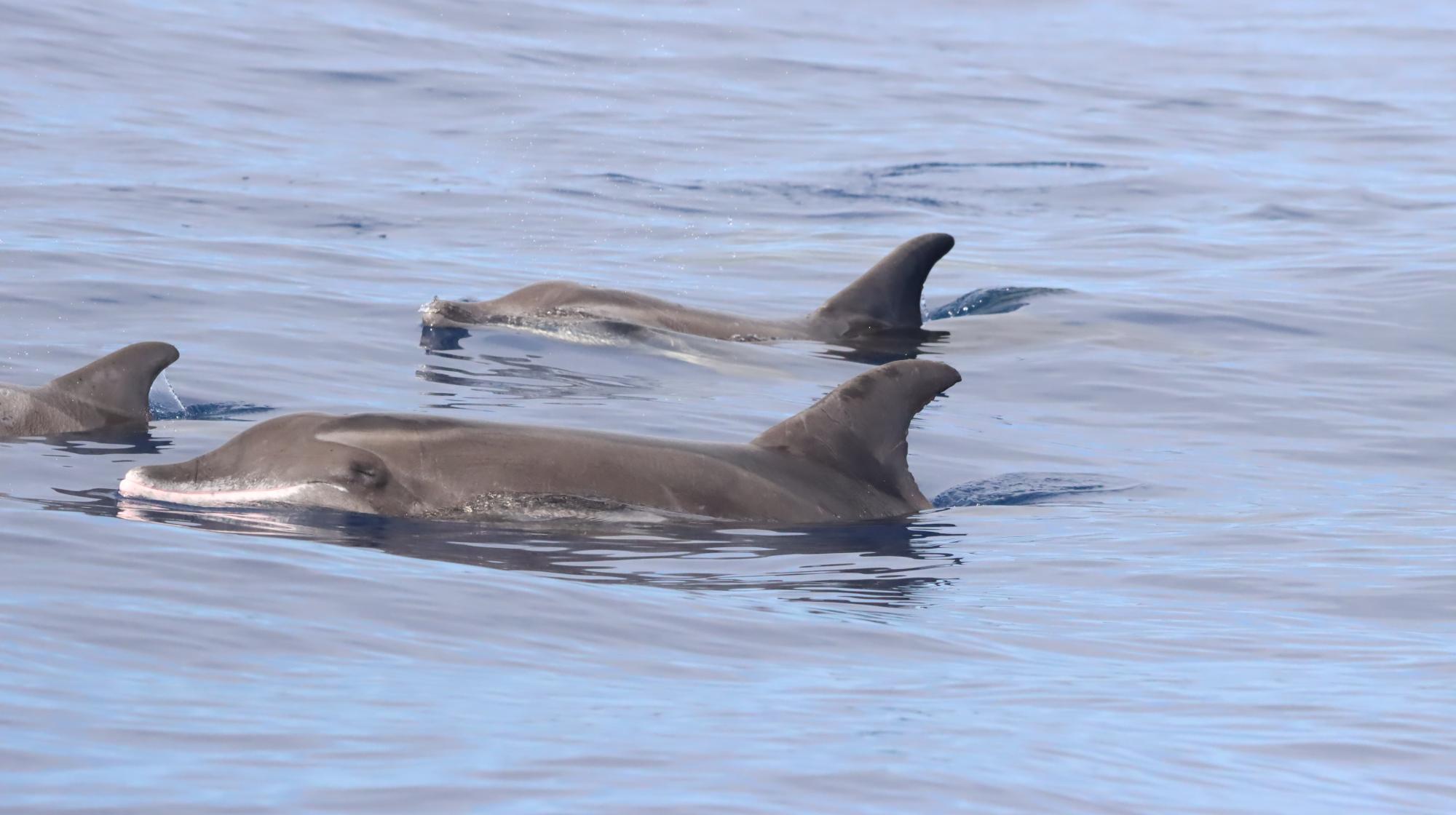
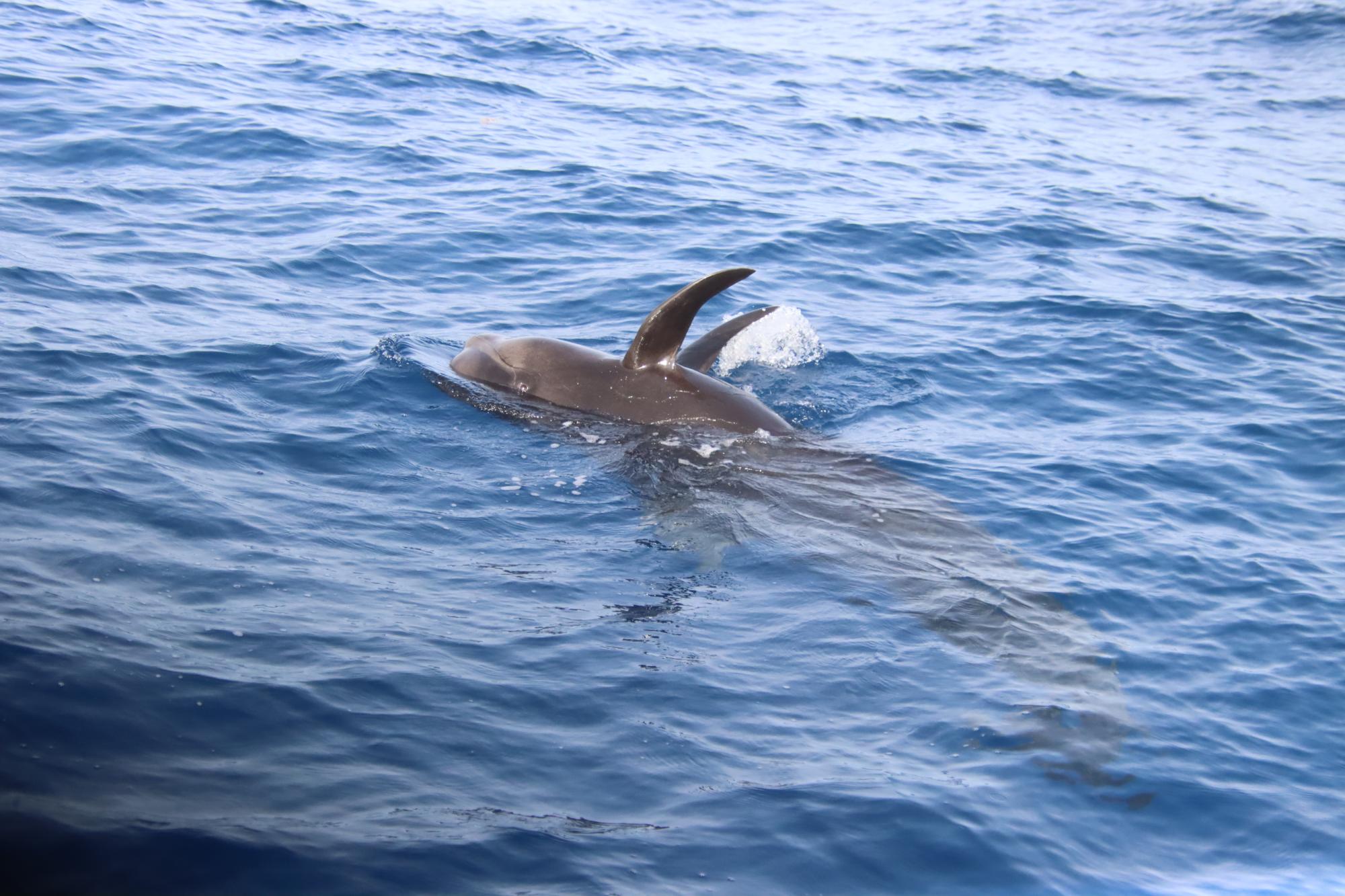
Commonly short-finned pilot whales and bottlenose dolphins; you may also see Bryde's whales, common dolphins, rough-toothed dolphins, false killer whales, Atlantic spotted dolphins and loggerhead sea turtles. Rarer sightings include beaked whales, orcas and sperm whales. Tenerife's waters host as many as 30 cetacean species.
What is the weather like in Tenerife?
Tenerife has warm, subtropical weather year-round. Winters (November-March) average 18-22C with occasional rain in the north; summers (April-October) average 24-28C and can exceed 30C in the south. It is well suited to year-round outdoor fieldwork.
Are there optional activities outside fieldwork?
Yes. Optional cultural and adventure add-ons include a Canarian cooking class, visits to Garachico old town, stargazing and camping in Teide National Park, kayaking and snorkelling, and a Mount Teide cable-car trip. Weekends are free.
What is the approach to working with the whales and dolphins?
All fieldwork is non-invasive: wildlife is observed from a distance with no feeding, touching or disturbance. Survey work from land and boat is designed to promote ethical, sustainable whale and dolphin watching and to gather data that helps protect the animals rather than intrude on them. Participants also take part in beach cleans and coastal waste monitoring as part of the conservation effort.
Where is the research station based?
The research station sits roughly a 10-30 minute walk from the town centre and the coastline at Puerto Colón, giving easy access to amenities and to the water.
What’s not included?
international flights, visa costs (if applicable), personal travel insurance (mandatory for participation) and personal expenses.
Can I volunteer in Spain?
Yes. The Impact Network Foundation works with one partner organisation in Spain: Tenerife Cetacean Project, based in Tenerife, in the Canary Islands. You apply to it directly through this site.
What NGOs are there in Spain?
The NGO in the Impact Network in Spain is MutatioMare, an independent conservation organisation working in Tenerife, in the Canary Islands. It is one of eight NGOs in the network, and the network is deliberately small — every organisation in it is locally run rather than a field office of an international charity.
Are there NGOs in Tenerife?
Yes — MutatioMare works in Tenerife, in the Canary Islands. Its work is whale and dolphin research.
What volunteer work can I do in Spain?
Whale and dolphin research. Marine conservation and scientific research on the cetacean populations in the waters off Tenerife — survey work, data collection and the research that underpins protection of the area.
How long can I volunteer in Spain for?
You can volunteer for anywhere between 2 and 12 weeks, and you choose your own start date rather than fitting a fixed intake.
Is this a local NGO or a volunteer agency?
MutatioMare is an independent, locally run organisation. The Impact Network Foundation does not operate it, staff it or direct its work — the Foundation exists to connect volunteers to organisations like it and to publish what they achieve.
How do I apply to volunteer in Spain?
Apply on the Tenerife Cetacean Project page on this site. Every applicant then has a short one-to-one call before a place is confirmed, so you can ask anything and the organisation can check the placement is a good fit.
Group bookings
We also host school groups, university groups, under-18 cohorts and bespoke groups.
School group info University group info U18 cohort info Bespoke group info
Internships
Everything a volunteer does, with more responsibility, assessed work and a final grade — built for students and recent graduates.
An internship covers everything a volunteer does, with more responsibility and an assessed element, and it suits students and recent graduates building field experience. No prior experience or qualification is needed — the first week covers training in species identification and survey methods, as it does for everyone.
Alongside the survey work every participant takes part in, interns assist staff with delivering surveys, prepare equipment for the day ahead, and take on data entry and analysis. You will also sit tests on cetaceans and sea turtles, and give presentations to staff and to other participants. Both contribute to a final grade awarded at the end of the programme.
You leave with hands-on field experience in data collection from boat, land and biodiversity surveys, practical data entry and analysis including fin identification, and leadership experience from running surveys and social activities for other participants. Every intern receives a certificate of completion and a professional recommendation letter to use in future job applications.
Interns staying four weeks or more can also take on a personal project. It is overseen and supported by staff and can cover anything related to the programme; past projects have been used both for university coursework and as the basis for a scientific publication.
Internships FAQs
Who can apply for an internship?
Anyone with an interest in marine conservation. No prior experience or qualifications are needed — the first week of every programme covers training in species identification and survey methods. Internships suit students and recent graduates looking to build field experience.
How is an internship different from volunteering?
Interns take on more responsibility and their work is assessed. Alongside the survey work every participant does, interns assist staff with survey delivery, prepare equipment, and take on data entry and analysis.
Interns also sit tests on cetaceans and sea turtles, and give presentations to staff and other participants. Both contribute to a final grade awarded at the end of the programme.
Is the internship assessed, and do I get a grade?
Yes. Tests on cetaceans and sea turtles, and presentations given to staff and other participants, both count towards a final grade awarded at the end of the programme.
How long do internships run?
From two weeks upwards. Interns staying four weeks or more can also take on a personal project.
Can I do a personal project or use this for my degree?
Yes, if you stay four weeks or more. The project is overseen and supported by staff and can cover anything related to the programme. Past projects have been used both for university coursework and as the basis for a scientific publication.
What do I come away with?
Hands-on field experience in data collection from boat, land and biodiversity surveys; data entry and analysis including fin identification; and leadership experience from leading surveys and social activities for other participants.
Every intern receives a certificate of completion and a professional recommendation letter for future job applications.
Is there a fee, and when do I pay?
Yes — an internship is a paid placement, and the fee covers your accommodation, food, training and in-country support. Applying is free, and nothing is due until a place has been offered and you have accepted it.