Dawasamu Community Project
Locally led education and health work across the villages of Dawasamu, Fiji.
About Dawasamu Community Project
Operating since 2010
Locally led education and health work across the villages of Dawasamu, Fiji.
The Dawasamu Community Project is a community development organisation working alongside the villages of Dawasamu and neighbouring Bureiwai District across education, health and wellbeing, early childhood development, and sustainable resource management. The villages are traditional Fijian settlements with limited sources of income that have remained largely outside the tourism economy, and residents depend heavily on the land and sea for their food and livelihoods.
Key challenges include limited access to health education, limited training and support for community health workers, and the absence of formal waste management services. The project's work focuses on practical, locally-led responses: strengthening preventive health knowledge, supporting community health workers, building early childhood development and literacy programmes, running community-based waste management and recycling, and improving water security through rainwater harvesting and sanitation support.
The team has worked in Silana since 2013 and maintains close, long-standing relationships across the district.
- Works continuously in and around Silana village since 2013, across nine villages in Dawasamu District and four in Bureiwai District.
- Invited in 2023 to advise as a consultant on Fiji's national rural waste management manual.
- Community-based waste management adopted across all communities in Dawasamu District, with recycling points in both districts.
- Led debris clearing and recycled around 20 tonnes of damaged roofing after Severe Tropical Cyclone Winston in 2016, while rebuilding local learning spaces.
- Holds a licence to teach from Fiji's Ministry of Education, enabling afternoon literacy lessons for local students.
- Aligns its work with UN Sustainable Development Goals 3, 4, 6, 10, 13 and 17, framed around locally-led priorities and capacity building.
Project work
Education & community
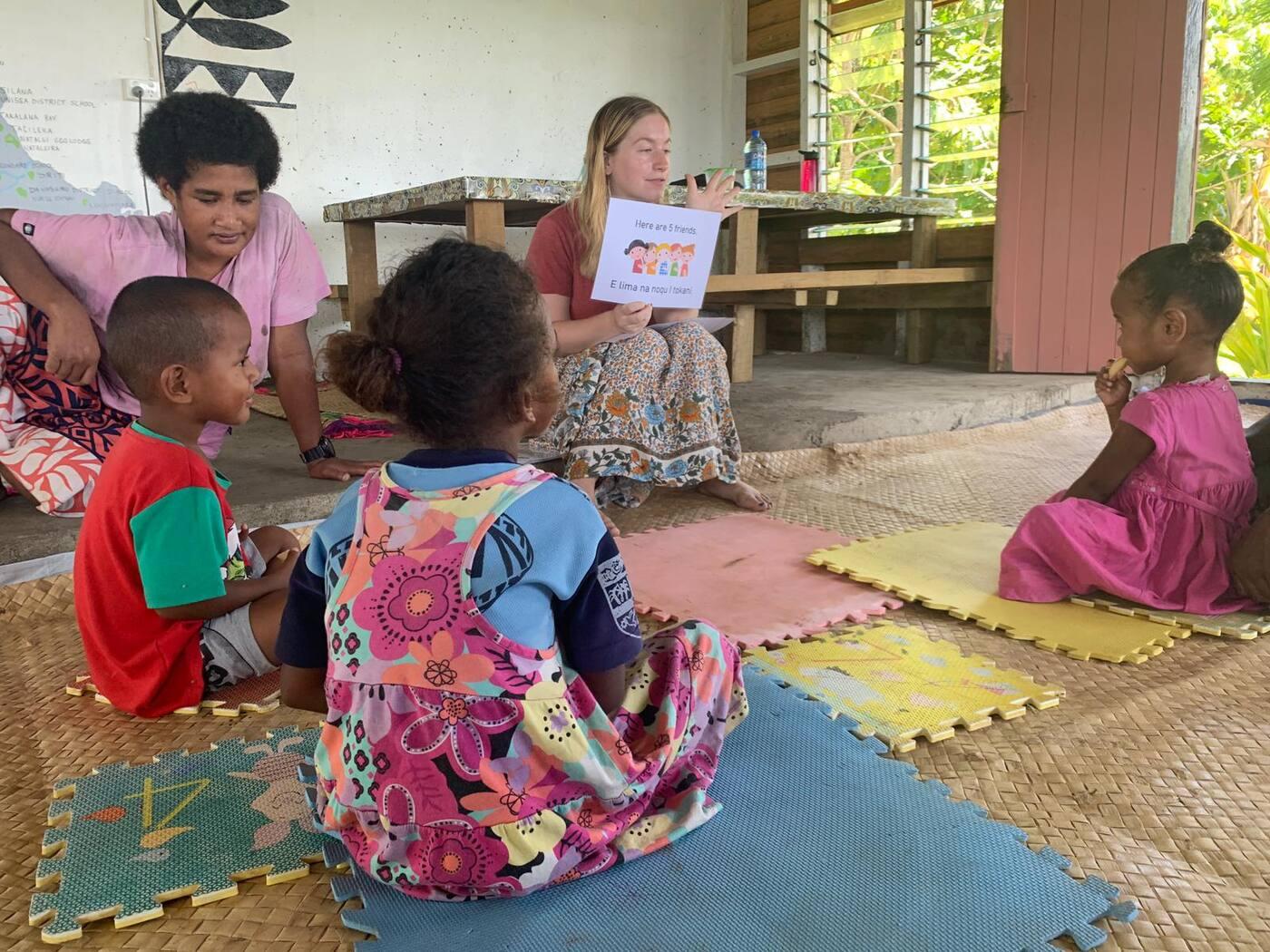
The Dawasamu Community Project runs early childhood development for children aged 3-5, afternoon literacy lessons for students aged 10-13, and programmes in health and nutrition, gender equality and sustainable resource management, including community waste management, recycling and rainwater harvesting.
Community-led & ethical
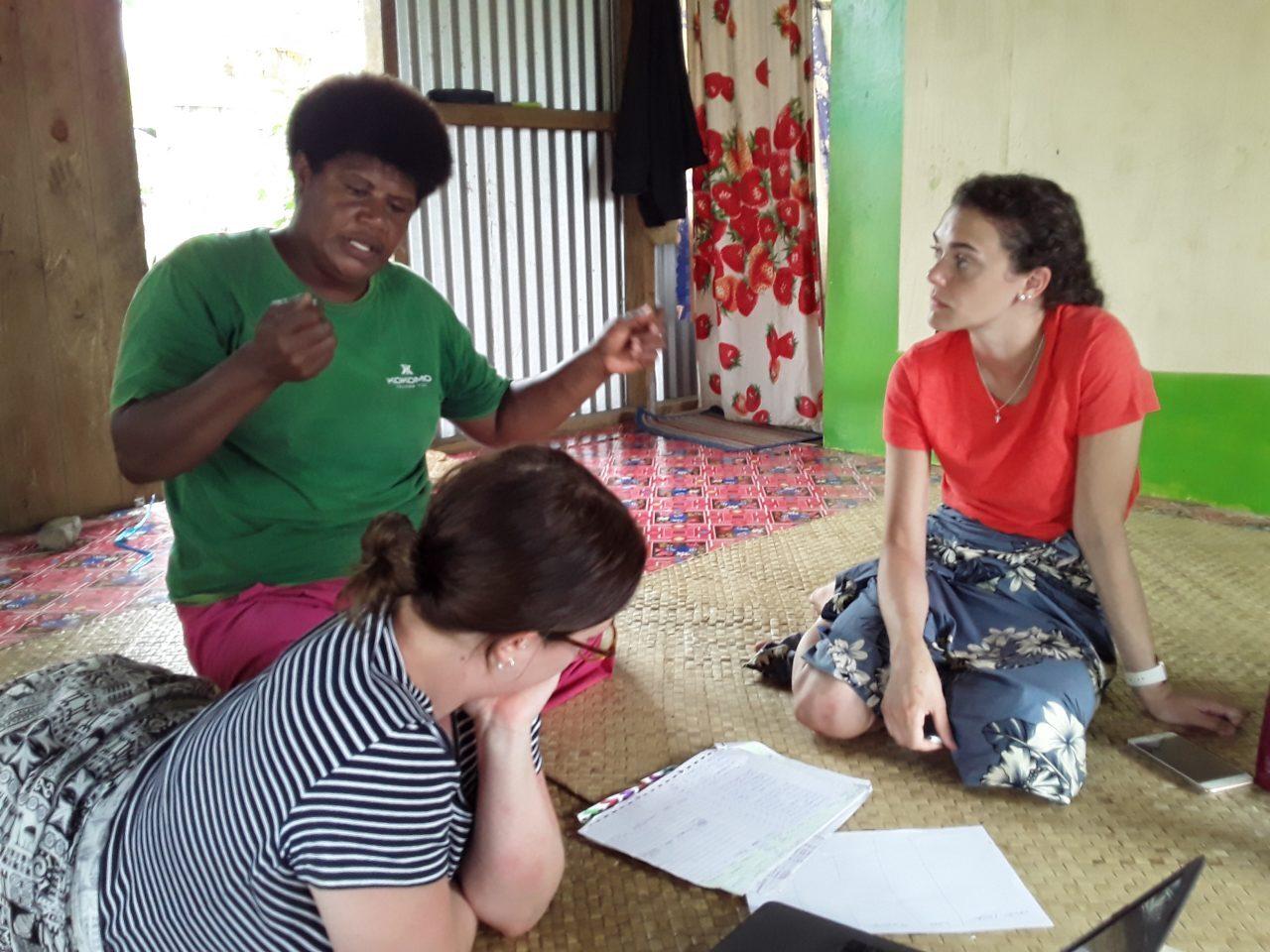
Work is coordinated directly with village leadership, community health workers and the Dawasamu district nurse under a Memorandum of Understanding, spanning nine villages in Dawasamu District and four in neighbouring Bureiwai. Silana is a 'dry' site out of respect for that agreement, and the project follows child protection and safeguarding practices and locally-led, do-no-harm engagement.
Approach
This is a community development organisation working alongside the villages of Dawasamu and neighbouring Bureiwai across education, health and wellbeing, early childhood development and sustainable resource management. All work is locally-led and guided by partner priorities, with a focus on continuous knowledge exchange and building the capacity of local healthcare workers, caregivers and community groups.
The approach is inclusive, culturally sensitive and grounded in a long-term Memorandum of Understanding with the village. Work aligns with UN Sustainable Development Goals 3, 4, 6, 10, 13 and 17, and emphasises do-no-harm engagement alongside practical sustainability measures such as rainwater harvesting, recycling, composting and reforestation.
Impact
The Dawasamu Community Project is based in the rural village of Silana, in the district of Dawasamu on Viti Levu, Fiji. Working alongside local schools, the Silana Women's Group and neighbouring districts, the project runs practical workshops and sessions across children's learning and development, health and nutrition, gender equality and water security. The figures below record activity year by year, drawn from the project's own monitoring, and reflect the sessions delivered and the number of community members taking part.
2026
2025
2024
2023
Milestones
- 2010The project began after an approach from a local trust foundation to support rainwater harvesting and education work in Fiji.
- 2011Early water infrastructure work increased one village's water holding capacity by 10,000 litres, an education programme was established, and the first Fiji base opened.
- 2012A successful pilot education programme ran in Dawasamu District, and the team supported Red Cross flood relief in Nadi.
- 2013Construction began on a base in Silana village in collaboration with the local youth committee; education and community projects opened, and full-time literacy assistance began at Navunisea Primary School.
- 2014
- 2015Education programmes expanded to further schools across the district.
- 2016Severe Tropical Cyclone Winston caused widespread damage; the team relocated temporarily and led debris clearing, recycling of damaged roofing (around 20 tonnes recycled) and rebuilding of learning spaces.
- 2016
- 2017Community-based waste management was adopted across all communities in Dawasamu District; recycling points and rebuilt school facilities (library, kindergarten) were completed.
- 2018A health programme launched, working with community health workers.
- 2019Waste management expanded into Bureiwai District; a school kitchen garden and shade house trials began.
- 2020Early childhood development began in three villages and a youth programme (ages 18-25) started in Silana before operations paused.
- 2022The base reopened; early childhood development for children aged 3-5 began.
- 2023A teaching licence was approved, enabling afternoon literacy lessons for students aged 10-13, and the project was invited to advise on a national rural waste management manual for Fiji.
Highlights
- The project has worked continuously in and around Silana village since 2013, building long-standing relationships across nine villages in Dawasamu District and four in Bureiwai District.
- In 2023 the project was invited to act as a consultant on the introduction of a national rural waste management manual for Fiji.
- Community-based waste management has been adopted across all communities in Dawasamu District, with recycling points established in both Dawasamu and Bureiwai districts.
- After Severe Tropical Cyclone Winston in 2016, the team led debris clearing and recycled around 20 tonnes of damaged roofing while rebuilding local learning spaces.
- The project holds a licence to teach from Fiji's Ministry of Education, enabling afternoon literacy lessons for local students.
- Silana is near Moon Reef, home to a resident pod of spinner dolphins, and Tova Peak, the third-highest mountain on Viti Levu (646m).
- Work aligns with UN SDGs 3, 4, 6, 10, 13 and 17, and is framed around locally-led priorities and capacity building rather than short-term intervention.
- On average each visiting participant generates about 47 kg of CO2 per week; the base runs a range of sustainability measures including rainwater harvesting, greywater systems, composting, recycling, mangrove reforestation and tree planting.
Setting
The project is based in the rural village of Silana, in the district of Dawasamu on Viti Levu, Fiji's largest island. Dawasamu sits in Tailevu Province, roughly a 2.5-hour drive from the national capital, Suva. Silana is a remote coastal village defined by dense jungle and volcanic mountainsides, with a strong iTaukei (indigenous Fijian) culture still led by chiefs and village headmen, and it is well known for its proximity to Moon Reef, home to a resident pod of spinner dolphins.
Fiji has three official languages, English, Fijian and Fiji Hindi, and English is widely spoken. The climate is warm and tropical year-round, with the dry season (May-October) averaging 23-25C and the wet season (November-April) averaging 26-27C. Fijian culture places importance on conservative dress, removing shoes and hats when entering homes and the village, and observing Sunday as a day of religion, family and rest.
Volunteering in Fiji
Dawasamu is a rural district on Fiji's main island, away from the resort coast. Work here is village-based and long-running, which is why continuity between volunteers matters more than any single placement.
Volunteer placement FAQs
What does a typical week look like?
Fieldwork runs Monday to Friday, around 35 hours per week. Days start early, at about 6:30 AM, and are spent delivering or preparing workshops and sessions in the village and local schools, depending on the programme and the needs of the project. Weekends are free, giving time to rest or explore the local area, though you should be back at the hub by Sunday dinner ready for the week ahead.
Where will I stay?
Accommodation at the hub is in shared, mixed-gender rooms with bunk beds, shared bathrooms and flushing toilets. The village site is ‘dry’ (no alcohol) in line with the community agreement. Facilities are more basic than many people are used to, so an open mind and a willingness to adapt are important. Everyone shares hub duties, including cleaning and other chores.
What does the Dawasamu Community Project do?
Where is the project based?
Who can take part as a volunteer?
Do I need previous experience or qualifications?
How long can I volunteer for?
What kinds of activities would I be involved in?
What is provided and what should I bring?
What are the meals like?
How do I get there and how does joining work?
Are there cultural expectations I should be aware of?
How is the project connected to the local community?
What safety and health support is in place?
What's expected of me when working in the community?
Can I volunteer in Fiji?
Yes. The Impact Network Foundation works with one partner organisation in Fiji: Dawasamu Community Project, based in the villages of Dawasamu, on Viti Levu. You apply to it directly through this site.
What NGOs are there in Fiji?
The NGO in the Impact Network in Fiji is Dawasamu Community Project, an independent community development organisation working in the Tailevu district of Viti Levu, Fiji's main island. It is one of eight NGOs in the network, and the network is deliberately small — every organisation in it is locally run rather than a field office of an international charity.
Are there NGOs in Dawasamu?
Yes — Dawasamu Community Project works in the Tailevu district of Viti Levu, Fiji's main island. Its work is education and community health work.
What volunteer work can I do in Fiji?
Education and community health work. Education and health work decided and delivered by the Dawasamu communities themselves. Volunteers support what the villages have already identified as the priority, rather than arriving with a project of their own.
How long can I volunteer in Fiji for?
Placements run to fixed start dates set by the project, so the dates are published in advance rather than chosen by you.
Is this a local NGO or a volunteer agency?
Dawasamu Community Project is an independent, locally run organisation. The Impact Network Foundation does not operate it, staff it or direct its work — the Foundation exists to connect volunteers to organisations like it and to publish what they achieve.
How do I apply to volunteer in Fiji?
Apply on the Dawasamu Community Project page on this site. Every applicant then has a short one-to-one call before a place is confirmed, so you can ask anything and the organisation can check the placement is a good fit.
Group bookings
We also host school groups, university groups and bespoke groups.