Puerto Morelos Reef Project
Run by MULUK
Reef monitoring and marine conservation on Mexico's Caribbean coast, part of the Mesoamerican Barrier Reef.
About MULUK
Operating since 2003
Reef monitoring and marine conservation on Mexico's Caribbean coast, part of the Mesoamerican Barrier Reef.
MULUK runs marine conservation and reef monitoring on the Mesoamerican Barrier Reef in partnership with Mexican government science agencies, universities and local NGOs.
- Works directly on the Mesoamerican Barrier Reef, the second-largest coral reef in the world and the largest in the Northern Hemisphere.
- Holds editing rights to the global AGRRA reef database and feeds data from six Puerto Morelos monitoring sites into it.
- Was granted official permission to lead the eagle ray population survey in the area.
- Runs an in-water coral nursery and has transplanted threatened Acropora corals, including 1,393 fragments planted in a single day in 2021.
- Helped train local fishing-cooperative divers as certified Rescue Divers, building local conservation capacity.
- Co-installed a solar-powered oceanographic data buoy tracking sea temperature, currents, wind and waves to support reef science.
Project work
Reef conservation
We monitor reef health on scuba using structured AGRRA transect surveys of coral, fish and benthos across six sites feeding the global AGRRA database, and run in-water coral nurseries that transplant threatened Elkhorn and Staghorn corals to rebuild the Mesoamerican Barrier Reef.
Community-led & ethical
The work is done through Mexican partners: federal agencies IMIPAS/CRIAP and CONANP (Puerto Morelos Reef National Park), UNAM's marine science institute, and NGOs including Healthy Reefs for Healthy People. Data is shared openly to support Mexican-led reef and fisheries management, and local fishers have been trained as certified reef surveyors and rescue divers.
Core work covers structured AGRRA reef-health surveys of coral, fish and benthos; in-water coral nurseries that transplant threatened Acropora corals; and monitoring of marine megafauna, including an eagle ray photo-ID population survey and sea turtle nesting patrols run with CONANP and the local community.
Further streams include lionfish and commercial-fisheries surveys shared with fisheries managers, seagrass and sargassum monitoring, and a solar-powered oceanographic data buoy. Community and coastal action ranges from beach and ocean clean-ups to environmental workshops and training local fishers as certified reef surveyors and rescue divers. All in-water work is done on scuba, and the project trains and certifies participants as part of the conservation programme.
Approach
This organisation runs marine conservation and reef monitoring on the Mesoamerican Barrier Reef in partnership with Mexican government science agencies, universities and local NGOs. Its work spans reef-health surveys, coral restoration, megafauna and sea turtle monitoring, invasive-species and fisheries data, and community action, all shared with partners so it supports Mexican-led coastal and fisheries management rather than operating in isolation.
Data is contributed to open-source databases and provided to decision-makers, and work aligns with UN Sustainable Development Goals 12, 13, 14, 15 and 17. The research station follows sustainable practices including a largely plant-based diet, refillable bottles, waste separation, recycling and reef and seagrass protection, and the project measures and reports its own carbon footprint.
Impact
The MULUK works along the Mexican Caribbean coast of the Yucatan Peninsula, monitoring and helping to restore the Mesoamerican Barrier Reef, the second-largest coral reef system in the world. In partnership with local research institutions, the project runs reef-health surveys using the AGRRA methodology across six monitored sites, tracks endangered species such as spotted eagle rays and sea turtles, restores coral, removes waste from local sites, and delivers environmental education. The figures below are drawn directly from the project's annual monitoring records and are grouped by year.
2025
2024
2023
Milestones
- 2003Marine conservation in the Mexican Caribbean began at Pez Maya, monitoring reef health within the Sian Ka’an Biosphere Reserve.
- 2004Work expanded to Mahahual.
- 2013A turtle project launched in Sian Ka’an.
- 2014Dive-training programmes developed.
- 2018Operations moved to Akumal, where coral restoration began.
- 2019From late 2018 the project moved to Puerto Morelos, following new partnerships with CRIP (now CRIAP/IMIPAS) Puerto Morelos and Healthy Reefs for Healthy People, concentrating on conserving and monitoring the local reef.
- 2020The Puerto Morelos base paused during COVID-19.
- 2021Reopened, and joined INAPESCA-led coral restoration (2021–2022).
- 2022Local fishing-cooperative divers trained as certified Rescue Divers with CRIAP and Mukul Ambiental.
- 2023Hosted AGRRA surveyor training with Healthy Reefs and CRIP and gained AGRRA database editing rights; launched a sea turtle nesting conservation programme with CONANP and the local community.
- 2024Started eagle ray monitoring at the C56 wreck; began sargassum monitoring with CINVESTAV; installed a solar-powered oceanographic data buoy with HRI, CONANP and UNAM.
- 2025Granted permission to lead the eagle ray population survey.
Highlights
- Works directly on the Mesoamerican Barrier Reef, the second-largest coral reef in the world and the largest in the Northern Hemisphere.
- Holds editing rights to the global AGRRA reef database and feeds data from six Puerto Morelos monitoring sites into it.
- Was granted official permission to lead the eagle ray population survey in the area.
- Ten notable IUCN Red List species in the area include Critically Endangered Elkhorn, Staghorn and Pillar corals and the Critically Endangered Nassau Grouper, plus Endangered Green sea turtles.
- Runs an in-water coral nursery and has transplanted threatened Acropora corals (e.g. 1,393 fragments planted in a single day in 2021).
- Helped train local fishing-cooperative divers as certified Rescue Divers, building local conservation capacity.
- Partners include Mexican federal agencies IMIPAS/CRIAP and CONANP, UNAM's marine science institute, and NGOs Healthy Reefs for Healthy People, Saving Our Sharks, Muluk AC and CoralWatch.
- Co-installed a solar-powered oceanographic data buoy tracking sea temperature, currents, wind and waves to support reef science.
- The reef directly supports the livelihoods of the Puerto Morelos fishing community.
Setting
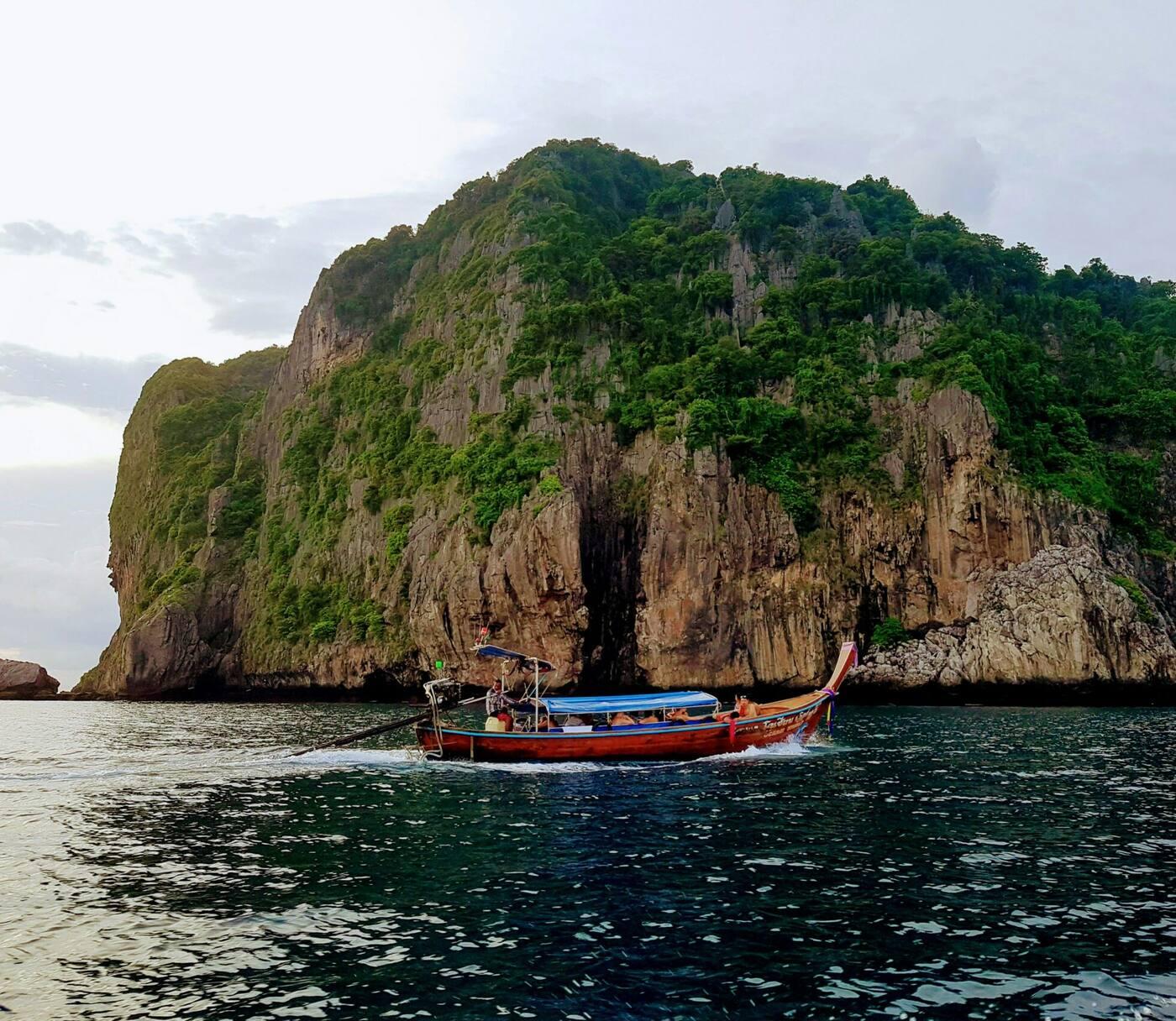
Puerto Morelos is a working fishing town on the Caribbean coast of Mexico's Yucatan Peninsula, on the Riviera Maya between Cancun and Playa del Carmen. It sits alongside the Mesoamerican Barrier Reef System, the second-largest coral reef in the world, within the Puerto Morelos Reef National Park, a protected marine area rich in marine life. The reef remains central to the local economy, supporting the livelihoods of the fishing community.
The wider region is known for mangroves, seagrass meadows, cenotes and nearby Maya archaeological sites. The climate is tropical, with an average annual air temperature around 24C, water temperatures of roughly 26 to 32C, and a June to November hurricane season.
Publications & reports
- 2024Mesoamerican Reef Report CardHealthy Reefs for Healthy People · Biannual field report
- 2020Mesoamerican Reef Report CardHealthy Reefs for Healthy People · Biannual field report
- Report on Puerto Morelos Coral Transects, November and December 2019MULUK · Intern report
- 2018Mesoamerican Reef Report CardVolume 5 · Healthy Reefs for Healthy People · Biannual field report
- 2015Mesoamerican Reef Report CardVolume 4 · Healthy Reefs for Healthy People · Biannual field report
- 2012Mesoamerican Reef Report CardVolume 3 · Healthy Reefs for Healthy People · Biannual field report
Volunteering in Mexico
Puerto Morelos sits on the Mesoamerican Barrier Reef, the largest reef system in the Atlantic. It runs along a heavily developed coastline, which is precisely why continuous monitoring matters here.
Volunteer placement FAQs
What does a typical week look like?
Fieldwork runs Monday to Friday, around 35 hours a week. A day starts with shared hub duties at about 7:00 AM, followed by project activities such as dives, surveys and data entry, usually diving or snorkelling one to two times a day when weather allows. Activities wrap up around 6:00 PM after dinner, with a couple of hours of personal time on weekdays. Weekends are free, though you return to the research station before dinner on Sunday to prepare for the week ahead.
Where will I stay?
Volunteers stay in shared dormitory accommodation about a 15-minute drive from the project hub, with bunk rooms, shared bathrooms with running water, Wi-Fi, a kitchen and a hand-wash laundry area. Meals are largely self-catered from a grocery budget, and everyone shares in basic day-to-day tasks such as cooking, cleaning and looking after equipment. Facilities are comfortable but can be more basic than you may be used to, so an open and adaptable attitude helps. Divemaster and MSDT participants placed at a dive shop stay in separate shared housing near their placement.
What does the MULUK actually do?
Where is the project based?
Who can volunteer, and is there an age requirement?
Do I need to be a qualified diver to take part?
Which diving qualifications can I earn?
What conservation work will I be trained in and carry out?
How long are the programmes?
What is provided, and what should I budget for?
How fit do I need to be?
What are the entry and visa requirements for Mexico?
Is travel insurance required?
What marine life might I see, and when is the best time to visit?
What is the approach to working with the reef and marine life?
Can I volunteer in Mexico?
Yes. The Impact Network Foundation works with one partner organisation in Mexico: Puerto Morelos Reef Project, based in Puerto Morelos, on the Caribbean coast. You apply to it directly through this site.
What NGOs are there in Mexico?
The NGO in the Impact Network in Mexico is Puerto Morelos Reef Project, an independent conservation organisation working in Puerto Morelos, in Quintana Roo on the Caribbean coast. It is one of eight NGOs in the network, and the network is deliberately small — every organisation in it is locally run rather than a field office of an international charity.
Are there NGOs in Puerto Morelos?
Yes — Puerto Morelos Reef Project works in Puerto Morelos, in Quintana Roo on the Caribbean coast. Its work is reef monitoring and marine conservation.
What volunteer work can I do in Mexico?
Reef monitoring and marine conservation. Reef monitoring and marine conservation — the survey work that tracks reef health over time and informs how the marine park is managed.
How long can I volunteer in Mexico for?
Placements run to fixed start dates set by the project, so the dates are published in advance rather than chosen by you.
Is this a local NGO or a volunteer agency?
Puerto Morelos Reef Project is an independent, locally run organisation. The Impact Network Foundation does not operate it, staff it or direct its work — the Foundation exists to connect volunteers to organisations like it and to publish what they achieve.
How do I apply to volunteer in Mexico?
Apply on the Puerto Morelos Reef Project page on this site. Every applicant then has a short one-to-one call before a place is confirmed, so you can ask anything and the organisation can check the placement is a good fit.
Group bookings
We also host school groups, university groups, under-18 cohorts and bespoke groups.
School group info University group info U18 cohort info Bespoke group info