
Ao Nang, Krabi - Coastal Conservation & Regenerative Living
Run by NatureMind
NatureMind is a nature-based social enterprise, locally rooted in conservation, research and education. Through our Forest to Reef approach, we work across interconnected ecosystems: from tropical forests and regenerative communities to mangroves, seagrass meadows and coral reefs.
About NatureMind
NatureMind is a nature-based social enterprise, locally rooted in conservation, research and education. Through our Forest to Reef approach, we work across interconnected ecosystems: from tropical forests and regenerative communities to mangroves, seagrass meadows and coral reefs.
Our work combines ecological research, hands-on restoration, environmental education, community engagement and practical approaches to sustainability. We offer immersive experiential learning programmes for volunteers, interns, students and educational groups, enabling participants to develop practical skills while contributing to locally led conservation and community initiatives.
Participants are encouraged to understand the connections between environmental degradation, human systems and community wellbeing, and to explore how meaningful, practical solutions can support the long-term regeneration and resilience of both ecosystems and societies.
NatureMind offers three complementary learning pathways. Participants may follow one primary pathway or combine elements from all three, depending on their interests, experience and length of stay.
1. Applied Ecology Learning Pathway
This pathway focuses on the ecology, conservation and restoration of interconnected tropical ecosystems. Participants may work across lowland forest, mangrove, seagrass and coral-reef environments, learning how these systems influence one another and how human activities affect their health.
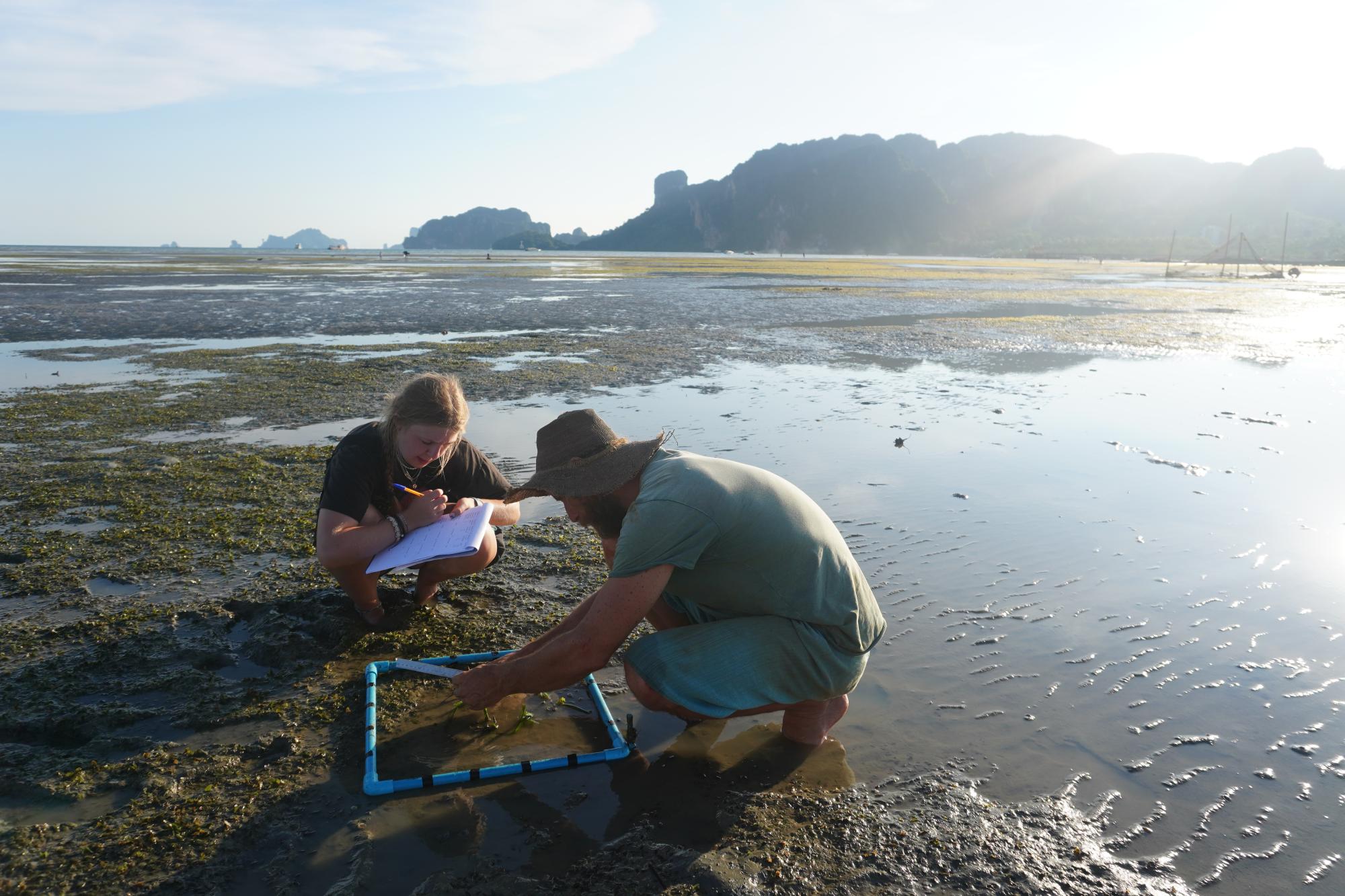
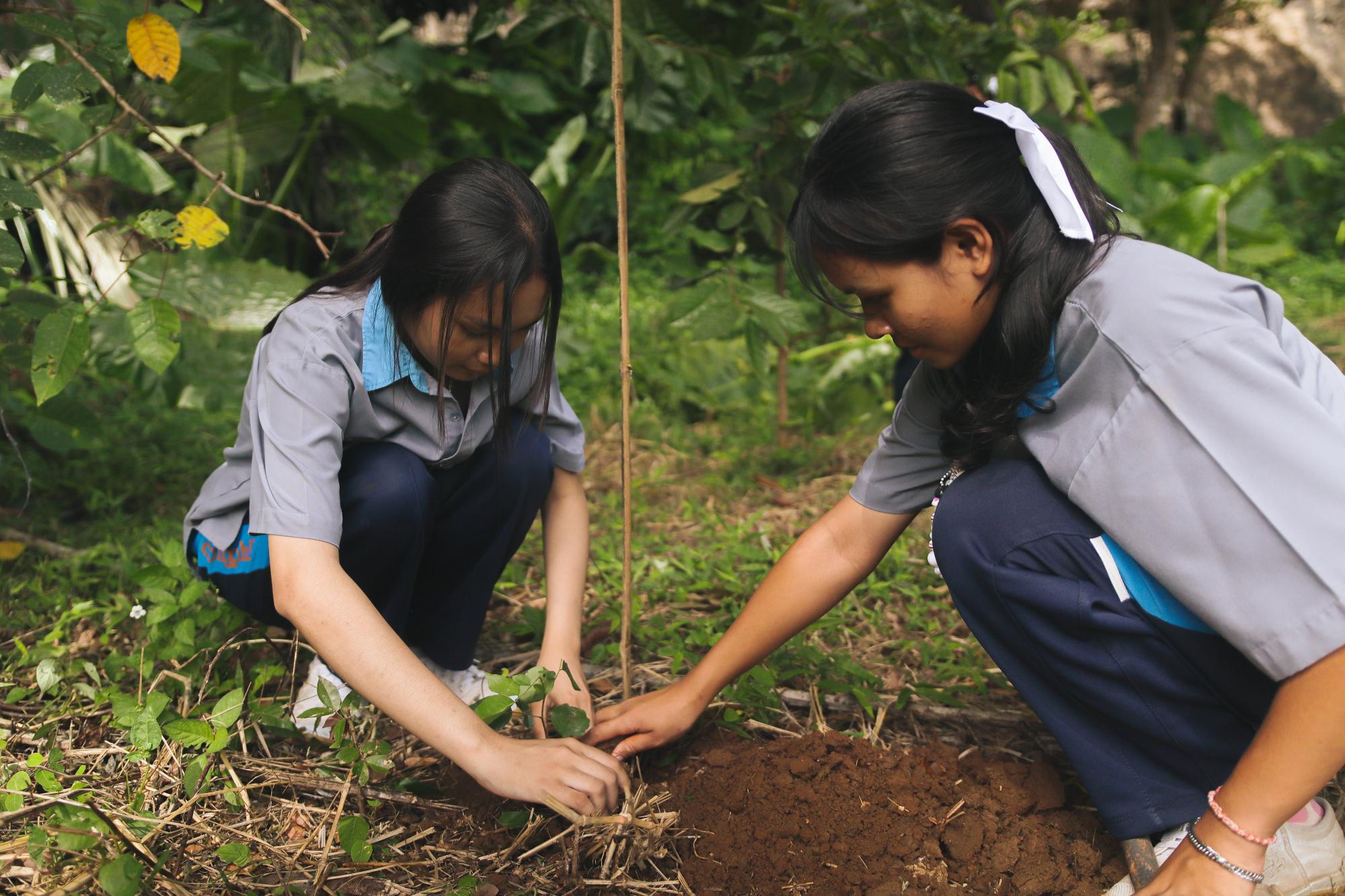
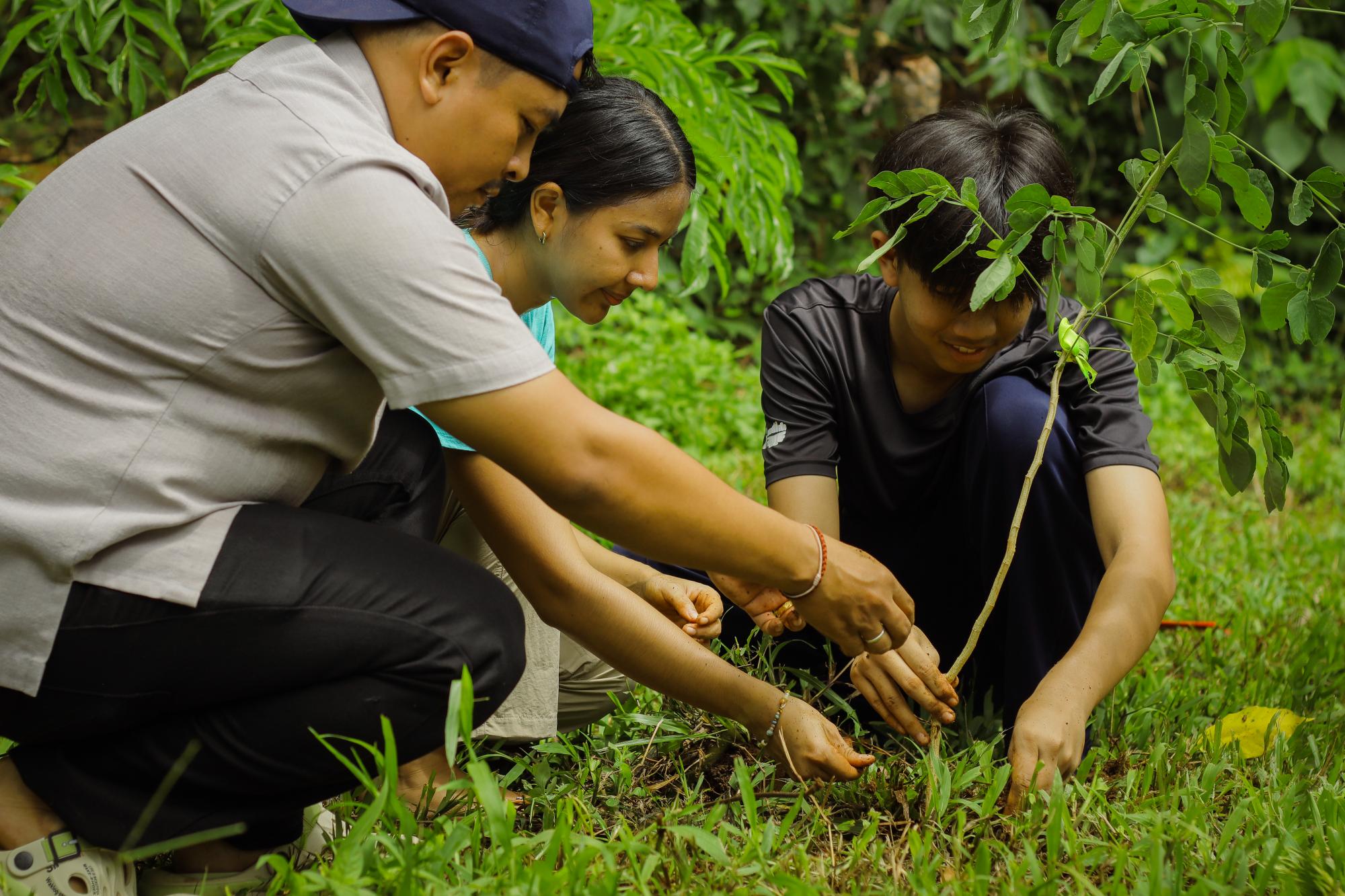
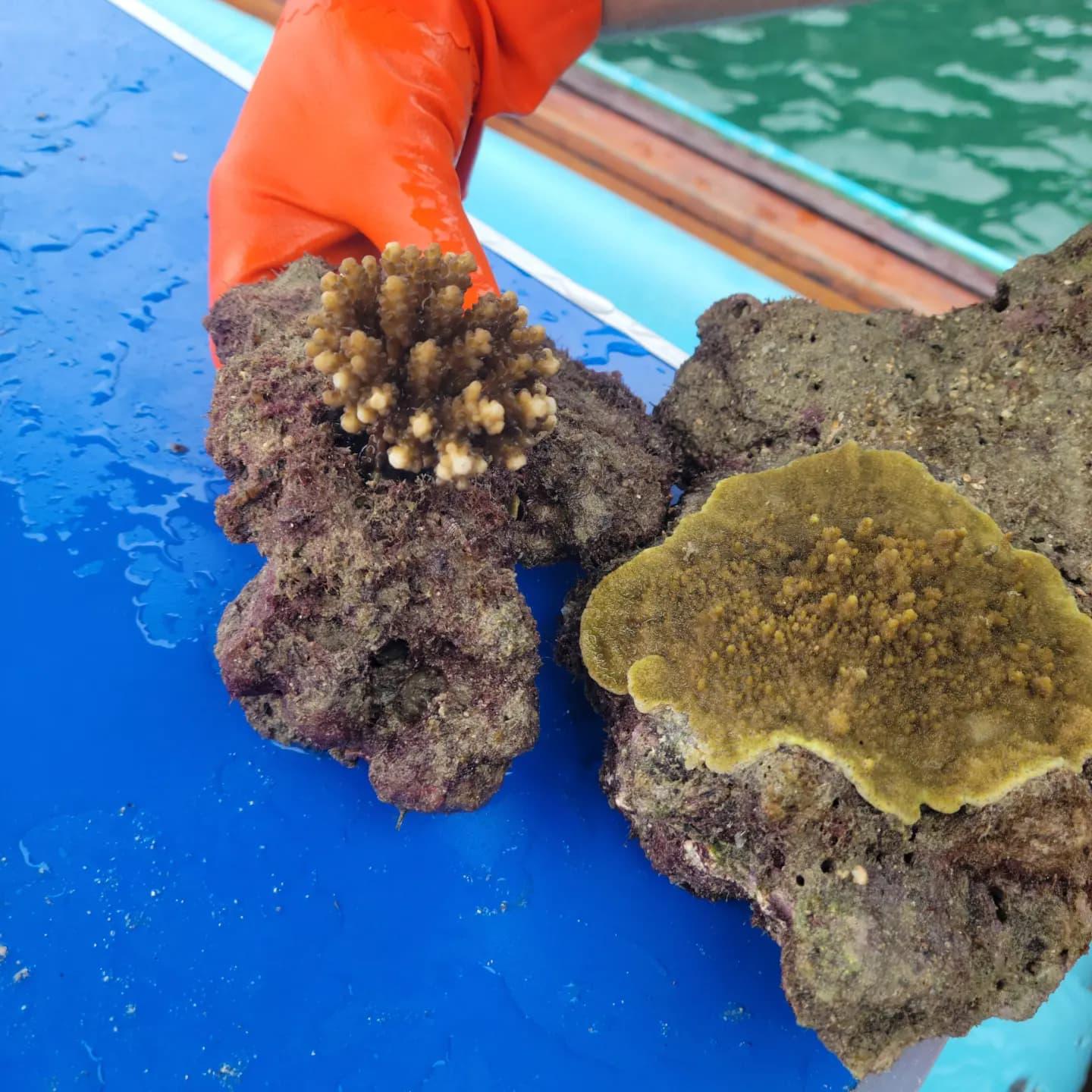
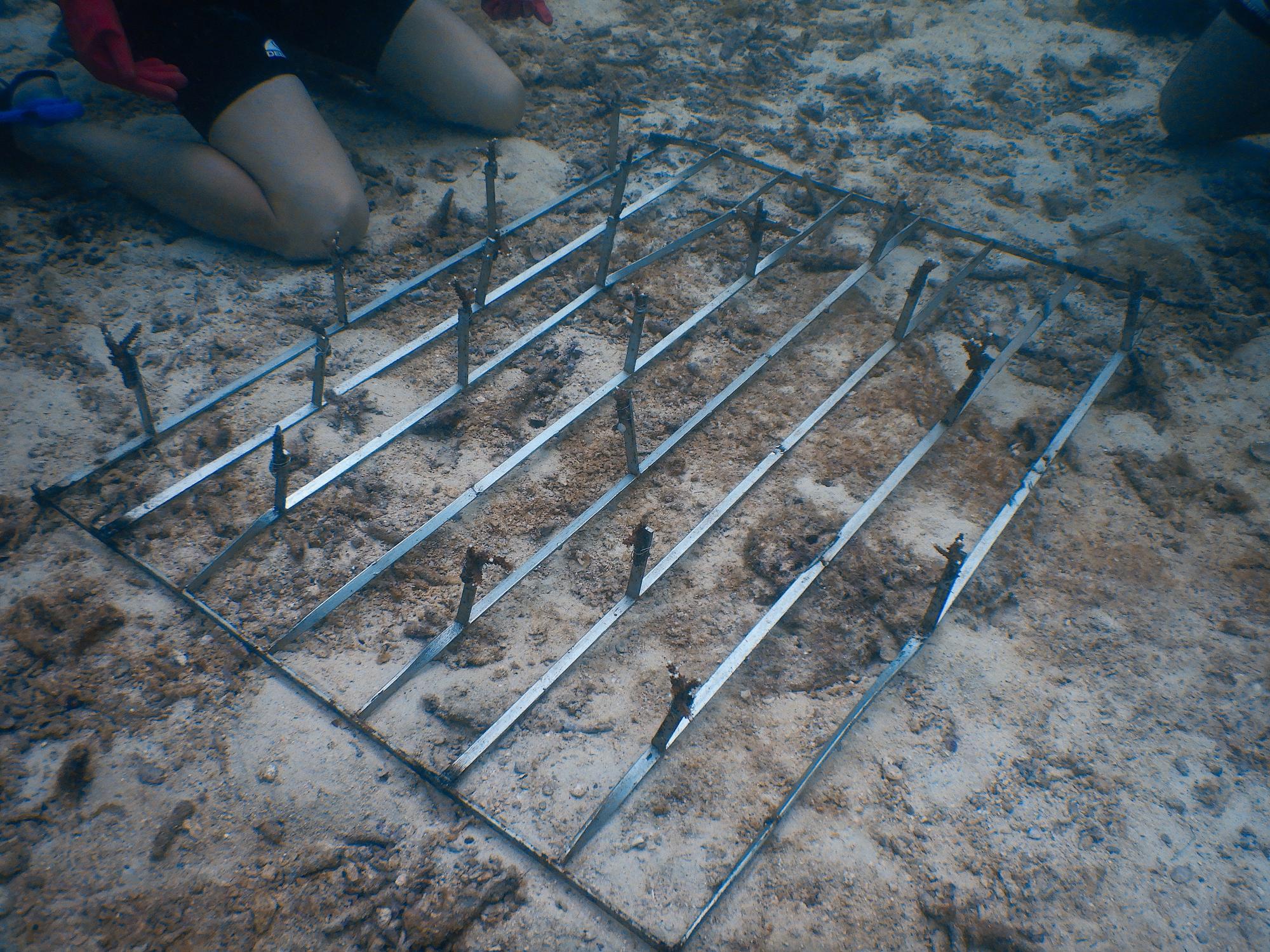
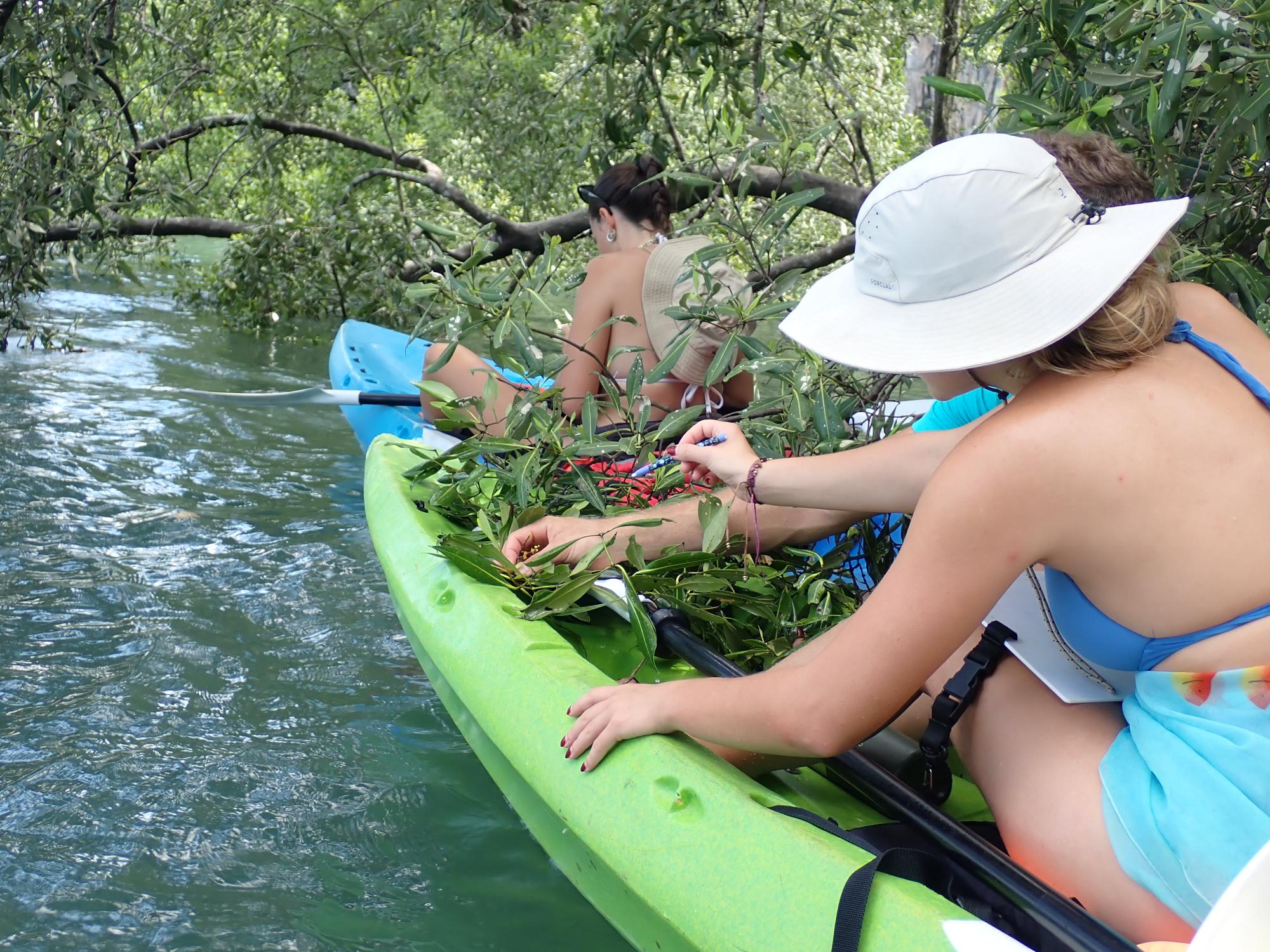
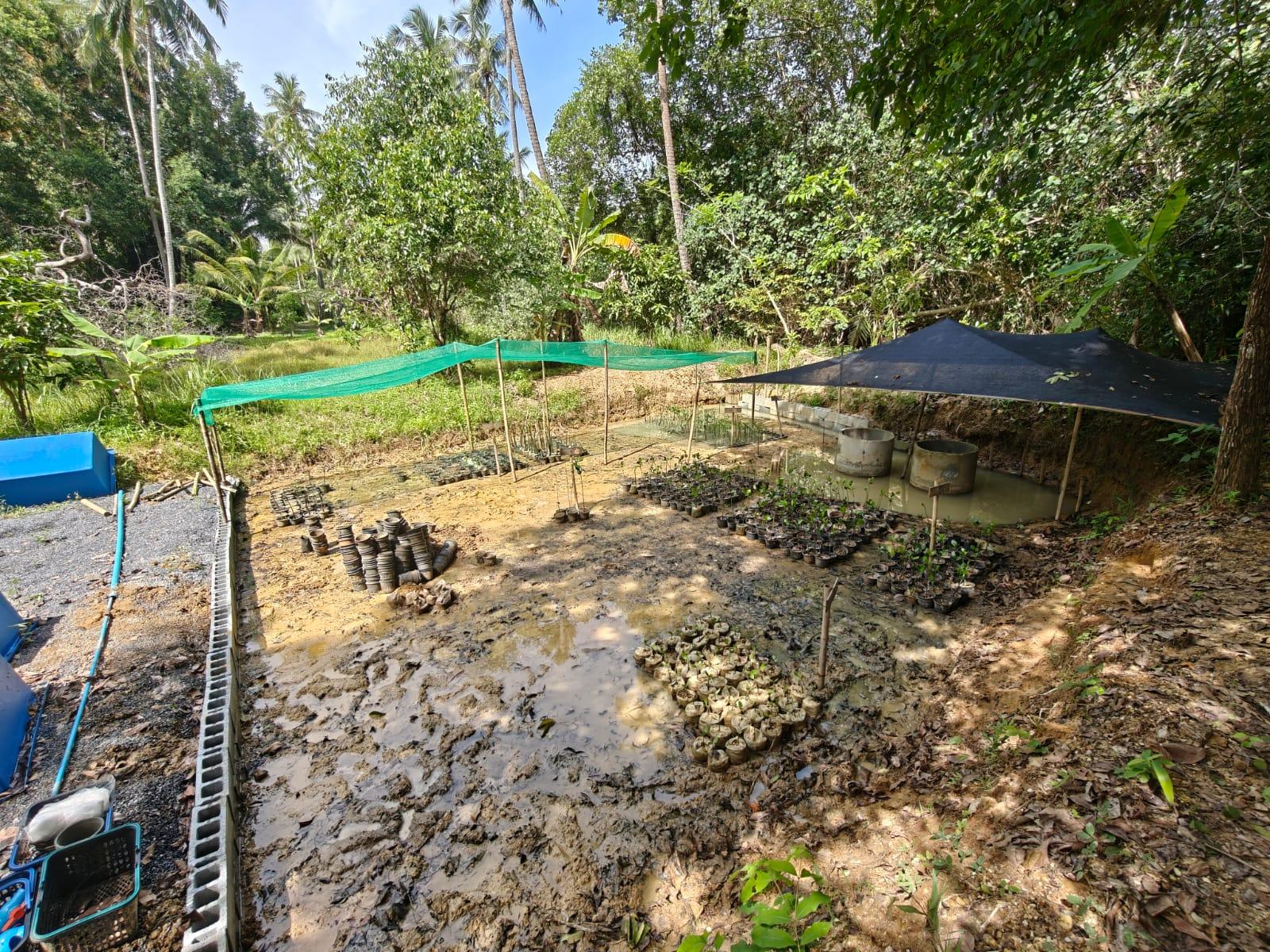
Activities can include ecological surveys, biodiversity monitoring, nursery management, native-plant propagation, forest restoration, mangrove and seagrass research, coral restoration, habitat assessments and conservation education. The pathway combines practical fieldwork with discussions about ecological processes, restoration strategies, data collection and long-term environmental management.
2. Sustainable Systems Learning Pathway
This pathway explores how people and communities can live in ways that reduce environmental pressure and support long-term resilience. It considers food production, resource use, waste reduction, water management, appropriate technology, ecological design, community organisation and the relationship between human wellbeing and healthy ecosystems.
Participants may contribute to practical projects involving gardens, natural systems, sustainable infrastructure, resource cycles and community-based initiatives. The emphasis is on learning how regenerative principles can be adapted to local environmental, social and cultural conditions rather than applying a single universal model.
3. Experiential Learning & Facilitation Pathway
This pathway focuses on developing the knowledge, confidence and practical skills required to become an effective facilitator. Participants learn how to design and lead meaningful learning experiences for diverse groups, including students, volunteers, professionals and community members.
Training may include group facilitation, workshop design, participatory learning, communication, reflective practice, activity planning, conflict management, inclusive leadership and adapting sessions to different audiences and learning environments. Participants gain experience by supporting or leading real educational activities, field sessions, workshops and group discussions within NatureMind’s programmes.
The pathway is particularly suited to interns and participants interested in environmental education, experiential learning, outdoor education, youth development, community engagement, sustainability training or organisational learning. It has a strong professional focus: participants build a portfolio of practical experience and facilitation materials, while developing skills that can be applied by organisations seeking trained facilitators around the world.
Where appropriate, NatureMind can also help connect suitable participants with relevant organisations, networks and future opportunities after or during their placement. These connections do not guarantee employment, but can help participants understand potential career pathways and begin developing a professional network in the field.
Participants can join in three formats:
- Volunteerships are suitable for short-term participants who want to contribute to scheduled activities and gain practical experience. Volunteers generally follow the weekly programme and may participate in activities across several projects.
- Internships require a minimum commitment of four weeks. Interns receive a more structured learning experience and work with the team to develop an individual project or area of focus. They are expected to take greater responsibility, engage with research or programme development, and usually complete a final report, presentation or other agreed output.
- Professional apprenticeships are longer-term placements for participants seeking deeper professional development. Apprentices gradually take on greater responsibility and may contribute to specific areas such as ecological research, restoration planning, environmental education, communications, community engagement or regenerative development. The exact structure is adapted to the apprentice’s background, objectives and the organisation’s current needs.
Project work
Ridge to Reef
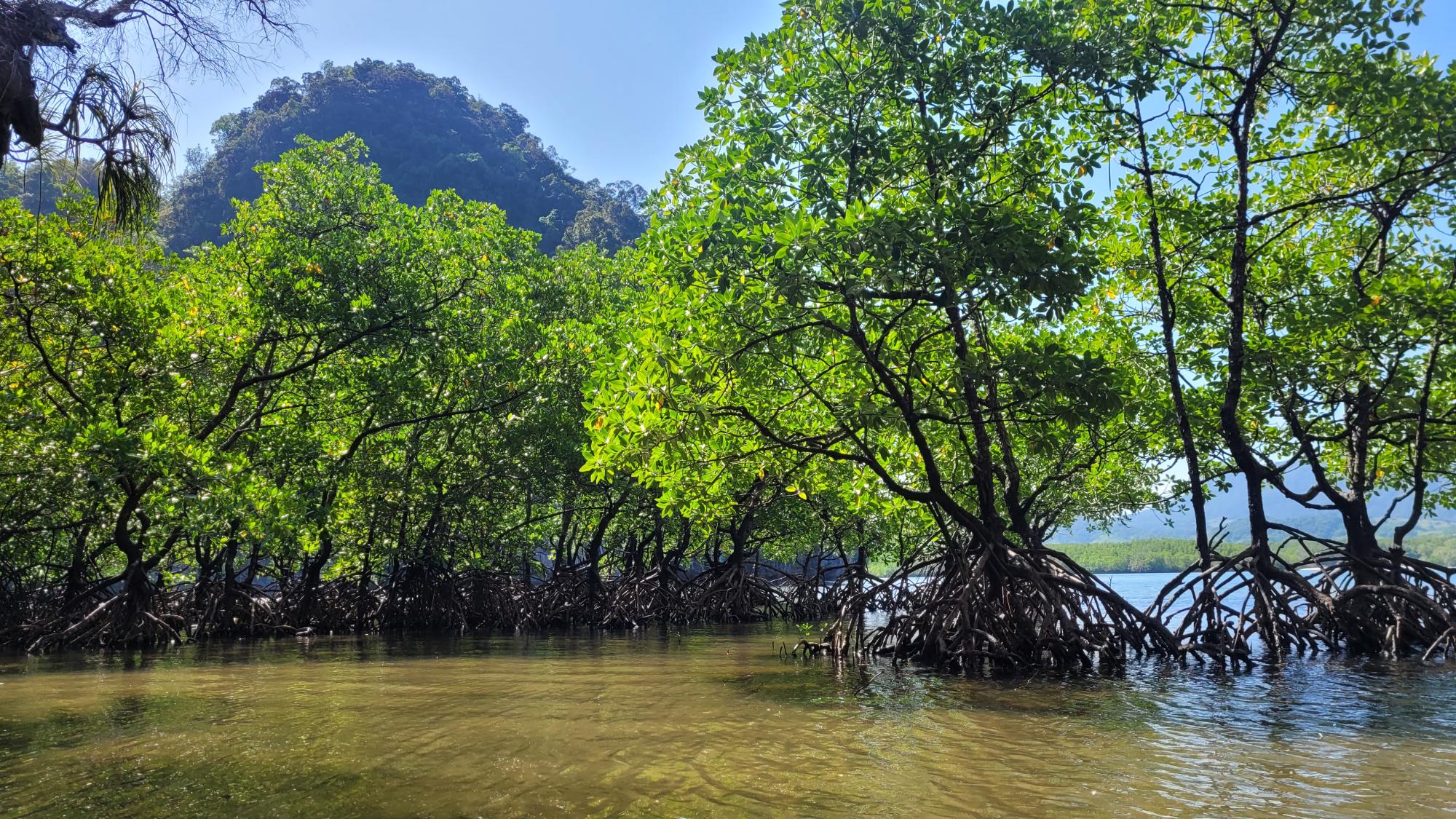
The work is built on a single idea: this coast is one connected system. Water, sediment and species move from the jungle ridgelines down through the mangroves and seagrass meadows out to the coral reefs, so the projects treat them as a single restoration problem rather than four separate ones — you work will span across the whole continuul, not just one habitat in isolation.
Regenerative Living & Sustainable Communities
We explore how everyday practices and community systems can support healthier people and environments. Our work includes permaculture, sustainable food and water systems, waste reduction, and circular solutions that keep resources in use. Through practical projects, community collaboration, and nature connection, we link personal wellbeing with the resilience of the places we live.
Nature-Based Education & Community Engagement
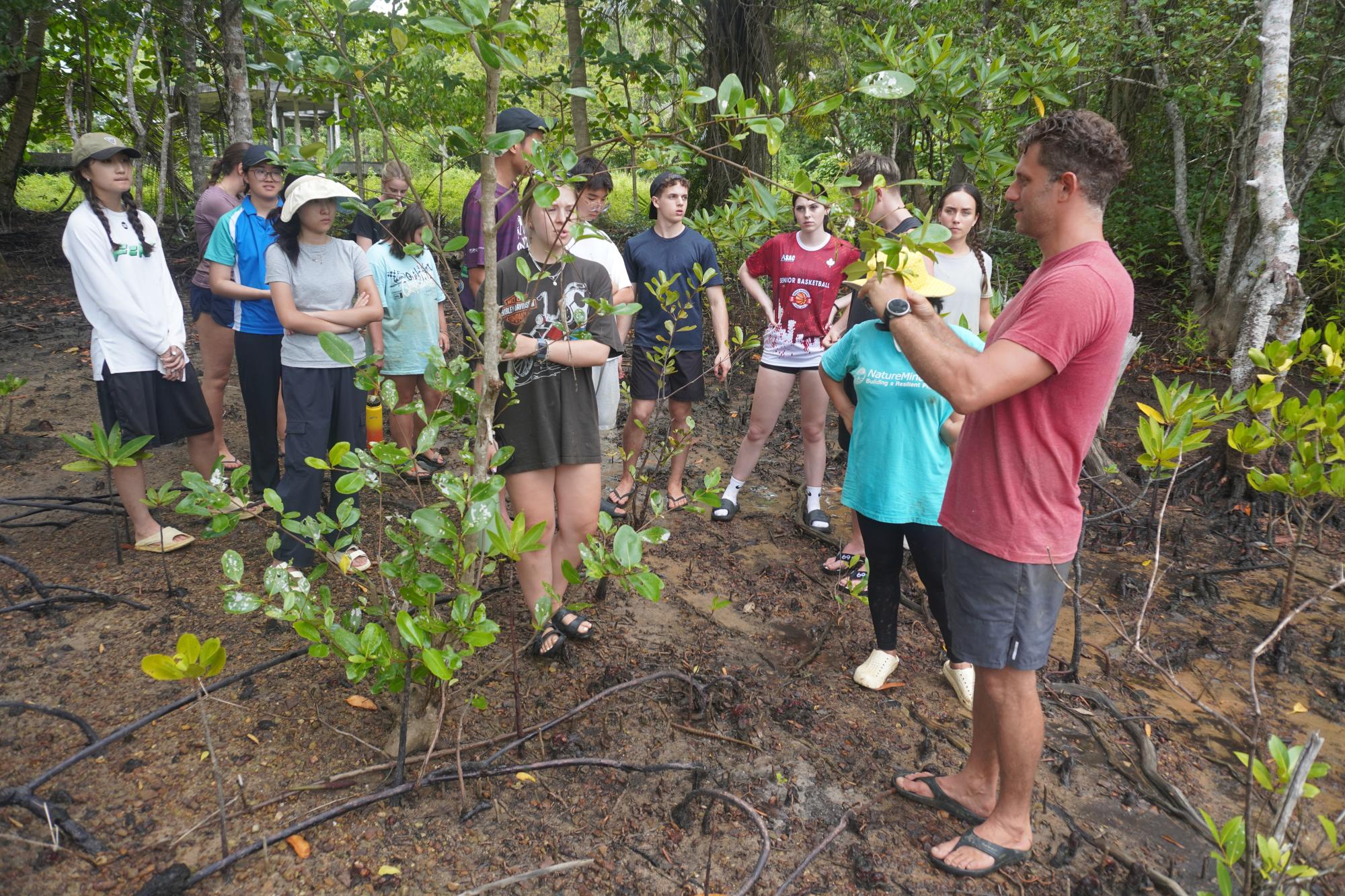
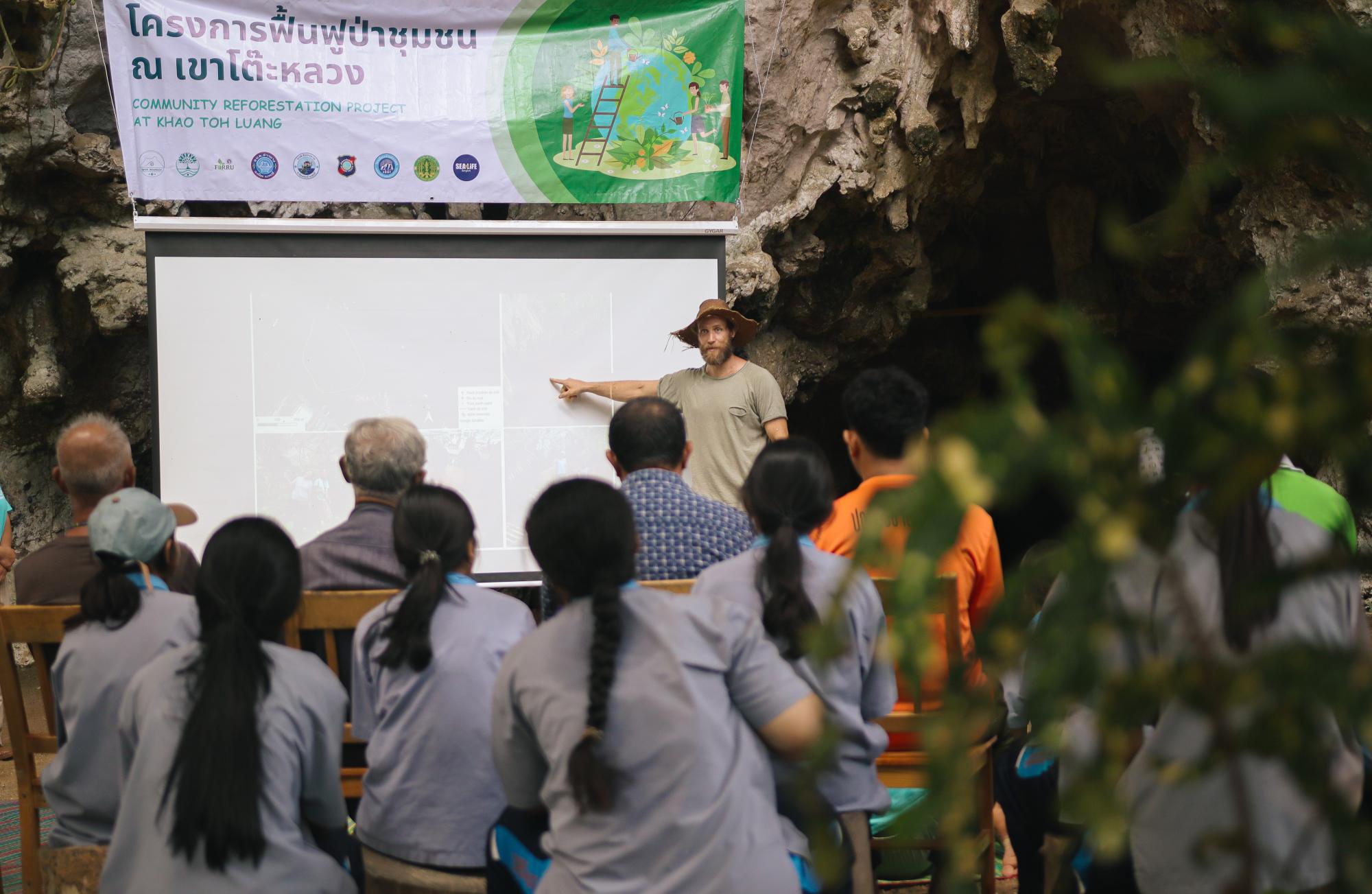
We use nature and real-world projects as settings for learning, reflection, and collaboration. Our work includes designing and delivering workshops, outdoor activities, and educational resources for schools, universities, and community groups. By combining environmental knowledge with thoughtful facilitation, we help people connect with their surroundings, learn from one another, and turn understanding into meaningful action
Fieldwork runs Monday to Friday, roughly 35 hours a week: breakfast at 08:00, project work from 09:00, lunch at 12:00, a second field or lab session from 13:00, and back to the hub around 16:00. Evenings and weekends are your own. No two weeks are the same — activities shift with conservation priorities, the weather and whatever the research needs that month, so expect some early starts, some full field days and some time on data analysis. One wellness or cultural activity is scheduled each week, from rock climbing to yoga or a cooking class.
Impact
Our impact rationale is rooted in the understanding that ecosystem health, community wellbeing, and the ways people learn and live are deeply interconnected.
Lasting conservation requires both restoring habitats and addressing the pressures that cause their degradation, while supporting communities to shape and sustain solutions.
We bring together Ridge to Reef Conservation, Regenerative Living, and Nature-Based Education to work across these dimensions: strengthening ecological connections, developing more sustainable everyday practices, and building the knowledge, confidence, and practical skills needed for informed action.
Through applied research, hands-on projects, and collaboration with local communities, we connect learning with tangible contributions and use monitoring and reflection to improve our approach over time. Our aim is to support healthier ecosystems and more resilient communities, with benefits that continue beyond any individual activity or participant’s stay.
Milestones
- 2018Naturemind-Ed was founded in Krabi, initially as a climbing camp for local and expat kids.
- 2019Our work started attracting some local schools, which started sending us some of their classes for short outdoor adventure and climbing camps.
- 2020COVID-19 Pause period. This allowed us to scout new talent, expand our team, and prepare for the coming years.
- 2021Camps and excursions slowly started happening again, with our reach expanding past Krabi Province.
- 2022Programmes continued growing in number, allowing us to start investing in refurbishing parts of our base camp, Spirit Mountain.
- 2023Naturemind Research & Development was established as a purely academic entity, focused on studying and understanding the underlying causes of local environmental degradation. The Applied Ecology Learning Pathway was established.
- 2024The internship programme was officially established, initially with only a few participants from france, and later on from the rest of the world thanks to a new collaboration with GVI.
- 2025Intern numbers increased noticeably, so we started renting our dormitory and office townhouses to accomodate a larger number of participants.
- 2026GVI closure reduced out participant influx, forcing us to revamp our website and start sourcing our partipants from other sources. Collaboration with the Trang Ocean Institute started. The Regenerative Living and Experiential Learning and Facilitation Learning Pathways were established.
Highlights
- Work spans the entire coastal system — jungle ridgelines, mangroves, seagrass meadows and coral reef — treated as one connected restoration problem rather than separate projects.
- Mangrove restoration follows the CBEMR method, repairing tidal hydrology so the forest regenerates itself, rather than relying on seedling planting alone.
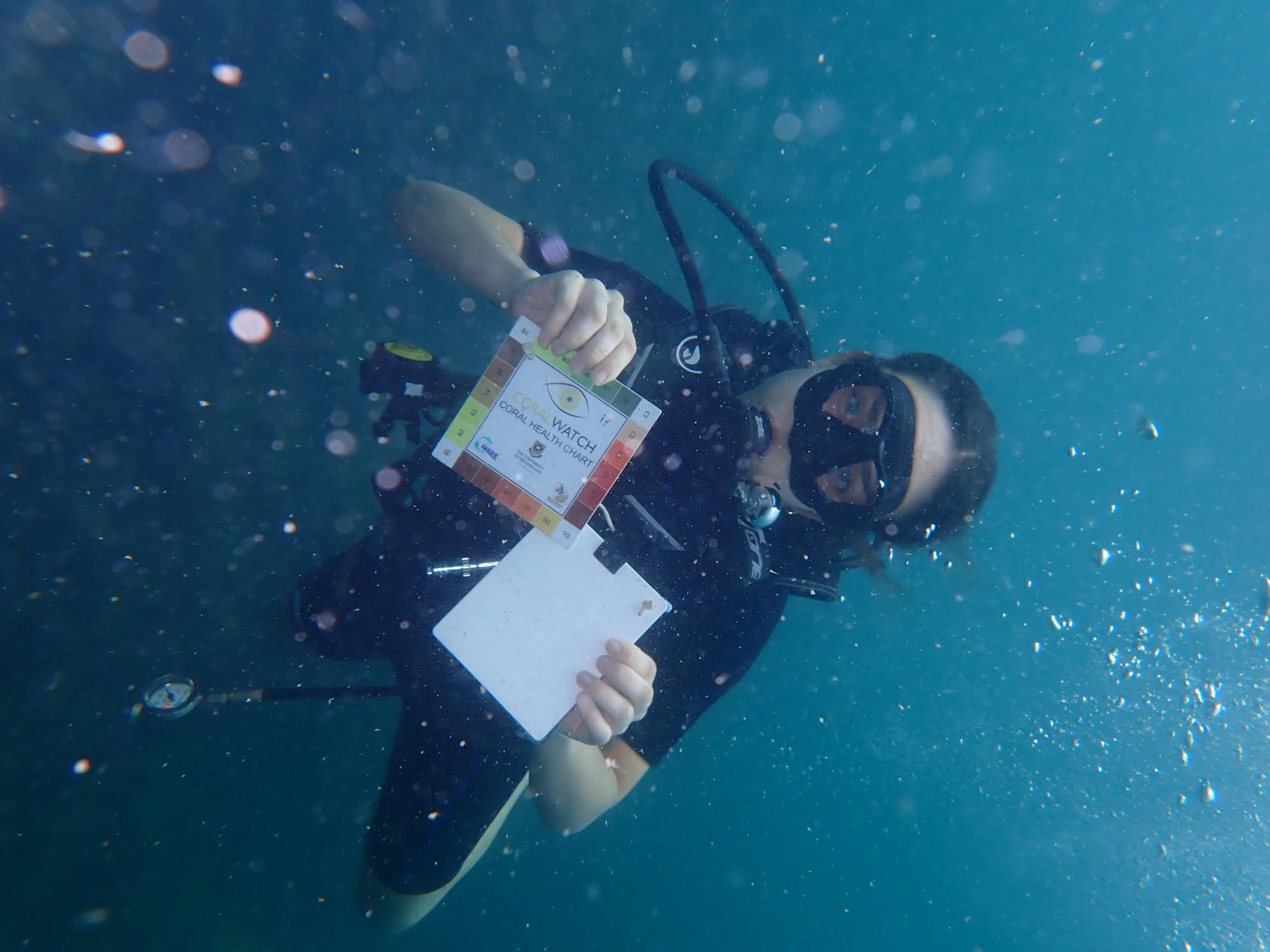
- Contributes to the Coral Watch Initiative, a citizen-science programme documenting coral bleaching in Thai waters and worldwide to inform national marine policy.
- Major player in seagrass aerial drone surveying of seagrass meadows and dugong populations in the Andaman sea.
- Heavy reliance on drone imagery, georeferencing and GIS analysis to track seasonal change across mangrove, reef and seagrass habitats.
- Restoration sites are used as classrooms, with school programmes and community education delivered on the sites being restored.
- Project work is aligned to multiple UN Sustainable Development Goals.
- Optional extra US and UK university credit bearing learning materials and courses.
Setting
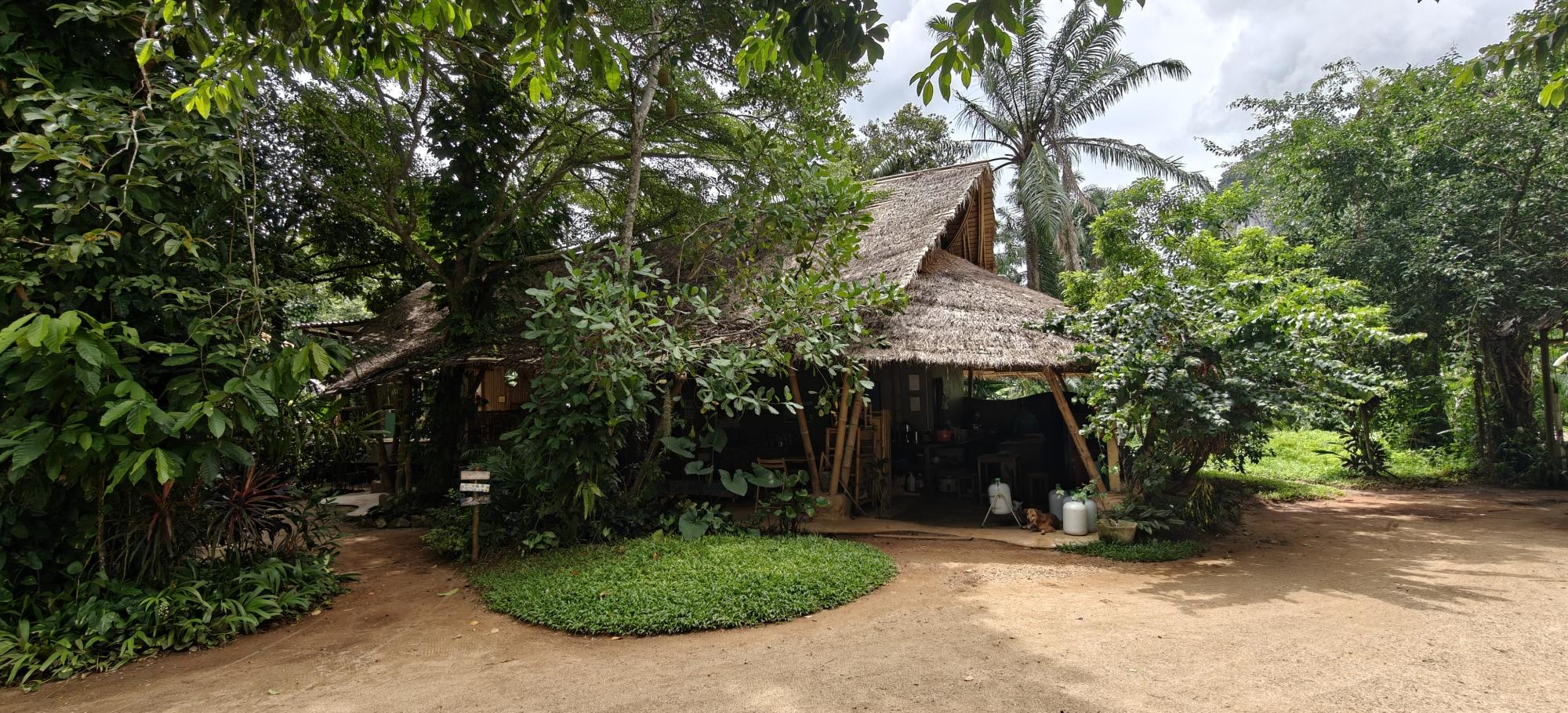
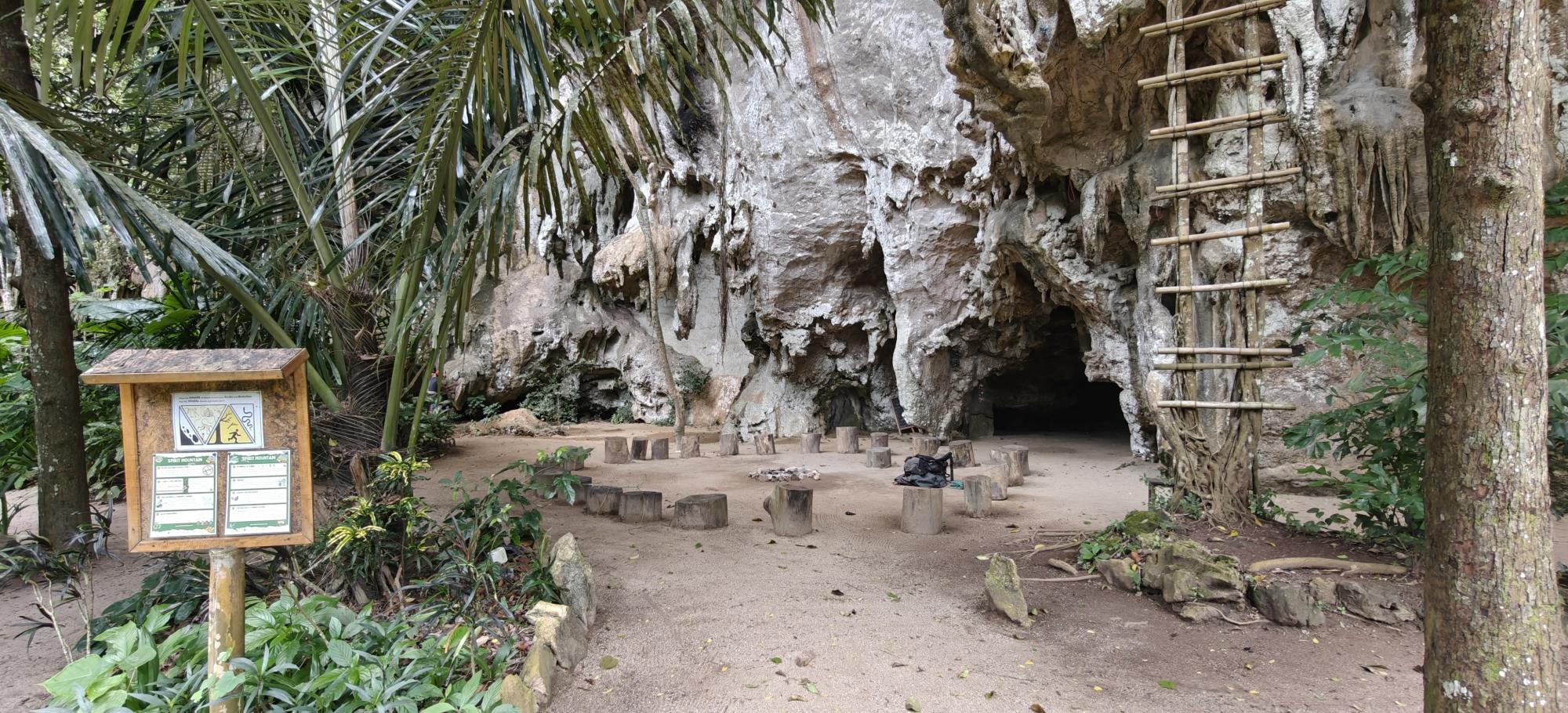
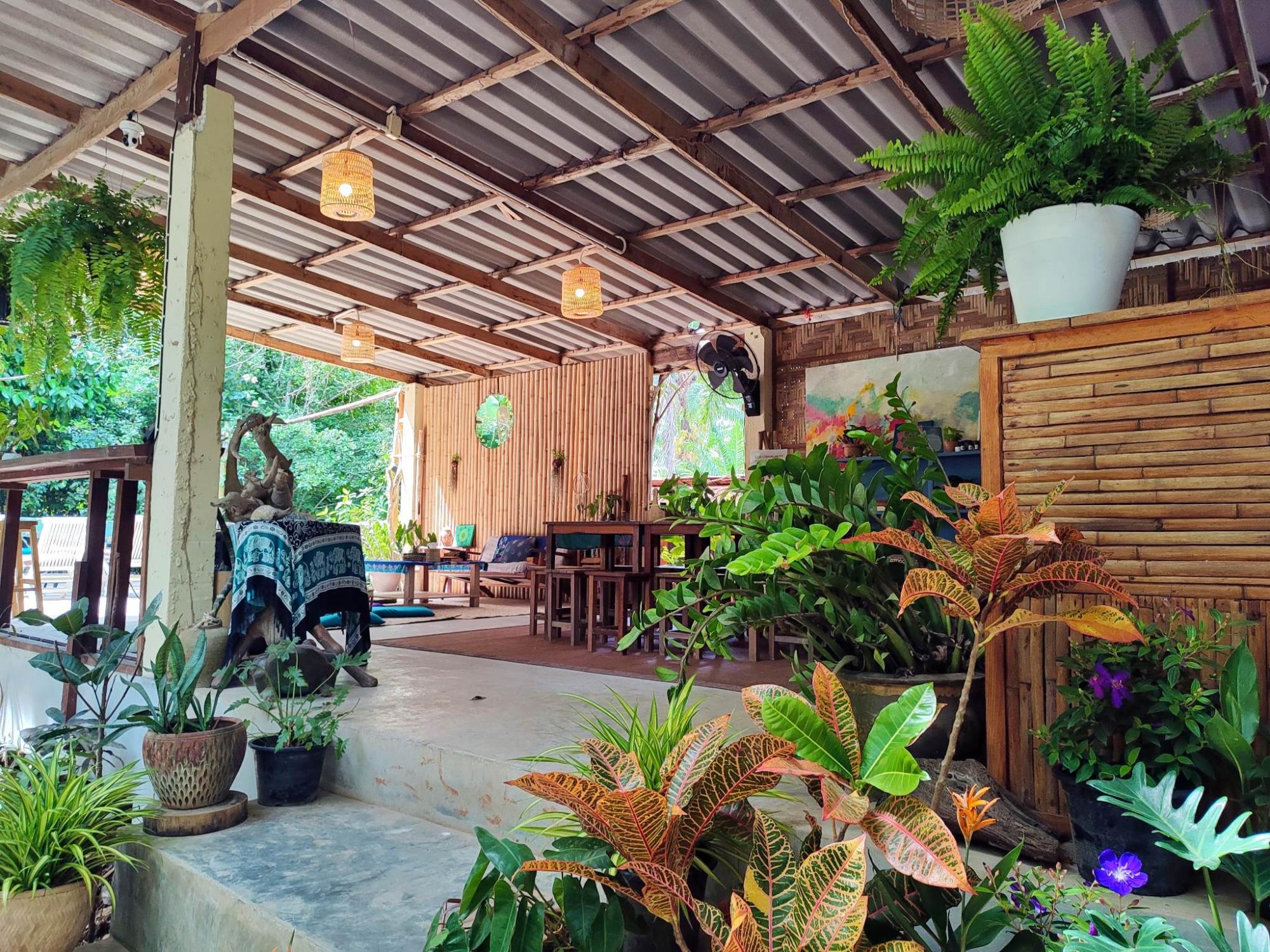
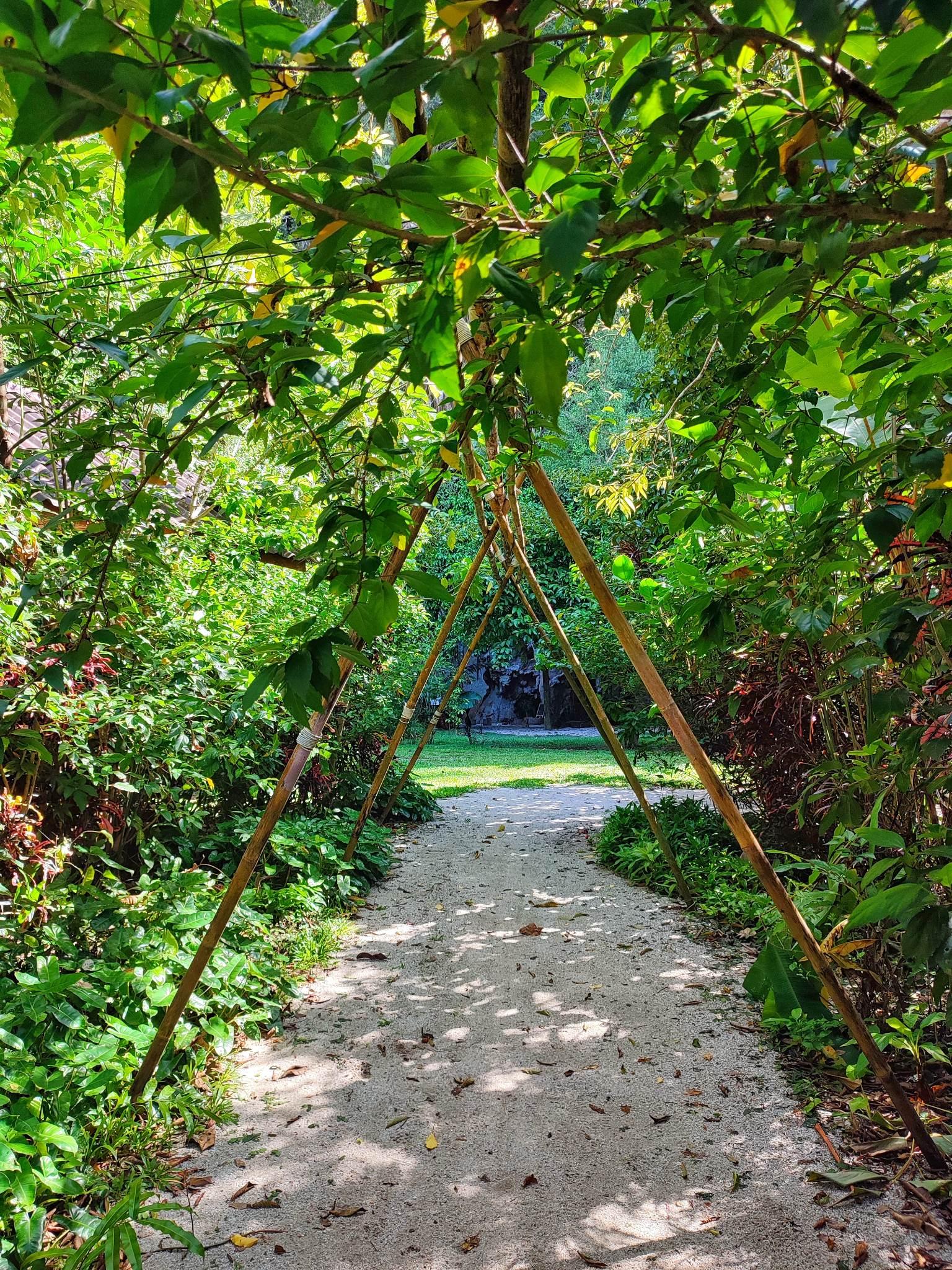
NatureMind is based at Spirit Mountain, a peaceful natural site surrounded by tropical vegetation and close to the limestone landscapes for which Krabi is known. Spirit Mountain serves as a base for environmental education, research, restoration activities and community learning. It provides participants with an opportunity to experience Thailand’s tropical environment directly, while remaining close enough to Ao Nang for access to everyday services and leisure activities.
Our shared dormitory accommodation is located approximately 2 km from Spirit Mountain and roughly halfway between the site and Ao Nang’s beachfront. Room upgrades are available at an additional cost, subject to availability. Participants can choose a private room with a king-size bed at the dormitory, suitable for individuals or couples, or a bungalow at Spirit Mountain itself for greater solitude and a deeper connection with nature. Bungalows accommodate up to four people, making them an option for couples or families who prefer to stay together in a peaceful natural setting.
Ao Nang is a lively coastal town with restaurants, cafés, shops, markets, tour operators, beaches and other services. It is a popular destination for both international visitors and Thai travellers, offering opportunities for swimming, kayaking, island trips, climbing, snorkelling and enjoying the local food and culture. Participants therefore have easy access to social and recreational activities during their free time.
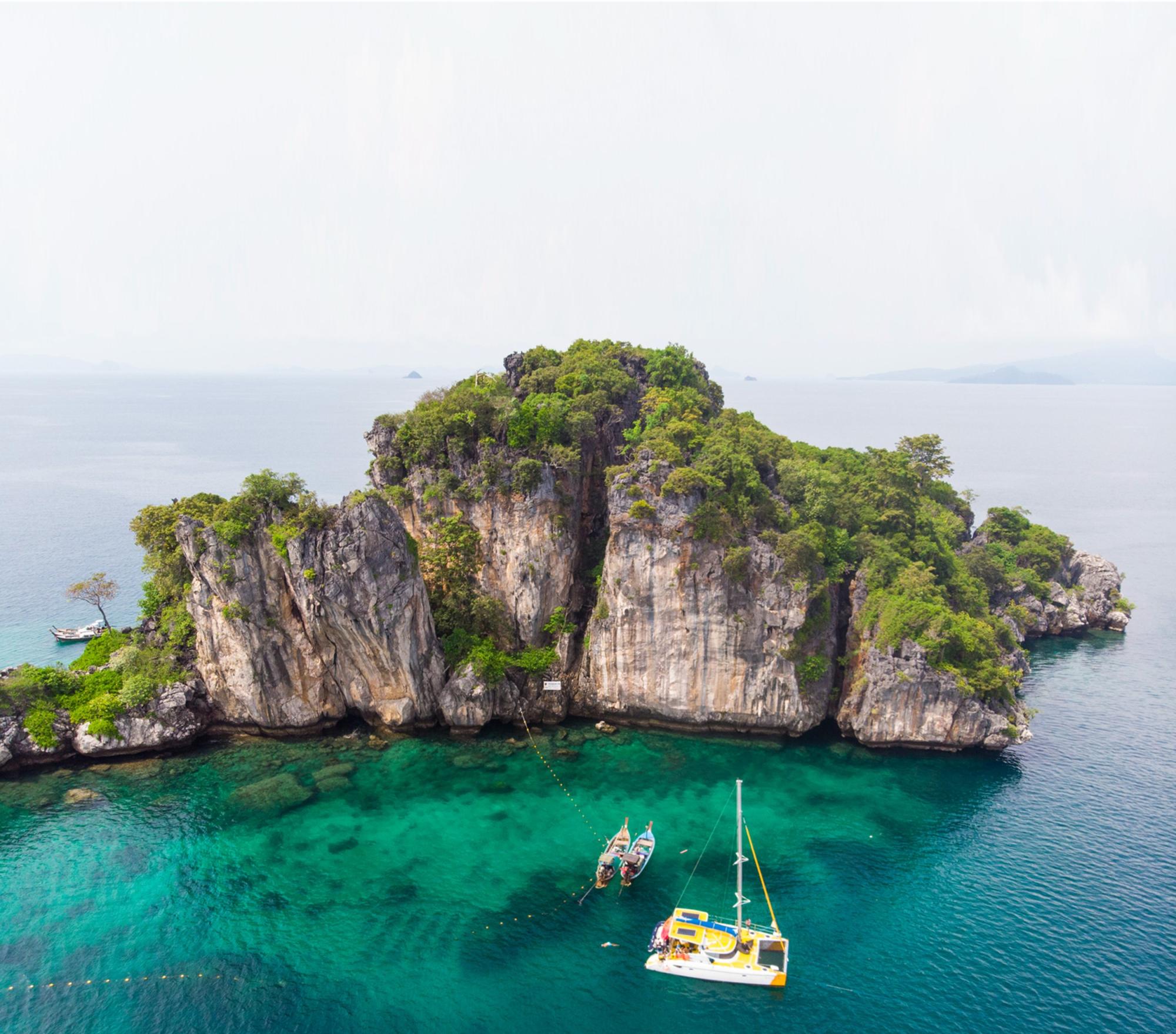
Krabi province offers a diverse setting for learning and exploration, including limestone mountains, mangrove forests, beaches, islands, coastal communities, lowland forests and marine ecosystems. Depending on the programme schedule, season and weather, participants may also use their days off to explore destinations elsewhere in southern Thailand. Possible weekend excursions include nearby islands and beaches, Phang Nga Bay, Phuket, Trang, Khao Sok National Park and other coastal or forest areas. These trips are normally organised independently by participants, although the NatureMind team can provide advice and help with local information and planning.
Volunteering
Volunteer placement FAQs
What does a typical week look like?
Participants generally join activities from approximately 08:00 to 16:00, five days per week. The schedule adapts to tides, weather, school timetables, community availability and project priorities. Activities usually run from Monday to Friday, and participants are always guaranteed two days off each week, even when these fall on different days.
Each placement begins with an orientation, programme briefing and introduction to NatureMind’s projects. Depending on the participant’s learning pathway, a typical week may include:
- Forest, mangrove, seagrass or coral-reef fieldwork
- Ecological monitoring, data collection and species identification
- Nursery care, propagation and ecosystem restoration
- Environmental education and community engagement
- Permaculture, sustainable resource use and regenerative living workshops
- Facilitation training and opportunities to help design, support or lead learning activities
- Project development, research, documentation or independent study
- Reflective practice and weekly planning with the NatureMind team
The balance of activities reflects each participant’s pathway, placement format and learning objectives. Volunteers generally follow the shared weekly schedule and contribute to ongoing work. Interns combine participation with dedicated time and guidance for an individual project. Professional apprentices take on more sustained responsibilities, developing their professional skills and agreed outputs while contributing across relevant areas of NatureMind’s work.
Activities take place at Spirit Mountain and at coastal, forest, community and partner sites around Krabi. Occasional longer excursions may also be arranged when relevant to the programme. This flexible structure connects practical experience with purposeful learning while responding to real environmental conditions and community needs.
Where will I stay?
Participants stay in gender-separated shared dormitories approximately 2 km from Spirit Mountain, situated between our main base and the Ao Nang beachfront. This provides a balance between access to programme activities and greater independence during free time, with shops, restaurants, services and nightlife within easy reach.
Shared dormitory accommodation is part of our communal living approach. It allows participants to meet people from different countries and cultural backgrounds, share daily experiences and develop a stronger sense of community.
Breakfast and lunch are provided on working days, normally Monday to Friday. The schedule may occasionally change according to tides, school timetables or other operational requirements, but participants are always guaranteed two days off per week. Meals are not provided on non-working days, although a shared kitchen is available. Evening meals are at your own cost, and vegetarian, vegan and gluten-free options are available on request.
All rooms and common areas are cleaned once a week. Bed linen and towels are changed during the weekly cleaning. Participants are responsible for their own personal laundry, which can be done at nearby laundromats. A local laundry service is also available through dry-cleaning businesses, which can wash, dry and fold clothes for an additional fee.
One private room is available as an optional add-on for 300 THB per night, subject to availability. Private bungalows at Spirit Mountain are also available for 1,200 THB per night. Each bungalow includes twin and bunk beds, making this option suitable for families, couples or groups travelling together.
Although our long-term aim is to accommodate all participants at Spirit Mountain, this is not currently feasible. We are working towards this as the site develops.
Wifi is available at all locations.
Do I need a diving qualification?
No. Diving is optional and is not required for any part of the programme. You can contribute to coral restoration through protocol design, data analysis, snorkel-based surveys and intertidal restoration at low tide.
SCUBA courses are available locally at extra cost, and certified divers may have the chance to carry out underwater work on ocean days. Gear is provided on those days if you are already certified.
Do I need to be a strong swimmer?
You need to be comfortable in the water. Snorkelling days require you to complete two open-water swim assessments, one with and one without snorkel gear.
A moderate to high level of fitness is recommended generally — the work involves hiking, swimming, paddling and long periods outdoors.
How do I get there?
Fly into Krabi International Airport (KBV) and book flights to arrive between 08:00 and 17:00 on your start date. A driver will meet you at the arrivals terminal. If you arrive outside that window you will need to arrange your own transport to the accommodation.
On your last day you will leave the accommodation at 08:00 and reach the airport around 08:30, so book a departing flight after 14:00.
Can I arrive early?
Yes, but you will need to arrange and pay for your own accommodation before your start date. Ao Nang Guesthouse is a reliable local option and offers an airport pick-up service if you arrive outside the standard window.
Do I need a visa?
Citizens of many countries can enter Thailand without a visa for up to 60 days, extendable by a further 30 days at a Thai immigration office. If you need a tourist visa, apply in advance for the 60-day version. For stays over 90 days you must leave and re-enter Thailand on a new visa.
Your passport must be valid for at least six months beyond your arrival date. Check the requirements for your own nationality before booking — visa costs are your responsibility.
What languages are spoken?
Thai is the official language and is what you will hear day to day. English is widely spoken in Krabi given how many visitors the province gets, particularly in hotels, restaurants and shops. Learning a few basic Thai phrases is useful but not essential.
What is the weather like?
Tropical, with two seasons. The dry season runs November to April: lower humidity, minimal rain, warm and sunny. The wet season runs May to October, with higher humidity, frequent rain and thunderstorms, usually in the afternoons.
Project work continues year-round, and activities shift with the conditions.
How much spending money will I need?
Most participants spend around 2,000 baht a week on data, snacks, drinks and small trips. Weekends spent in the tourist resorts cost considerably more — budget around 4,000 baht for those, depending on the season.
Thai Baht is the local currency. Travel with cash as your main source of funds; larger businesses take cards, and ATMs charge roughly 220 baht per withdrawal. Carry a credit card approved for international use for emergencies.
What do I need to arrange before I travel?
- A copy of your passport, valid for six months beyond arrival
- A background check
- A completed medical form
- Travel insurance covering medical costs and emergency evacuation — this is compulsory
- A visa application, if one is required for your nationality
If you plan to dive, you will also need diving cover to 30 metres.
How do I stay in touch with home?
There is Wi-Fi at the accommodation. You can also bring a network-unlocked phone and buy a local SIM at the airport or in town — TRUE or AIS are the networks we would recommend. If your phone needs an eSIM, arranging that is up to you.
Power is 220V, 50Hz, and sockets are the US flat-pin type.
What are the health and safety basics?
Do not drink the tap water, and note that vaping is illegal in Thailand. Stay hydrated and use high-factor sunscreen. Protect against mosquito-borne illness such as dengue with repellent and long clothing at dawn and dusk. Thai roads are dangerous — take real care if you choose to ride a motorbike, and always wear a helmet.
Check your routine vaccinations are up to date well before you travel, and take advice from a travel clinic on what else is recommended for your itinerary. Bring enough prescription medication for the whole programme in its original packaging — staff cannot supply or administer any medication, including painkillers.
What will I do in my free time?
Saturdays and Sundays are free, though there are occasional weekend project activities. Ao Nang has a wide range of restaurants, bars and shops.
Krabi is known for its beaches, limestone cliffs and forests, and offers world-class rock climbing, kayaking and island hopping. Khao Phanom Bencha and Than Bok Khorani National Parks are both within reach for hiking and wildlife watching. Bicycles are available at the accommodation, and the Grab app covers most local journeys.
Will I definitely see dugongs or turtles?
No, and it would be wrong to suggest otherwise. Both are part of this ecosystem but sightings are extremely rare.
The monitoring work relies on feeding trails, acoustic recorders, camera traps and opportunistic photo identification. That rarity is the reason the restoration work exists.
What’s not included?
Flights, travel insurance, visa costs, evening meals on most work days, meals on non-work days, and personal spending.
Airport transfer from Krabi International Airport is included, Phuket International Airport pickup is available at an additional cost.
Applied Ecology Learning Pathway
The Applied Ecology Learning Pathway provides hands-on experience in understanding, monitoring and restoring tropical ecosystems.
The Applied Ecology Learning Pathway involves learning directly in the field across interconnected tropical ecosystems. Participants explore how forests, mangroves, seagrass meadows, coral reefs and coastal communities influence one another, while examining the ecological and human pressures affecting these environments.
Activities may include:
- Ecological surveys and biodiversity monitoring
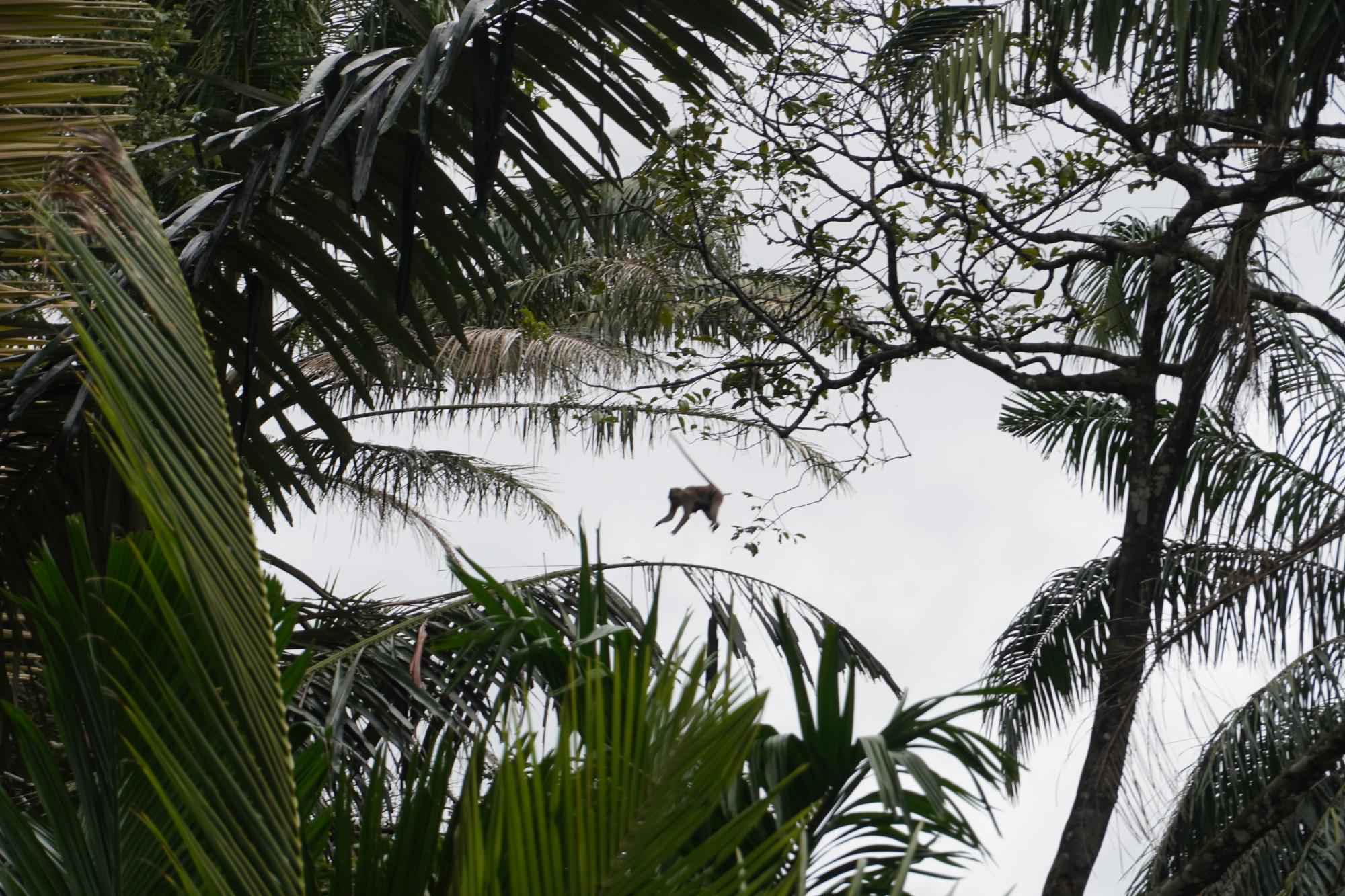
- Species identification and field observation
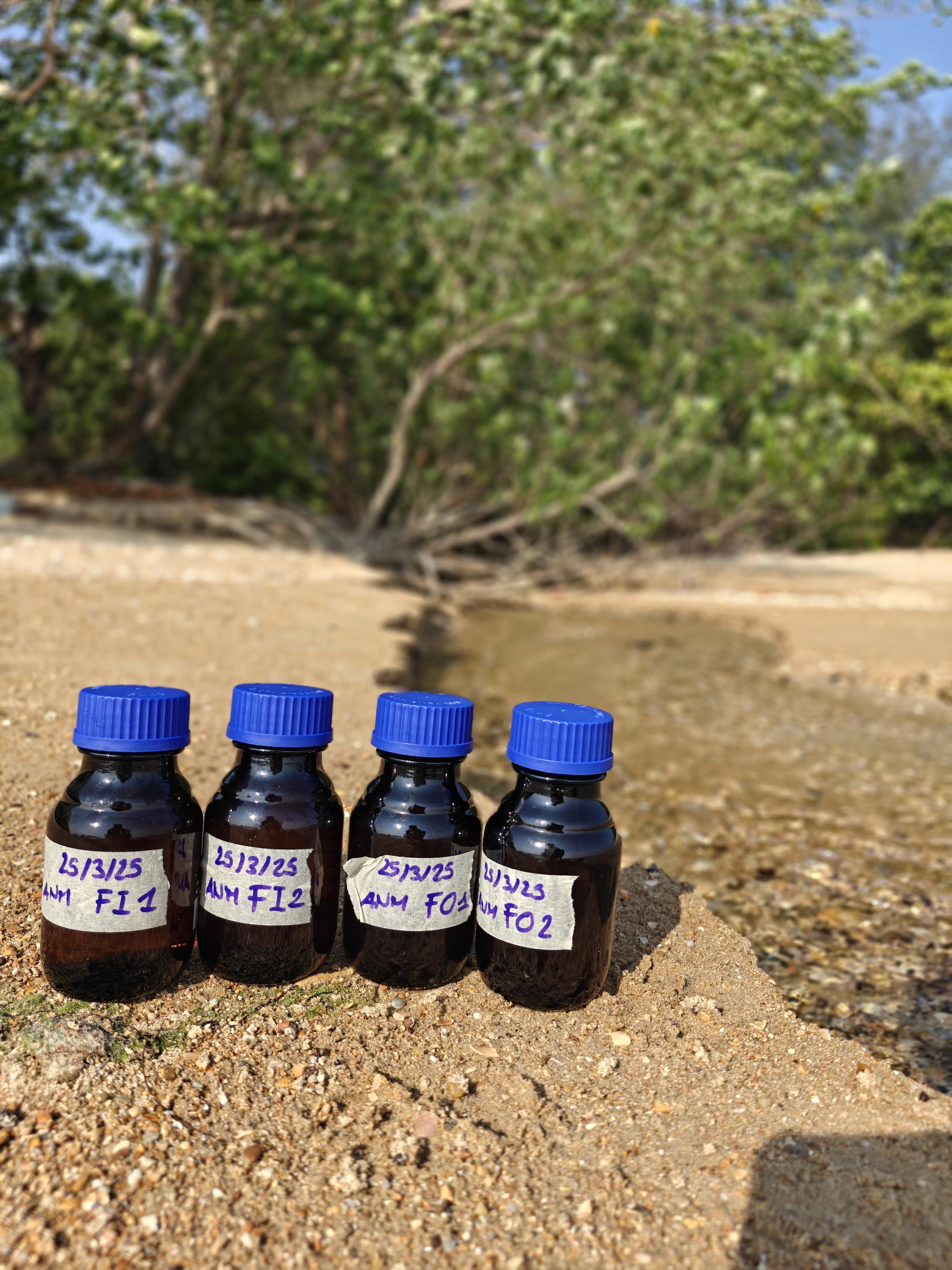
- Habitat assessments and environmental data collection
- Native-plant propagation and nursery management
- Lowland forest and mangrove restoration
- Seagrass research and dugong-habitat monitoring
- Coral-reef monitoring and restoration activities
- Conservation education and community engagement
- Data organisation, analysis and scientific reporting
The pathway is grounded in the principle that effective conservation begins by understanding and addressing the causes of environmental degradation. Participants therefore learn about passive regeneration, ecological resilience and community-led solutions before considering active restoration interventions where these are appropriate.
Volunteers participate in ongoing activities as part of the wider programme. Interns and professional apprentices receive additional support to develop a specific research, monitoring, restoration or education project based on their interests, skills and the organisation’s current priorities. Activities vary according to season, weather, tides, project needs and participant experience.
A longer stay allows participants to move beyond introductory activities and become more deeply involved in ecological monitoring, restoration and project development. With additional time, participants can build stronger field skills, follow changes in sites over multiple visits, contribute more consistently to ongoing projects and develop an individual research, restoration or education project. For interns and professional apprentices, the first two weeks generally focus on orientation and familiarisation. Longer placements then allow more time for independent work, data collection, analysis, reporting and professional development. Programme fees are reduced for longer stays: 2 weeks: 17,000 THB per week 3-7 weeks: 16,000 THB per week 8–11 weeks: 15,000 THB per week 12–24 weeks: 14,000 THB per week For placements longer than 12 weeks, additional discounts may be available depending on the participant’s objectives, responsibilities and programme structure. These fees include accommodation, weekday breakfast and lunch, local programme transport, materials and supervision.
Applied Ecology Learning Pathway FAQs
Do I need to be a biologist or have any prior knowledge?
No. You do not need to be a biologist or have prior experience in ecology or conservation. The pathway is open to participants from all backgrounds, and activities are introduced progressively with guidance from the NatureMind team.
Curiosity, willingness to learn and an interest in the natural world are the most important requirements. Participants with backgrounds in biology, environmental science, marine science, forestry, agriculture or related fields can build on their existing knowledge, while beginners can develop practical skills through supervised fieldwork.
Do i need to be a SCUBA Diver?
No, although being SCUBA certified will unlock additional activities and other way sfor you to contribute to our data collection and restoration effort.
SCUBA diving certification is obtainable with our Dive Shop partners at an additional cost of ~16.000THB. The full course will take 3 days to complete and you will be issued with a full PADI Open Water Diver Certificate (Advanced, Rescue, and Specialties also available).
I have specific dietary requirements, can you cater for them?
Our kitchen makes every meal on base, so they have full control of all the ingredients used. We can cater for most dietary requirements (Halal, allergies, intolerances, etc.), but please do inform us of said restrictions prior to arrival so we can make the necessary arrangements.
Sustainable Systems Learning Pathway
The Sustainable Systems Learning Pathway explores how communities can design more resilient, regenerative and sustainable ways of living through permaculture, resource management and nature-based solutions.
The Sustainable Systems Learning Pathway explores how human communities can live within ecological limits while developing greater resilience and wellbeing. Participants examine the connections between food, water, energy, waste, livelihoods, biodiversity and community organisation, and learn how these systems influence one another.
Activities may include:
- Permaculture and regenerative design
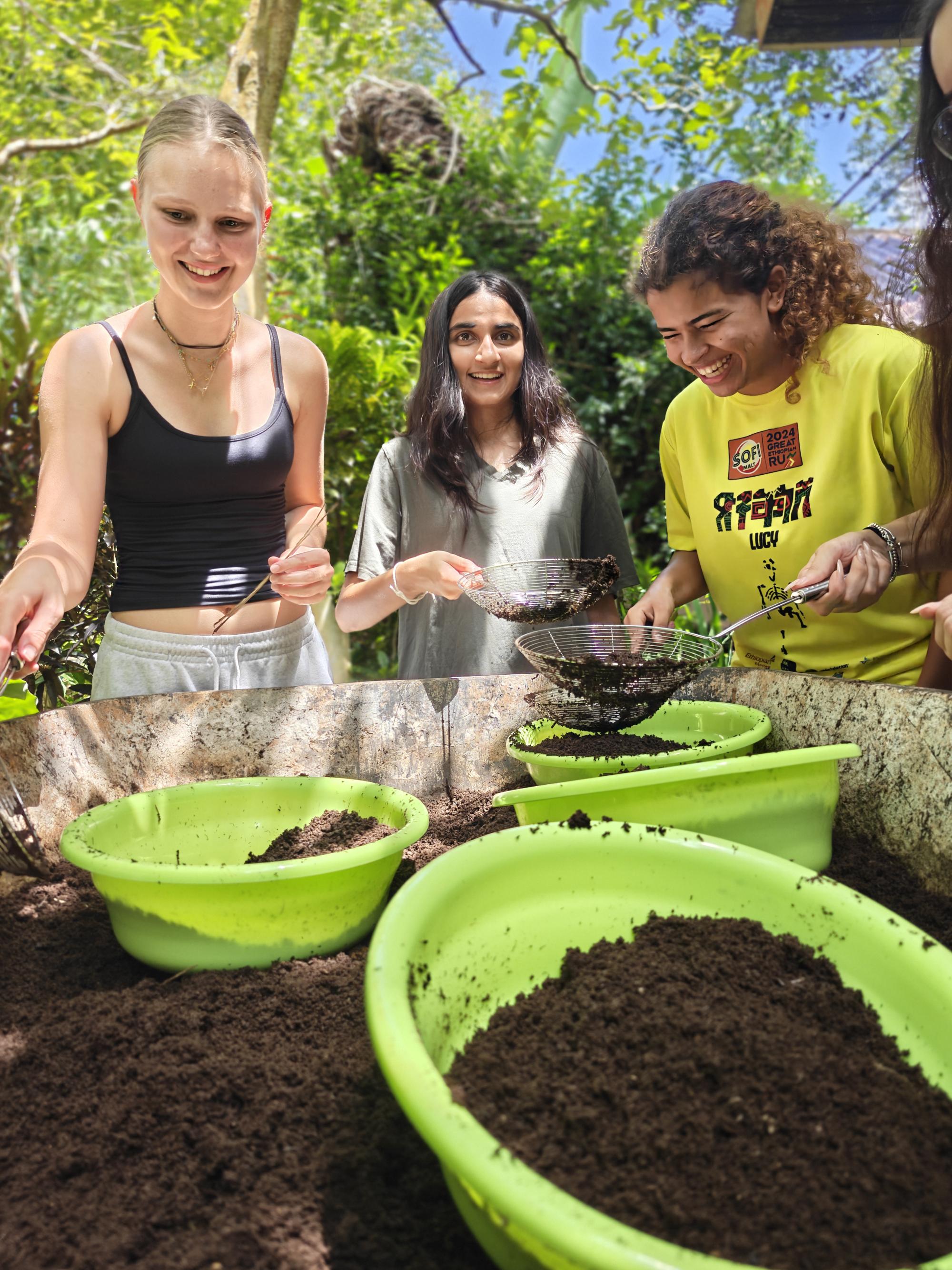
- Sustainable food production and ecological gardening
- Natural resource and water management
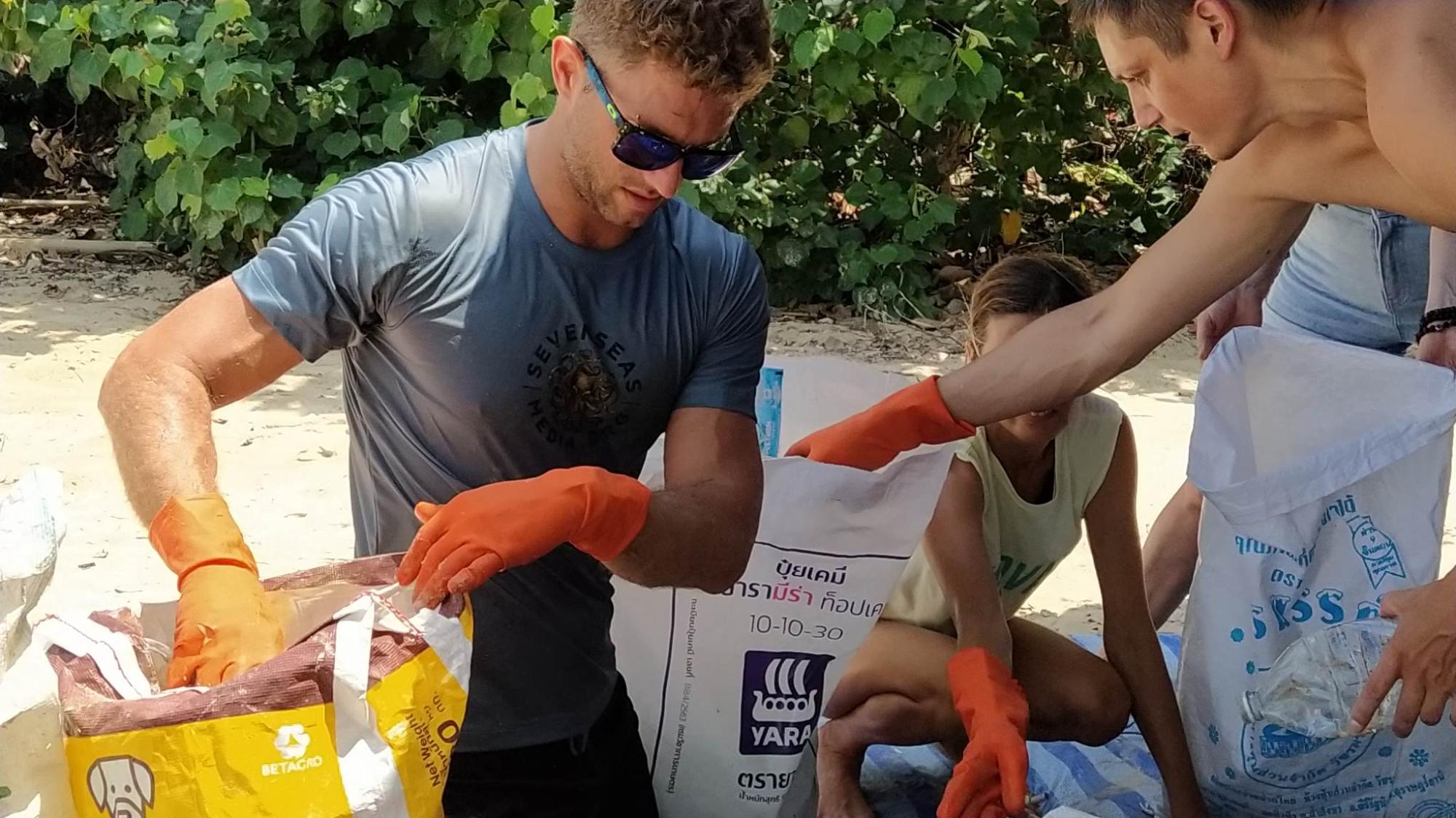
- Waste reduction and circular resource systems
- Appropriate technology and low-impact infrastructure
- Community-based development and local ownership
- Environmental education and behaviour change
- Practical regenerative-living projects at Spirit Mountain and partner sites
- Reflective activities exploring personal and collective wellbeing
The pathway combines discussion, observation and hands-on learning. Participants are encouraged to identify the underlying causes of environmental and social challenges, rather than focusing only on isolated symptoms, and to explore solutions that are practical, locally appropriate and capable of being maintained by communities.
The exact activities depend on current projects, seasonal conditions and participant interests. Interns and professional apprentices may also develop an individual project related to regenerative living, sustainable systems, education, community engagement or ecological design.
A longer stay allows participants to move beyond introductory activities and become more deeply involved in ecological monitoring, restoration and project development. With additional time, participants can build stronger field skills, follow changes in sites over multiple visits, contribute more consistently to ongoing projects and develop an individual research, restoration or education project. For interns and professional apprentices, the first two weeks generally focus on orientation and familiarisation. Longer placements then allow more time for independent work, data collection, analysis, reporting and professional development. Programme fees are reduced for longer stays: 2 weeks: 18,000 THB per week 3 weeks: 17,000 THB per week 4–7 weeks: 16,000 THB per week 8–11 weeks: 15,000 THB per week 12–24 weeks: 14,000 THB per week For placements longer than 12 weeks, additional discounts may be available depending on the participant’s objectives, responsibilities and programme structure. These fees include accommodation, weekday breakfast and lunch, local programme transport, materials and supervision.
Sustainable Systems Learning Pathway FAQs
Do I need any specific training or knowledge prior to arrival?
No specific training or prior knowledge is required. The pathway is designed for participants from a wide range of backgrounds, including those who are new to permaculture, sustainability and regenerative living.
An open mind, willingness to learn and an interest in exploring practical solutions are more important than previous experience. Participants with backgrounds in environmental science, agriculture, community development, education, design, engineering, social sciences or related fields may find opportunities to build on existing knowledge, but all activities are introduced at an appropriate level.
Experiential Learning & Facilitation Pathway
The Experiential Learning & Facilitation Pathway develops the practical skills needed to design and lead engaging, inclusive learning experiences for diverse groups in environmental, educational and community settings.
Participants learn how to design, deliver and evaluate engaging learning experiences for diverse groups. The pathway combines facilitation theory with practical experience supporting and leading workshops, field sessions, educational activities and group discussions.
Participants develop skills in:
- Workshop and activity design
- Group facilitation and inclusive communication
- Environmental and sustainability education
- Experiential and participatory learning methods
- Group dynamics, leadership and conflict management
- Adapting activities to different ages, cultures, abilities and learning styles
- Reflective practice, feedback and session evaluation
- Planning, presenting and documenting learning activities
Participants gradually move from observation and assisting to co-facilitating and, where appropriate, independently leading activities. They may work with volunteers, interns, school groups, university students, community members or other visitors involved in NatureMind’s programmes.
Interns and professional apprentices can develop a facilitation portfolio containing session plans, activities, reflections and evaluations. Where appropriate, NatureMind may also introduce suitable participants to partner organisations and wider professional networks seeking experienced facilitators in environmental education, outdoor learning, sustainability, youth development and community engagement.
A longer stay allows participants to move beyond introductory activities and become more deeply involved in ecological monitoring, restoration and project development. With additional time, participants can build stronger field skills, follow changes in sites over multiple visits, contribute more consistently to ongoing projects and develop an individual research, restoration or education project. For interns and professional apprentices, the first two weeks generally focus on orientation and familiarisation. Longer placements then allow more time for independent work, data collection, analysis, reporting and professional development. Programme fees are reduced for longer stays: 2 weeks: 18,000 THB per week 3 weeks: 17,000 THB per week 4–7 weeks: 16,000 THB per week 8–11 weeks: 15,000 THB per week 12–24 weeks: 14,000 THB per week For placements longer than 12 weeks, additional discounts may be available depending on the participant’s objectives, responsibilities and programme structure. These fees include accommodation, weekday breakfast and lunch, local programme transport, materials and supervision.
Experiential Learning & Facilitation Pathway FAQs
Do i need any prior knowledge or certificate?
No prior knowledge, teaching qualification or facilitation certificate is required. Participants receive guidance and progressively develop their skills through observation, supported practice and supervised involvement in educational activities.
Because this pathway may involve greater contact with children and young people, participants may be required to provide a criminal background check or equivalent safeguarding documentation before taking part in certain activities. Requirements may vary depending on the participant’s role and the policies of partner schools or organisations.