Pokhara Community Project
Run by Shaja Nepal
Mountain community resilience and habitat conservation in the Nepal Himalaya.
About Shaja Nepal
Operating since 2003
Mountain community resilience and habitat conservation in the Nepal Himalaya.
The project runs long-standing community-development work across education, women's empowerment, health and infrastructure, delivered in partnership with local schools and organisations. Access to quality education, resources and school infrastructure is limited in the area, so the team supports schools with English teaching, health and hygiene lessons, and improvements to buildings and facilities.
Because Nepal's economy depends on tourism, English skills can open further education and employment, and the project supports English learning for both school-aged students and adults. Women often leave education early for financial or family reasons, so women's groups in four communities offer English, life skills and income-generating skills such as knitting and sewing.
Health education focuses on prevention, hygiene, disease awareness and environmental factors affecting health, including Water, Sanitation and Hygiene (WASH) work in local schools. Construction and refurbishment projects have delivered toilet blocks, a music room, school desks and other facility upgrades.
- Community-development work in the Pokhara area dates back to 2003, making it one of the longer-running programmes of its kind in the region.
- Works with SASANE, a survivor-led Nepali organisation (founded 2008) that combats human trafficking, child marriage and violence against women, and teaches survivors paralegal and life skills.
- Partners with several government schools in the villages of Hemja, Yamdi and Pame, supporting classes from primary through higher secondary level.
- Women's empowerment work reaches women's groups in four communities, and a community sewing project with women from the Hemja area began in 2023 as an income-generating initiative.
- Construction projects have delivered school toilet blocks, a music room, volleyball facilities and 35+ school desks.
- Programmes align with UN Sustainable Development Goals #3, #4, #5, #6 and #17, and emphasise locally-led, partner-guided delivery.
Project work
Education & empowerment
Programmes cover English teaching, early childhood development, women's empowerment, gender equality, community health and WASH, and school construction. Women's groups in four communities offer English, life skills and income-generating skills such as knitting and sewing.
Community-led & ethical
Work is guided by local priorities and delivered with partners including SASANE, a survivor-led anti-trafficking organisation, government schools in Hemja, Yamdi and Pame, and women's community groups. Delivery follows child-protection and safeguarding practices and respect for local culture.
Impact
The Shaja Nepal works alongside local schools and community groups in and around Pokhara, in central Nepal. Its work spans children's learning and development, adult English education, gender equality with local girls and women, health and nutrition, community infrastructure, and environmental activity such as clean-ups and sustainability education. The figures below are taken directly from the project's annual records for 2023 to 2026, grouped by year, and record sessions delivered, learners and community members reached, teachers and facilitators engaged, refurbishments completed, and waste collected. Figures for 2025 and 2026 reflect a partial reporting year.
2026 (to date)
2025
2024
2023
Approach
This organisation runs long-standing community development work across education, women's empowerment, health and infrastructure, delivered in partnership with local schools and organisations. Its approach is locally-led and partner-guided, with an emphasis on doing no harm and building trust for long-term sustainability. Stated aims include improving preventive health knowledge, developing women's income potential and self-sufficiency, supporting English learning, and improving education and health facilities.
Work aligns with UN Sustainable Development Goals 3, 4, 5, 6 and 17. Ethical commitments include child protection and safeguarding, respect for local culture, and sustainability measures at the base such as a majority plant-based menu, refillable bottles, recycling, waste separation and tree planting.
Milestones
Community programmes in the Pokhara area began in 2003, starting with teaching support at local boarding schools and children's welfare homes, plus environmental education. Through the mid-2000s to early 2010s the work expanded to nearby districts (including Bandipur, Trishuli, Nuwakot and Chitwan) with teaching, childcare, community centre/library and environmental projects. A women's empowerment initiative launched in 2015, followed by a healthcare programme built around WASH (Water, Sanitation and Hygiene) work in local schools. From 2016 onward, partnerships were established with government schools in Hemja, Yamdi and Pame and with SASANE, a survivor-led anti-trafficking organisation. Construction initiatives began around 2018 with larger projects such as toilet blocks at Yamdi and Hemja schools, a music room, and 35+ school desks. In 2019 a partnership began with the Himalayan Animal Rescue Trust (HART) for animal-welfare awareness. A community sewing project with women from the Hemja area started in 2023, alongside new school partnerships (Bishnu Paduka Higher Secondary School and Gaurishankar Primary School). The team continues to work across all focus areas in Pokhara today.
Highlights
- Based in Pokhara's Lakeside district, with views of Phewa Lake and the sacred Machapuchare (Fishtail) mountain in the Annapurna range.
- Community-development work in the Pokhara area dates back to 2003, making it one of the longer-running programmes of its kind in the region.
- Works with SASANE, a survivor-led Nepali organisation (founded 2008) that combats human trafficking, child marriage and violence against women, and teaches survivors paralegal and life skills.
- Partners with several government schools in the villages of Hemja, Yamdi and Pame, supporting classes from primary through higher secondary level.
- Women's empowerment work reaches women's groups in four communities, including survivors of trafficking, women with limited prior access to education, and women who have moved from rural areas to develop English and numeracy skills.
- A community sewing project with women from the Hemja area began in 2023 as an income-generating skills initiative.
- Construction projects have delivered school toilet blocks, a music room, volleyball facilities and 35+ school desks.
- Health work centres on preventative healthcare and WASH (Water, Sanitation and Hygiene) education in local schools.
- Programmes align with UN SDGs #3, #4, #5, #6 and #17, and emphasise locally-led, partner-guided delivery.
- Sustainability measures at the base include a majority vegetarian/vegan menu, refillable water bottles, recycling, upcycling, waste separation and tree planting.
Setting
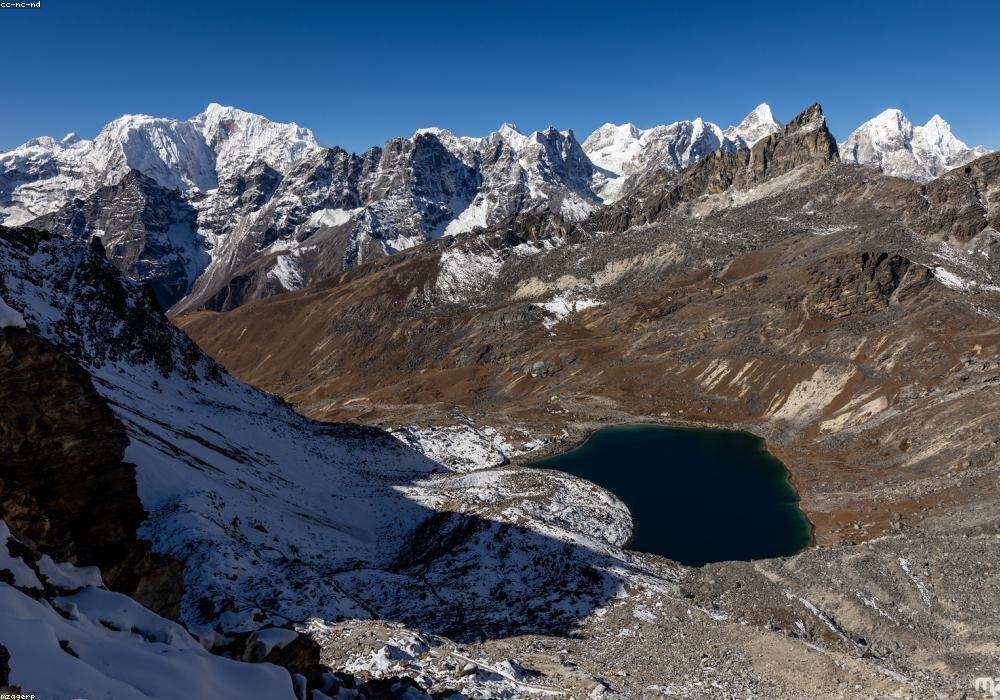
The project is based in Pokhara, a city on the shores of Phewa Lake in central Nepal, in the foothills of the Annapurna range. Pokhara is a well-known gateway to Himalayan trekking routes and relies heavily on tourism. The team works from the Lakeside area and in nearby villages including Hemja, Yamdi and Pame.
The wider community includes several ethnic groups such as the Gurung, Magar and Newar, along with settlements of Tibetan families. Nepali is the main language, and conversational English is common in tourist areas. The time zone is Nepal Time (UTC +5:45). The region experiences a monsoon from roughly mid-July to mid-September and a busy festival and school-holiday period from late September to November.
Volunteering
Volunteering in Nepal
Pokhara sits below the Annapurna range and is the gateway for much of Nepal's trekking economy. That brings income, and it brings strain on both the environment and the communities absorbing the visitors.
Volunteer placement FAQs
Where is the project based?
What kind of work does the project do?
Who can volunteer, and are there age or other requirements?
Do I need previous experience or qualifications?
How long can I stay, and how does joining work?
What does a typical week look like?
What is provided during the placement?
What is the accommodation like?
What are the meals like?
How do I get there, and do I need a visa?
Is travel insurance required?
How does the project handle health and safety?
What should I know about local culture?
What is the project's environmental footprint?
What's expected of me when working with the community?
Can I volunteer in Nepal?
Yes. The Impact Network Foundation works with one partner organisation in Nepal: Pokhara Community Project, based in the Pokhara valley, below the Annapurna range. You apply to it directly through this site.
What NGOs are there in Nepal?
The NGO in the Impact Network in Nepal is Pokhara Community Project, an independent community development organisation working in the Pokhara valley, below the Annapurna range. It is one of eight NGOs in the network, and the network is deliberately small — every organisation in it is locally run rather than a field office of an international charity.
Are there NGOs in Pokhara?
Yes — Pokhara Community Project works in the Pokhara valley, below the Annapurna range. Its work is community resilience and habitat conservation work.
What volunteer work can I do in Nepal?
Community resilience and habitat conservation work. Community resilience work alongside habitat conservation — the two are treated as one problem here, because the pressures on mountain communities and on mountain habitat are the same pressures.
How long can I volunteer in Nepal for?
Placements run to fixed start dates set by the project, so the dates are published in advance rather than chosen by you.
Is this a local NGO or a volunteer agency?
Pokhara Community Project is an independent, locally run organisation. The Impact Network Foundation does not operate it, staff it or direct its work — the Foundation exists to connect volunteers to organisations like it and to publish what they achieve.
How do I apply to volunteer in Nepal?
Apply on the Pokhara Community Project page on this site. Every applicant then has a short one-to-one call before a place is confirmed, so you can ask anything and the organisation can check the placement is a good fit.
Group bookings
We also host school groups, university groups, under-18 cohorts and bespoke groups.
School group info University group info U18 cohort info Bespoke group info