
Decoding cetacean communication off Tenerife
The waters off Tenerife are among the best places in Europe to encounter whales and dolphins, and every sighting is also an exchange of sound. Cetaceans, the group that includes whales, dolphins and porpoises, use one of the most complex forms of vocal communication known in the animal world. It has puzzled researchers for decades, and the MutatioMare is part of a wider effort to understand what these animals are actually saying to one another.
Dolphin communication is built from a surprisingly varied toolkit. Whistles, sharp clicks and rapid sequences known as burst pulses each carry different information. Some sounds coordinate movement within a group, others signal the presence of a predator, and many are strikingly specific, tailored to a particular situation or even a particular individual. Far from being random noise, these vocalisations form a flexible system that shifts with context. The clicks, in particular, do double duty: dolphins use rapid trains of them for echolocation, reading the shape and distance of objects around them from the returning echoes, which means the same animals that talk to one another are also, in effect, seeing with sound.
Names, in a sense
One of the most intriguing findings is that dolphins appear to use signature whistles that function almost like names. Individuals develop a distinctive call early in life and use it to identify themselves, and others will imitate that whistle to get a specific animal's attention. Mothers and calves rely on these signatures to stay in contact, and the behaviour hints at a level of social awareness that continues to reshape how scientists think about cetacean intelligence. Some studies suggest dolphins can remember the signature whistle of an old companion for decades, a feat of social memory that would be remarkable in any species.
Understanding this language is not merely an academic pursuit. Sound is central to how dolphins navigate, hunt and hold their groups together, which makes them acutely vulnerable to noise. Shipping traffic, engine noise and industrial activity can mask their calls, disrupt feeding and separate mothers from young. Studying how cetaceans communicate helps reveal exactly where human activity interferes, and that knowledge is essential for protecting them.
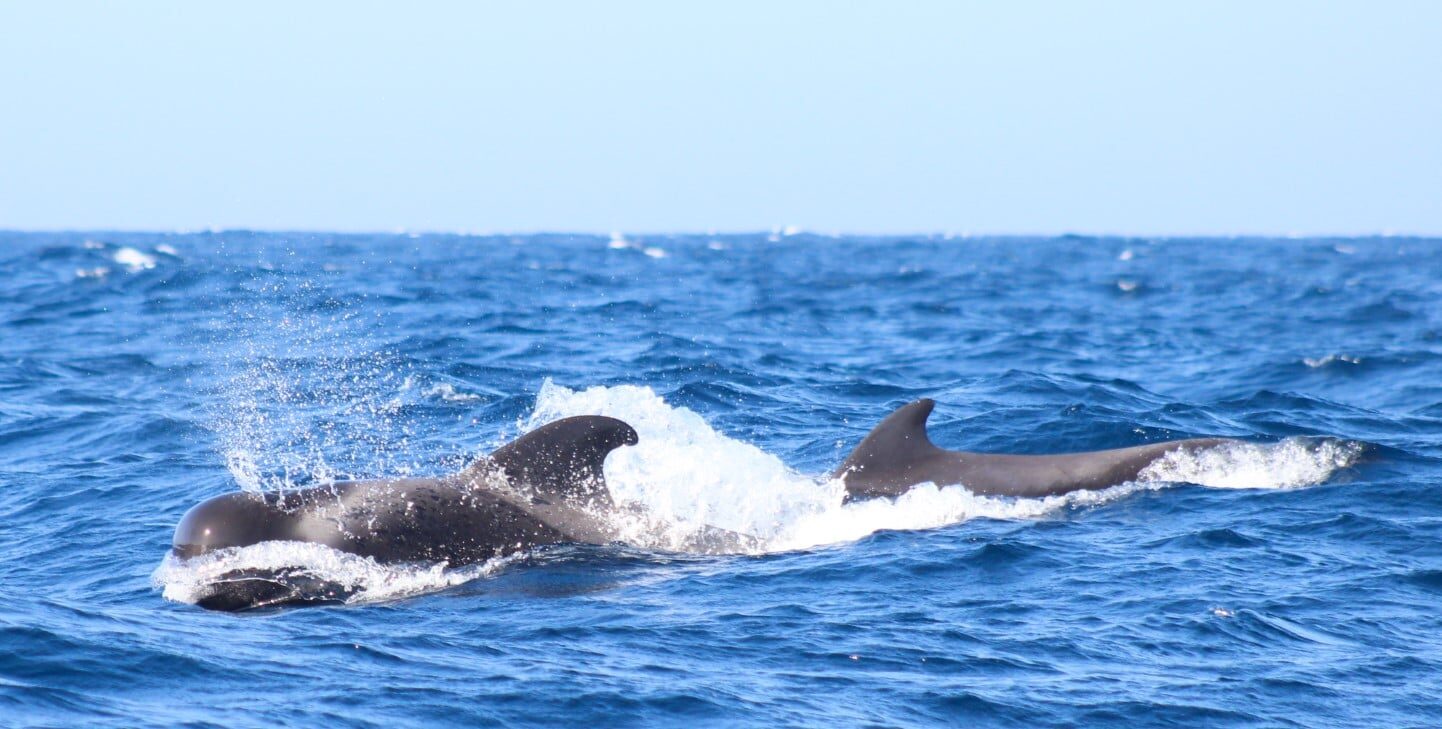
This is where careful, patient fieldwork matters. By recording vocalisations, logging behaviour and building a picture of the individual animals that return to these waters, the MutatioMare contributes to a growing body of research on how cetaceans live and how they are affected by the busy seas around the Canary Islands. Long-term observation from a consistent location is exactly the kind of data that broad-brush surveys tend to miss.
There is still far more that we do not know than we do. Decoding a communication system this rich is slow work, and much of it depends on quiet hours on the water, hydrophones in hand, waiting for the next exchange. But every recorded whistle and click brings us a little closer to understanding these animals on their own terms, and to making the case for the healthier, quieter oceans they need.
Comments
Add new comment