
Bon Om Touk: the story behind Cambodia's Water Festival
Cambodia's Water Festival, known in Khmer as Bon Om Touk, is the country's largest and most joyful celebration. It has none of the mud of an English music festival and little in common with the polished events of the modern circuit. Instead it is a genuinely traditional occasion, one with roots stretching back to the sixteenth century, and for anyone spending time in Cambodia with the Siem Reap Education and Community Development Projects it is well worth understanding.
The story begins in 1528, when King Ang Chan I, determined to defend the Khmer Empire from invasion, ordered his naval commander to prepare a counter-attack. The response took the form of two rows of rowing boats led by a larger sailing vessel, supported by ground troops. Those boats are the heart of the festival today. Every year since 1914, with only a grim interruption during the Khmer Rouge period, the first of the three festival days has featured villagers from every province racing beautifully carved boats along the Sisowath Quay in Phnom Penh.
Over time the races have taken on a second meaning. They mark the end of the monsoon and the reversal of the Tonle Sap river, a remarkable natural event in which mud built up over the wet season effectively forces the river to change direction. It is one of the few places in the world where a river runs backwards, and the festival honours that rhythm of the seasons as much as any historic battle.
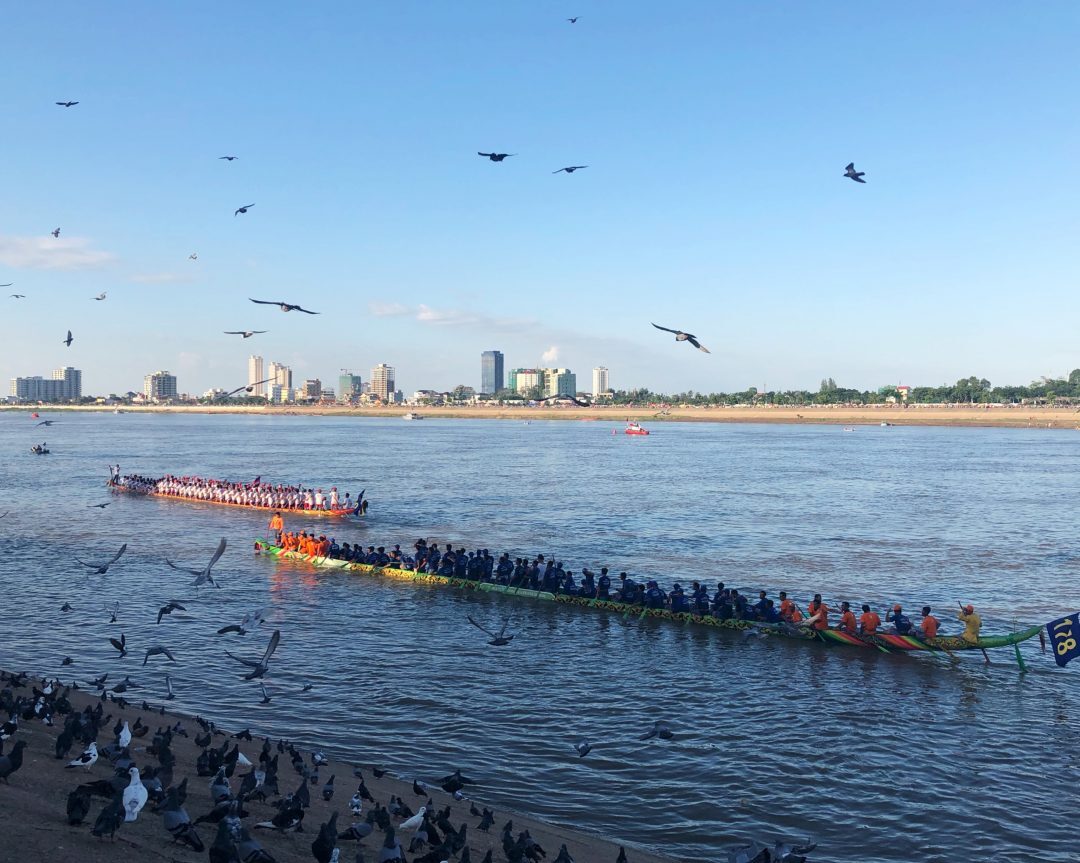
The evenings are where the celebration truly comes alive. For two nights the quay is lit by a seemingly endless procession of brightly illuminated boats gliding along the water, crowned by a magnificent fireworks display overhead. The tradition dates from the naval victory of 1529, after which the king ordered an annual celebration in which boats were set afloat and lit by candles. Today's dazzling arrays of lights are the modern descendants of those candlelit vessels; the fireworks, one suspects, are simply an added flourish. However it began, the spectacle on the river is a sight to behold.
Part of the festival's meaning lies in its timing. It is meant to signal the close of the rainy season, though anyone who has watched rain fall steadily through a festival day might question its accuracy as a forecast. That uncertainty does nothing to dim the occasion. If anything it adds to the sense of a country marking the turning of the year on its own terms, whatever the weather chooses to do.
What lingers most is the atmosphere. To see millions of Cambodians come together, and to watch a nation that has lived through such a turbulent history celebrate an ancient tradition peacefully and with such warmth, is genuinely moving. For those in Siem Reap it is also a reminder of how much local culture shapes the communities we work alongside, and of why understanding that culture matters.
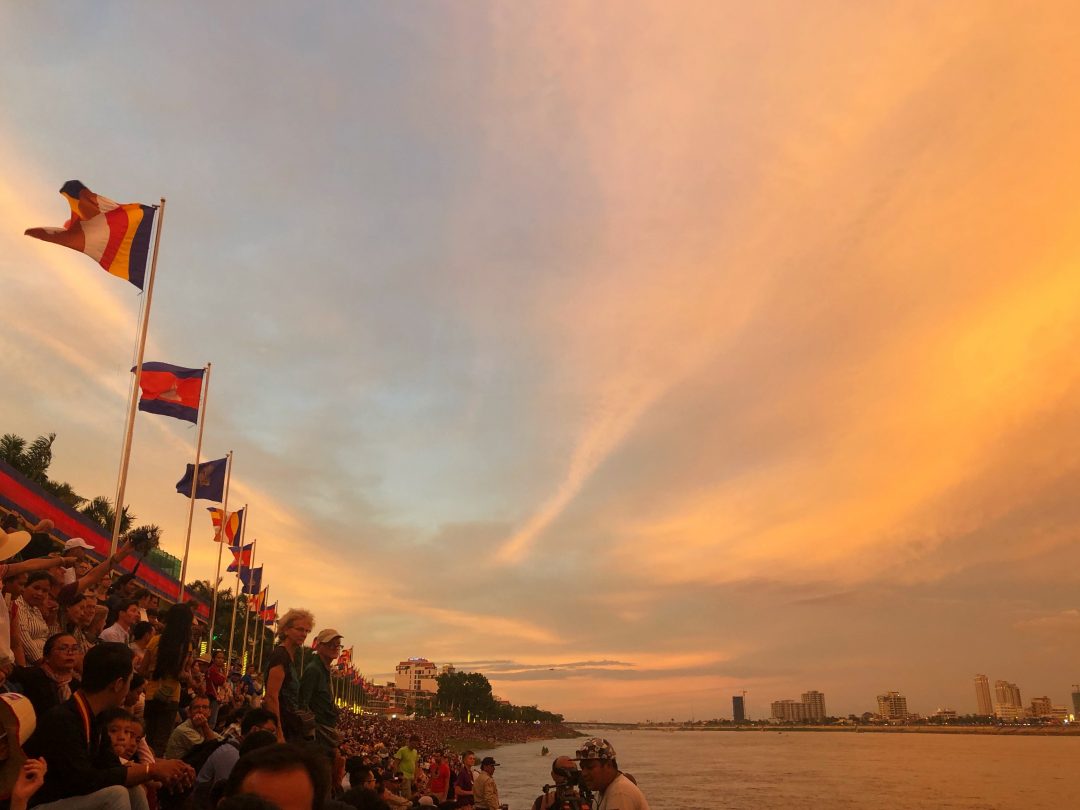
If you find yourself in Cambodia as the monsoon draws to a close, the Water Festival is not to be missed. It is a window onto five centuries of history, a celebration of the land and its rivers, and above all an expression of the resilience and spirit of the Khmer people. Experience it once and it stays with you.
Comments
Add new comment